
Qing Dynasty Legations and Early Diplomatic Outposts (1875, 1911)
The diplomatic history of China in Washington begins not with a building, with a desperate attempt to halt a collision between two expanding empires. While the Burlingame Treaty of 1868 theoretically opened the door for mutual recognition, the Qing Dynasty did not establish a permanent physical legation until 1875, and the minister, Chen Lanbin, did not present his credentials until September 1878. This delay was not bureaucratic; it reflected a deep internal schism within the Qing court regarding the need of engaging with the "barbarians" of the West. When Chen arrived, accompanied by the Yale-educated progressive Yung Wing, they established their headquarters in a rented mansion at the corner of Connecticut Avenue and K Street NW, formerly owned by Alexander Shepherd. This location, known locally as the "Big Brown House," became the sovereign patch of Chinese soil in the American capital.
The establishment of this outpost occurred in a hostile atmosphere. Anti-Chinese sentiment on the West Coast was reaching a fever pitch, driven by labor unions and nativist politicians. The legation's primary directive was the protection of Chinese laborers, a task that proved nearly impossible. Chen Lanbin, a conservative scholar who spoke no English, found himself. His staff wore traditional silk robes and braided queues, marking them as exotic curiosities in a city dominated by frock coats and top hats. The legation became a defensive bunker. Diplomatic cables from this period reveal a mission under siege, inundated with reports of lynchings and riots from California, yet possessing little use to force the State Department to intervene.
The physical movement of the legation through Washington's neighborhoods tracks the fluctuating status of the mission. In 1886, the legation moved to "Stewart's Castle" on the north side of Dupont Circle. This imposing structure, built for Senator William Morris Stewart, was a architectural anomaly, much like its tenants. The rent was exorbitant, yet the Qing government paid it to project power and stability. Inside, the ballroom was used not for dancing, which the ministers found undignified, for "smoking and conversation." Here, the diplomats attempted to cultivate influence among the Washington elite, using the curiosity of the American upper class to gain access to political levers. This strategy had limited success; the Chinese Exclusion Act of 1882 had already passed, cementing institutional racism into federal law.
The tenure of Wu Tingfang, beginning in 1896, marked a radical shift in tactics. Unlike Chen, Wu was a British-educated barrister who spoke flawless English. He understood the power of the American press. Wu moved the legation to 18th and Q Streets NW and turned the mission into a hub of social engagement. He gave interviews, wrote articles, and charmed the press corps, becoming the modern Chinese diplomat to use public relations as a weapon. Wu argued that trade with China was the key to American prosperity, attempting to bypass moral arguments in favor of economic self-interest. His efforts humanized the Chinese government in the eyes of the East Coast establishment, even as the West Coast remained virulently hostile.
The Boxer Rebellion (1900) nearly destroyed this fragile progress. The siege of the foreign legations in Beijing forced the Washington mission into a nightmare scenario: representing a government that was actively warring against the nation they were accredited to. The legation staff in Washington faced threats of violence and expulsion. Yet, the mission survived. Following the conflict, the Qing court appointed Liang Cheng (Chentung Liang Cheng) as minister in 1902. Liang, a former student of the Chinese Educational Mission who had played baseball at Phillips Academy, negotiated the most significant diplomatic victory of the era: the remission of the Boxer Indemnity.
The United States had been awarded $24 million in damages after the rebellion, a sum Liang argued was based on inflated claims. Through persistent lobbying and the use of detailed financial data to expose the discrepancies, Liang convinced President Theodore Roosevelt and Congress to return the surplus, approximately $12 million. This capital did not return to the Qing treasury; instead, it was directed to fund the Boxer Indemnity Scholarship Program, which established Tsinghua University in Beijing. This masterstroke ensured that the generation of Chinese leaders would be educated in American science and engineering, creating a diplomatic legacy that outlasted the dynasty itself.
In 1902, the legation made its final move under the Qing flag, commissioning a purpose-built structure at 2001 19th Street NW. Designed by Waddy Wood, this building was a statement of permanence. It was the property the Chinese government owned outright in the capital. The architecture was Western, a Georgian Revival mansion, signaling a desire to blend into the diplomatic norms of the West. Yet, the timing was ironic. The Qing Dynasty was crumbling. The diplomats working inside this new were serving a government that was losing control of its own provinces. By the time the Xinhai Revolution broke out in 1911, the legation at 19th Street was a well-oiled diplomatic machine representing a ghost state.
The operational costs of these early missions were relative to the Qing budget. Archives show that the legation frequently struggled with liquidity, dependent on silver shipments that were to fluctuation in exchange rates. The ministers were frequently forced to advance personal funds to cover rent and staff salaries. Even with these financial constraints, the legation maintained a rigorous schedule of banquets and receptions, understanding that in Washington, visibility was currency. The table outlines the physical footprint of the Qing diplomatic presence during this volatile era.
| Period | Address / Location | Key Minister(s) | Strategic Significance |
|---|---|---|---|
| 1878, 1886 | Connecticut Ave & K St NW (Shepherd Mansion) | Chen Lanbin, Zheng Zaoru | sovereign foothold; focus on labor protection and consular setup. |
| 1886, 1893 | Dupont Circle (Stewart's Castle) | Zhang Yinhuan, Cui Guoyin | High-visibility location to project imperial prestige even with Exclusion Act. |
| 1893, 1896 | 14th & Yale Streets NW | Yang Ru | Transitional period; focus on immigration treaty renegotiations. |
| 1896, 1901 | 18th & Q Streets NW (Schneider House) | Wu Tingfang | Era of "Public Relations Diplomacy"; navigating the Boxer Rebellion. |
| 1902, 1911 | 2001 19th Street NW | Liang Cheng, Wu Tingfang, Zhang Yintang | Chinese-owned property; Boxer Indemnity negotiations; transition to Republic. |
The transition from the Qing Dynasty to the Republic in 1911 happened within the walls of the 19th Street legation. The staff cut their queues and changed the flag, the mission remained the same: survival in a nation that wanted their goods not their people. The groundwork laid by Chen, Wu, and Liang established a precedent of resilience. They operated without military backing, relying solely on intellect, protocol, and the manipulation of American legal and economic interests to maintain China's sovereignty abroad. This era of "weak state, strong diplomacy" defined Chinese foreign policy for the century.
Republic of China Tenure and the Twin Oaks Estate (1912, 1978)

The collapse of the Qing Dynasty in 1912 did not immediately displace the Chinese diplomatic mission in Washington; it changed the flag flying over it. The five-colored flag of the new Republic of China (ROC) replaced the dragon banner at the legation on 2001 19th Street NW, a Georgian Revival structure that served as the nerve center for Chinese diplomacy through World War I. This building, designed by Waddy Wood, anchored the mission until 1944. During these tumultuous decades, the legation fought to secure American support against Japanese aggression, a campaign that required more than just office space. It required a stage.
That stage was secured in 1937, when Ambassador Chengting T. Wang rented the Twin Oaks estate at 3225 Woodley Road NW. The property, an 18. 24-acre compound originally built in 1888 for National Geographic Society founder Gardiner Greene Hubbard, offered a grandeur that eclipsed most diplomatic residences. In 1947, Ambassador Wellington Koo, recognizing the need for a permanent symbol of the ROC's legitimacy as the Chinese Civil War raged, purchased the estate from the Hubbard family. The price was $350, 000. This acquisition granted the ROC a physical footprint larger than the White House grounds, a fact that would become a geopolitical thorn in the side of Beijing for the eighty years.
Throughout the 1950s and 1960s, Twin Oaks functioned as the operational heart of the "China Lobby." Madame Chiang Kai-shek frequently stayed at the residence, using its parlors to charm American lawmakers and secure military aid for Taiwan. The estate became a of social influence, where the ROC projected an image of stability and Western alignment even as it lost control of the mainland. The chancery moved to 2311 Massachusetts Avenue NW in 1944, yet Twin Oaks remained the psychological center of the mission. It was here that Ambassadors entertained Presidents Eisenhower and Ford, maintaining the illusion that the government in Taipei spoke for all of China.
The illusion began to fracture in 1971 when the United Nations expelled the ROC in favor of the People's Republic of China (PRC). The final blow arrived in December 1978. President Jimmy Carter announced that the United States would switch diplomatic recognition to Beijing on January 1, 1979. The State Department gave Ambassador James Shen a humiliating ultimatum: the ROC mission had to vacate its properties and leave the country. The PRC, citing international laws on state succession, prepared to seize all ROC assets in the United States, including the priceless Twin Oaks estate.
Facing the total loss of their diplomatic sovereign territory, the ROC delegation executed a desperate legal maneuver in the final hours of 1978. On December 22, just days before the recognition switch, the ROC government sold Twin Oaks to a private American non-profit organization, the "Friends of Free China Association." The sale price was ten dollars. This nominal transaction, orchestrated with the help of Thomas Corcoran, a former FDR advisor, legally transferred the deed to a private domestic entity, placing it beyond the reach of the State Department's seizure orders and the PRC's claims. When the clock struck midnight on January 1, 1979, the PRC assumed control of the embassy status, yet they found the jewel of the portfolio, the Woodley Road estate, locked away in private hands.
Ambassador James Shen departed Washington in disgrace, yet the property remained safe. The passage of the Taiwan Relations Act in April 1979 subsequently provided retroactive legal protection for ROC assets held prior to derecognition. The ROC repurchased the estate from the Association in 1982, cementing its status as a unique diplomatic anomaly: a sovereign residence for a government the United States officially did not recognize. While the chancery at 2311 Massachusetts Avenue was eventually lost, later becoming the Embassy of Haiti, Twin Oaks survived as a "phantom embassy," hosting National Day receptions and trade delegations under the guise of the Taipei Economic and Cultural Representative Office (TECRO).
This gray-zone status well into the 21st century. By 2026, Twin Oaks had evolved from a symbol of exile into a hub for high-level "unofficial" diplomacy. Following the signing of the U. S.-Taiwan Agreement on Reciprocal Trade in February 2026 and a strategic Memorandum of Understanding between AIT and TECRO in January 2026, the estate hosted celebrations that mirrored state functions in everything name. The property remains the only diplomatic facility in Washington where the flag of a derecognized nation flies over 18 acres of prime real estate, a permanent testament to the midnight deal that outmaneuvered Beijing.
| Period | Location | Function | Status |
|---|---|---|---|
| 1912, 1944 | 2001 19th Street NW | Legation / Embassy | Transitioned from Qing Legation; vacated 1944. |
| 1937, 1947 | 3225 Woodley Road NW (Twin Oaks) | Ambassador's Residence | Rented from Hubbard family. |
| 1944, 1978 | 2311 Massachusetts Ave NW | Chancery | Primary office; lost after derecognition ( Embassy of Haiti). |
| 1947 | 3225 Woodley Road NW (Twin Oaks) | Ambassador's Residence | Purchased by ROC for $350, 000. |
| Dec 1978 | 3225 Woodley Road NW (Twin Oaks) | Private Property | Sold to Friends of Free China Assn. for $10 to block PRC seizure. |
| 1982 | 3225 Woodley Road NW (Twin Oaks) | Representative Residence | Repurchased by ROC (TECRO) under Taiwan Relations Act protection. |
1979 Transfer of Recognition and Connecticut Avenue Interim Sites
The diplomatic pivot of 1979 forced the People's Republic of China (PRC) to operate from converted commercial and residential buildings rather than the traditional diplomatic estates of Washington. Following the 1973 establishment of a Liaison Office, the PRC purchased the Windsor Park Hotel at 2300 Connecticut Avenue NW and the adjacent St. Albans apartment building at 2310 Connecticut Avenue NW in November 1973. These structures, originally built for hotel guests and tenants, served as the de facto chancery and staff quarters for over three decades. Even with the formal elevation of the Liaison Office to an Embassy on January 1, 1979, the PRC delegation remained confined to these Connecticut Avenue sites, unable to occupy the historic properties previously held by the Republic of China (ROC).
Anticipating the shift in recognition, ROC officials executed a legal maneuver to prevent the PRC from seizing their prime real estate assets. In late December 1978, just days before the official transfer of diplomatic relations, ROC Ambassador James Shen deeded the 18-acre Twin Oaks estate and the chancery at 2311 Massachusetts Avenue NW to a private non-profit organization, the Friends of Free China Association. The transaction price was recorded as ten dollars for each property. This sale placed the buildings outside the immediate reach of the State Department and the incoming PRC diplomats, creating a legal blockade that denied Beijing access to the Qing-era and Nationalist-era diplomatic headquarters.
The United States Congress subsequently reinforced this property division through the Taiwan Relations Act of April 1979. The legislation retroactively protected the ownership status of Taiwan's assets as they existed on December 31, 1978. Consequently, the PRC continued to conduct its diplomatic mission from the cramped corridors of the former Windsor Park Hotel. The 2300 Connecticut Avenue complex functioned as the nerve center for Chinese operations in the capital until the completion of the I.M. Pei-designed chancery at International Place in 2009. Meanwhile, the former ROC chancery on Massachusetts Avenue was eventually sold to the government of Haiti, leaving the PRC without a presence on Embassy Row for the remainder of the 20th century.
Acquisition of Federal Land at International Place NW
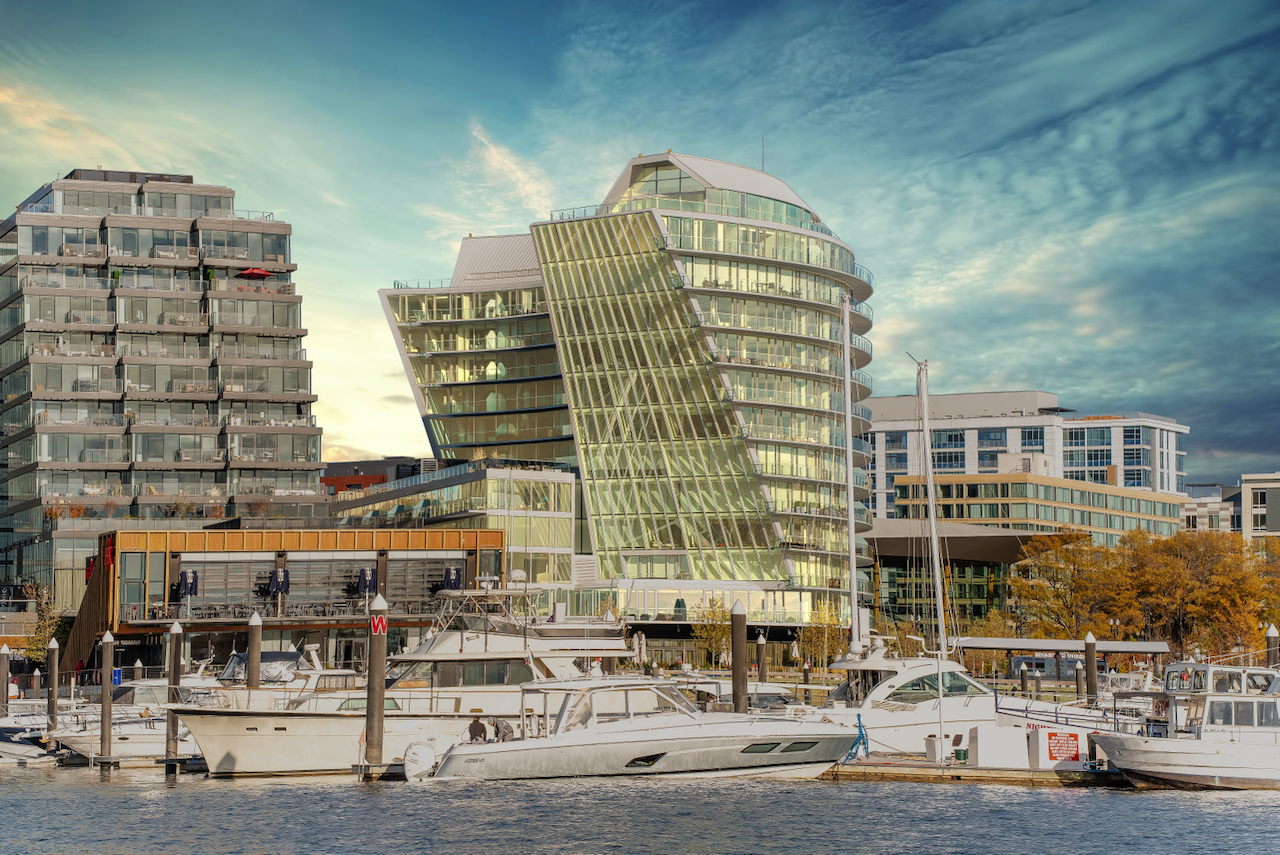
The acquisition of the site at 3505 International Place NW represents a distinct shift in the diplomatic posture of the People's Republic of China (PRC) toward the United States. Unlike the Qing Dynasty's hesitant rental of the "Big Brown House" or the Republic of China's purchase of the Twin Oaks estate, the PRC's entry into Washington required a negotiated exchange of federal territory. The process began in earnest after the normalization of relations in 1979. Beijing's diplomats initially operated out of the Windsor Park Hotel at 2300 Connecticut Avenue NW. The Chinese government purchased this 1950s-era structure in November 1973 to serve as a Liaison Office. The facility was cramped and insecure. It absence the physical setbacks necessary to prevent electronic eavesdropping and failed to project the rising power of the Chinese state.
The solution lay in the International Chancery Center (ICC). Congress authorized this federal enclave in 1968 under the International Center Act. The Department of State the Van Ness area to house foreign missions that could no longer find suitable space on Massachusetts Avenue. The PRC identified a prime plot within this secure zone. The acquisition process was not a simple real estate transaction. It functioned as a high- diplomatic barter. The United States required a new embassy compound in Beijing to replace its facilities in the Ritan Diplomatic District. Negotiations resulted in a reciprocal land swap agreement signed on October 19, 2001. The document was titled the Agreement Between the Government of the United States of America and the Government of the People's Republic of China Concerning the Use of the Property Located at the International Chancery Center in Washington, D. C.
This 2001 agreement granted China the use of the ICC site. In return the United States secured the rights to the "Liang Ma He" site in Beijing's Third Diplomatic Enclave. The deal was codified further by a specific construction agreement signed on November 17, 2003. This second treaty addressed the intense security paranoia consuming both nations. The terms allowed each nation to use its own workers and materials to build their respective chanceries. This provision aimed to prevent the host country from embedding listening devices in the concrete or structural steel. The agreement permitted the PRC to import Chinese construction personnel on A-2 visas. These workers lived in onsite barracks or controlled housing to minimize their contact with American intelligence agents.
The physical site at 3505 International Place NW covers approximately 10, 796 square meters. The location offers significant strategic advantages. It sits on high ground in the northwest quadrant of the district. The terrain provides clear lines of sight and complicates unauthorized physical method. The lease terms follow the standard ICC model where the foreign government owns the building while the United States government retains underlying title to the land. This arrangement mirrors the restrictions placed on the U. S. embassy in Beijing. The reciprocity ensures that any legal action taken against the Chinese property in D. C. can be met with immediate retaliation against American property in China.
| Year | Event | Details |
|---|---|---|
| 1973 | Windsor Park Purchase | PRC buys the Windsor Park Hotel at 2300 Connecticut Ave NW for the Liaison Office. |
| 1979 | Embassy Status | Liaison Office upgrades to full Embassy status following normalization. |
| 2001 | Land Swap Agreement | US and China sign agreement exchanging ICC land in DC for Liangmaqiao land in Beijing. |
| 2003 | Construction Pact | Agreement allows use of imported labor and materials to prevent espionage. |
| 2005 | Groundbreaking | Construction begins at 3505 International Place NW. |
| 2009 | Completion | New Chancery officially opens on April 1. |
The selection of the architect signaled a desire to blend hard power with cultural sophistication. The Ministry of Foreign Affairs commissioned Pei Partnership Architects. The firm was led by the sons of I. M. Pei. The elder Pei served as a consultant. The design called for a wrapped in French limestone. The material choice referenced the federal architecture of Washington. The angular geometry referenced traditional Chinese motifs. The structure spans 429, 480 square feet. It was the largest foreign embassy in the United States at the time of its completion in 2009. The sheer of the building dwarfed the neighboring Israeli and Singaporean missions. It signaled that Beijing viewed its presence in Washington as a permanent and dominant fixture of the geopolitical order.
Construction fell to China State Construction Engineering Corporation (CSCEC). The firm is a state-owned enterprise with direct ties to the Chinese military-industrial complex. The use of CSCEC ensured that the building's internal schematics remained a state secret. American labor unions protested the exclusion of local workers. The 2003 bilateral agreement superseded local labor laws. The site operated as a closed loop. Materials arrived in diplomatic pouches or sealed shipping containers. The United States reciprocated this behavior in Beijing. The Americans imported their own contractors to build the in Liangmaqiao. Both sides operated under the assumption that the other would attempt to compromise the supply chain.
The operational capacity of the new chancery expanded the PRC's intelligence and administrative reach. The Windsor Park facility had forced diplomats to live and work in converted hotel rooms. The International Place compound provided specialized facilities for secure communications. It also housed a 200-seat auditorium and extensive entertaining spaces. The consolidation of offices into one secure compound reduced the counter-intelligence surface area. Diplomats no longer had to shuttle between scattered annexes. The centralization allowed the Ambassador to monitor staff more. The distinct "West Office Wing" and "East Office Wing" layout separated public consular functions from sensitive political work.
Current assessments in 2026 indicate the site remains the nerve center for Chinese operations in North America. The 2024 adjustment of consular jurisdictions reaffirmed the Washington embassy's direct oversight of the serious mid-Atlantic region. The land itself has appreciated significantly in value. Yet the diplomatic value far exceeds the real estate appraisal. The compound stands as sovereign territory obtained through a direct trade of strategic assets. The deal that secured 3505 International Place NW was not a purchase. It was a hostage exchange of soil. The United States holds the Liangmaqiao plot. China holds the International Place plot. Both sides hold the other's security infrastructure as collateral.
Chancery Construction and Skilled Labor Importation Controversies
The construction of the current Chancery at 3505 International Place NW represents a pivot from diplomatic engagement to architectural fortification. Following the signing of a bilateral agreement on November 17, 2003, the People's Republic of China and the United States established a reciprocal framework that allowed each nation to build its new embassy using its own workforce. This agreement, born from the mutual paranoia of the Cold War bugging scandals, sanctioned the creation of a sovereign island within the District of Columbia. The project bypassed local labor unions and American building inspectors, creating a closed loop of supply and construction that alarmed US counterintelligence officials and frustrated local trade organizations.
Groundbreaking occurred in June 2005, initiating a project that would import not only materials an entire population of laborers. The China State Construction Engineering Corporation (CSCEC), a state-owned enterprise with deep ties to the Chinese military-industrial complex, managed the build. Under the terms of the 2003 agreement, the Chinese government issued A-2 diplomatic visas to hundreds of construction workers. These individuals were not treated as immigrant labor as "mission members," a legal classification that shielded them from US labor laws, OSHA inspections, and the prying eyes of the FBI. They lived in secure, temporary housing, were bused to the site in groups, and were strictly prohibited from interacting with the local population to prevent defections or intelligence leaks.
The exclusion of American workers sparked immediate friction. Washington DC's trade unions, particularly the carpenters and electricians, protested the loss of millions of dollars in wages. Yet, the State Department remained silent, bound by the need of the reciprocal arrangement that allowed the United States to simultaneously construct its own in Beijing without Chinese interference. The diplomatic logic was cold and transactional: to ensure the US Embassy in Beijing remained free of listening devices in the concrete, the US government had to permit China to import its own "sanitized" workforce to Washington. This resulted in a construction site at Van Ness that operated as a black box, with unclear fencing and guards ensuring that no unauthorized American set foot on the soil until the keys were turned over.
Architecturally, the building attempts to mask its defensive nature with the prestige of its designers. Pei Partnership Architects, led by Chien Chung Pei and Li Chung Pei, sons of the legendary I. M. Pei, delivered a design that fused modernism with traditional Chinese geometry. The structure spans approximately 250, 000 square feet (sources vary on exact gross square footage due to secure annexes) and uses warm beige French limestone to blend with the federal aesthetic of Washington. yet, the open appearance is deceptive. The layout creates a perimeter defense, and the "slitted" window designs on certain facades function to limit sightlines into secure areas. Every slab of granite used for the flooring was quarried in China and shipped under diplomatic seal to prevent tampering.
The operational security during construction was absolute. Materials arriving from China were treated as diplomatic pouches. The 2003 agreement stipulated that "special dedicated project materials" would be released by US Customs within 48 hours without inspection. This loophole allowed the importation of sophisticated technical equipment, chance including signals intelligence (SIGINT) arrays, under the guise of building supplies. Intelligence analysts have long suspected that the embassy's location, on high ground in the International Chancery Center, was selected specifically to maximize the interception of communications from the surrounding federal buildings.
By the time the building opened on April 1, 2009, it stood as a physical testament to the distrust between the two powers. While the US Embassy in Beijing faced years of delays, cost overruns, and accusations of forced labor regarding its own Chinese subcontractors for non-secure zones, the Chinese project in Washington finished on schedule. The efficiency of the imported labor force, driven by the discipline of a state-owned enterprise, stood in sharp contrast to the bureaucratic quagmire of standard DC construction projects. The table compares the two simultaneous construction efforts, revealing the asymmetry in execution even with the reciprocal legal framework.
| Feature | Chinese Embassy (Washington, DC) | US Embassy (Beijing) |
|---|---|---|
| Architect | Pei Partnership Architects | Skidmore, Owings & Merrill (SOM) |
| Primary Contractor | China State Construction Eng. Corp (CSCEC) | Zachry Caddell Joint Venture |
| Labor Force | ~500-600 Imported Chinese Nationals (A-2 Visa) | Mixed: Cleared Americans (Secure) / Chinese (Non-Secure) |
| Completion | 2009 (On Schedule) | 2008 (Delayed, opened in phases) |
| Security Protocol | Total exclusion of host country workers | Segregated zones; "cleared Americans" only for chancery |
| Cost Estimate | ~$200 Million (USD) | ~$434 Million (USD) |
The legacy of this construction project extends to 2026. The precedent set by the "sovereign island" construction model has hardened. The CSCEC, the entity that built the embassy, was later sanctioned by the US government for its role in militarizing islands in the South China Sea and for "malign activities" globally. The embassy building itself remains a focal point of tension; its high walls and imported granite floorboards are not just design choices artifacts of a security agreement that prioritized counter-intelligence over local economic integration. The skilled labor controversy of the mid-2000s proved to be a harbinger of the decoupling that would define US-China relations in the decades that followed.
Architectural Design by Pei Partnership Architects
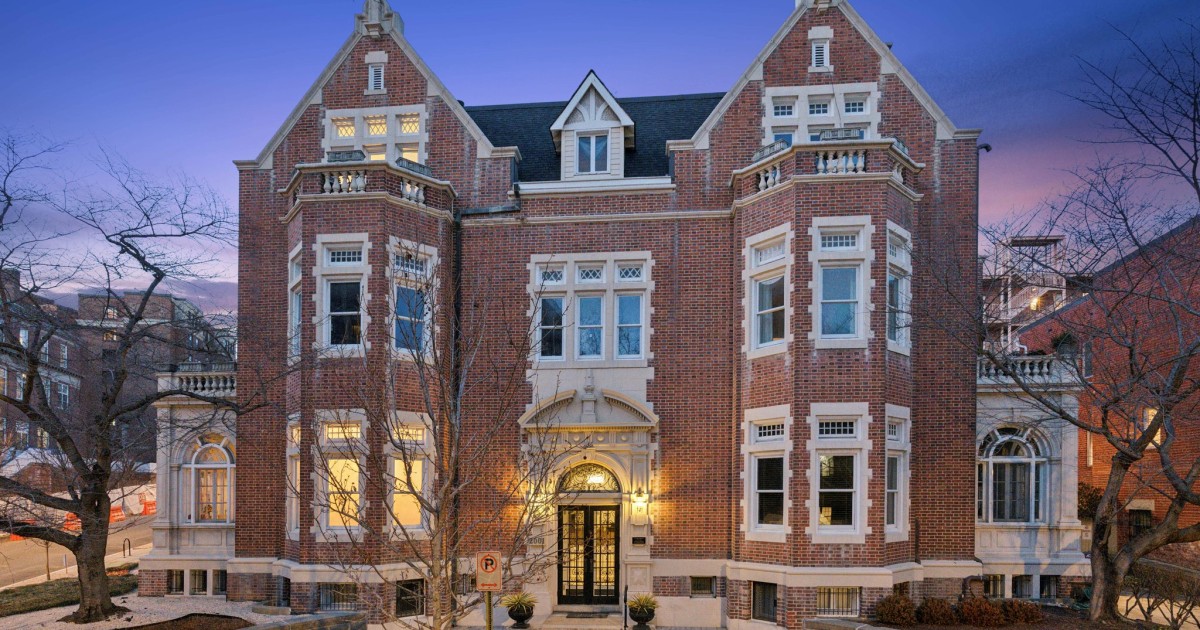
The transition of the Chinese diplomatic mission from the cramped, bug- confines of the Windsor Park Hotel to a purpose-built on International Place marked a definitive shift in Beijing's projection of power. By the late 1990s, the People's Republic of China required a physical footprint that matched its ascending economic status, rendering the retrofitted hotel on Connecticut Avenue, where diplomats reportedly banged on pots to drown out American listening devices, obsolete. The solution was a massive, 429, 000-square-foot complex, the largest foreign embassy in Washington upon its completion, designed not as an office as a statement of geopolitical permanence.
To execute this vision, the Ministry of Foreign Affairs bypassed state-run design institutes in favor of Pei Partnership Architects, a New York-based firm led by Chien Chung (C. C.) Pei and Li Chung (L. C.) Pei. Their father, the Pritzker Prize-winning modernist I. M. Pei, served as a consultant, lending the project immediate architectural legitimacy and a symbolic between East and West. The selection of the Peis signaled a deliberate rejection of "pagoda kitsch", the curved roofs and red columns that Westerners expected of Chinese architecture. Instead, the design team delivered a clear, geometric modernist structure clad in warm, beige-hued French limestone, a material chosen specifically to harmonize with the federal architecture of Washington, D. C., blending the communist mission into the aesthetic fabric of the American capital.
The construction process, yet, was defined by an intense paranoia that necessitated a bilateral treaty. In 2003, the United States and China signed a reciprocal agreement allowing each nation to use its own workforce for their respective new embassies in Beijing and Washington. This was not a labor dispute a counter-intelligence strategy. Beijing feared that American contractors would surveillance technology into the concrete and steel of the new chancery. Consequently, the project was executed by China Construction America, a subsidiary of the state-owned China State Construction Engineering Corporation (CSCEC). Hundreds of Chinese laborers were flown to Washington, housed in controlled environments, and bused to the site daily. These workers operated behind high fences, their interactions with the local population strictly limited, turning the construction site into a sovereign island long before the building opened.
The architectural layout reflects a "fusion of traditional philosophies and modernity," a phrase frequently found in press releases here implemented with rigid precision. The complex is divided into three distinct zones: a West Office Wing, an East Office Wing, and a central Entrance Pavilion. This tripartite arrangement allows for strict compartmentalization of functions, separating public consular services from the secure, classified operations of the chancery. The placement of the building adheres to principles of Feng Shui, with the main entrance facing south, an orientation historically reserved for the emperor to receive subjects and harness positive energy (qi). The angular, stone-clad forms create a heavy, impenetrable exterior, relieved only by the strategic use of glass in the atrium and skylights that filter natural light into the deep interior spaces.
| Architects | Pei Partnership Architects (C. C. Pei, L. C. Pei); I. M. Pei (Consultant) |
| Contractor | China Construction America (CSCEC) |
| Total Floor Area | ~429, 000 square feet (39, 900 square meters) |
| Exterior Material | French Limestone (Beige-hued) |
| Flooring Material | Granite (Imported from China) |
| Completion Date | July 2008 (Official Opening) |
| Location | 3505 International Place NW, Washington, D. C. |
Inside, the design prioritizes and intimidation over intimacy. The central atrium features a 50-foot ceiling, designed to dwarf the visitor. The interior finishes continue the exterior's limestone theme introduce granite flooring imported directly from China, ensuring that diplomats literally walk on Chinese soil, or at least Chinese stone. The vast lobby serves as a gallery for large- artworks, including pieces by contemporary ink painter Liu Dan, which attempt to soften the brutalist geometry with organic forms. Yet, the spatial logic remains hierarchical. The flow of movement is carefully choreographed, guiding visitors through screening zones and holding areas, while the upper levels of the office wings remain inaccessible to all cleared personnel.
The security architecture is woven into the aesthetic design. The setback from the street is significant, exceeding standard diplomatic security requirements to create a standoff distance against vehicle-borne explosives. The landscaping, frequently described as a "Chinese garden," functions as a perimeter buffer. Traditional rock formations and water features disguise blocks and surveillance lines. Unlike the previous Connecticut Avenue location, which sat exposed on a busy thoroughfare, the International Place site is a disguised as a museum. The window placements are calculated; narrow slits in sensitive areas prevent visual eavesdropping, while the glass curtain walls are reserved for the atrium and non-sensitive public gathering spaces.
When the facility officially opened in July 2008, just weeks before the Beijing Olympics, it represented a culmination of a decade-long diplomatic push. Foreign Minister Yang Jiechi presided over the ceremony, flanked by U. S. officials, marking the building as a "new landmark" in Sino-U. S. relations. The sheer size of the compound, occupying a significant plot in the International Chancery Center, physically demonstrated China's intent to rival the United States global influence. It dwarfed the nearby embassies of Israel, Singapore, and Bangladesh, asserting dominance in the diplomatic enclave. The Pei design succeeded in its dual mission: it provided a modern, sophisticated face for a rising superpower while concealing the hardened, paranoid operational core of the Chinese Communist Party's intelligence and diplomatic apparatus in the West.
The choice of French limestone over Chinese materials for the facade remains a point of architectural curiosity. While the granite floors were nationalistic imports, the exterior cladding was sourced from the same quarries that supplied the Louvre and the National Gallery of Art's East Building (another I. M. Pei project). This decision allowed the embassy to claim a visual kinship with Western institutions of high culture, camouflaging its function. It does not look like a foreign outpost; it looks like a permanent fixture of the Washington establishment. This architectural camouflage serves a strategic purpose, normalizing the Chinese presence in the capital while the imported labor and strict access controls maintained the site's integrity as a closed loop system, impervious to American intelligence penetration during its construction.
Building Fortification and Technical Security Infrastructure
The transition of the Chinese diplomatic mission from the porous, rented quarters of the late 19th century to the at 3505 International Place NW represents a fundamental shift in Beijing's method to physical and information security. For nearly a century, Qing and Republican envoys operated out of converted residential mansions, such as the "Big Brown House" on K Street and later the Twin Oaks estate. These structures offered zero resistance to modern surveillance. By 1973, when the Liaison Office opened at the Mayflower Hotel and later the Windsor Park Hotel, the facilities were widely understood to be compromised. American intelligence agencies had easy access to the structure's blueprints and telecommunications infrastructure. The Windsor Park site, a converted hotel at 2300 Connecticut Avenue, forced Chinese diplomats to assume every conversation was recorded. This vulnerability drove the aggressive fortification strategy that defined the construction of the current chancery.
The turning point came with the November 2003 bilateral agreement between the United States and China. This document, a binding reciprocal arrangement, permitted each nation to construct new embassy compounds in the other's capital using their own labor and materials. This legal framework was the primary method Beijing used to sanitize their new Washington headquarters from American signals intelligence (SIGINT). While the United States employed cleared American workers to build its embassy in Beijing to prevent Chinese bugs, Beijing mirrored the tactic in Washington with ruthless efficiency. The project was not an architectural endeavor; it was a counter-intelligence operation.
Construction of the I. M. Pei-designed chancery, which began in 2005, operated under a strict security cordon. The China State Construction Engineering Corporation (CSCEC) imported over 500 Chinese laborers to the site. These workers were housed in temporary barracks on the embassy grounds or in tightly controlled off-site housing, forbidden from interacting with the local population. This isolation served two purposes: it prevented American intelligence officers from recruiting assets among the construction crew, and it ensured that no unauthorized device could be slipped into the pouring of the concrete or the welding of the steel frame. Every bag of cement, every steel beam, and every pane of blast-proof glass was inspected by Chinese security officers. Much of the serious material was shipped directly from China in diplomatic pouches or sealed containers, bypassing U. S. customs inspection under the terms of the 2003 agreement.
The finished structure, opened in 2009, is a study in defensive architecture disguised as modernism. While the exterior features warm beige French limestone, chosen to blend with Washington's federal aesthetic, the internal skeleton is a hardened cage. The building sits set back from Van Ness Street, protected by a perimeter of bollards, anti-ram walls, and a hardened guardhouse. The Pei Partnership Architects designed the facility with distinct zones, separating public consular functions from the secure administrative wings. The "West Office Wing" and "East Office Wing" are connected by an entrance pavilion, yet internal access control creates a series of air-gapped compartments. The most sensitive areas, known as SCIFs (Sensitive Compartmented Information Facilities), are encased in copper shielding to create a Faraday cage effect, blocking incoming and outgoing electronic signals.
Technical security infrastructure on the roof of the chancery has drawn intense scrutiny from the FBI and the National Security Agency (NSA). The roofline is populated with various radomes, spherical weatherproof enclosures that protect antenna equipment. While standard for diplomatic missions to maintain independent communications with their home capital, the and positioning of the Chinese array suggest capabilities beyond simple diplomatic cables. Intelligence reports from 2018 through 2022 indicated that the equipment installed on the embassy roof, and chance in other diplomatic properties, possessed the capability to intercept microwave transmission signals. The location of the embassy at the International Chancery Center offers a strategic line of sight across Northwest D. C., theoretically allowing passive collection of signals from nearby federal buildings.
The security apparatus extends beyond the walls of the chancery. In 2022, federal investigators examined equipment capable of disrupting Department of Defense communications, specifically those related to U. S. Nuclear Command, Control, and Communications (NC3). While the Chinese Foreign Ministry dismissed these allegations as paranoia, the technical reality remains that the embassy's high ground position makes it an ideal platform for SIGINT collection. The FBI investigation into "Huawei equipment" atop cell towers near military bases frequently intersects with concerns about the embassy's central processing capabilities. The 2025 "Salt Typhoon" cyber-espionage campaign, which penetrated U. S. telecommunications wiretap systems, highlighted the integration of physical presence and digital reach. The embassy serves as the command node for this hybrid infrastructure, coordinating the human intelligence officers who operate under diplomatic cover.
Residential security also underwent a massive upgrade. The purchase and renovation of the apartment complex at 2301 S Street NW in the Kalorama neighborhood created a secondary. Known to locals for its blacked-out windows and intense camera coverage, this building houses embassy staff and, according to intelligence officials, officers from the Ministry of State Security (MSS). The renovation of this property followed the same paranoid as the chancery: imported labor, screened materials, and the removal of all previous wiring. It functions as a dormitory-style secure facility where staff movements are monitored to prevent defection or compromise. The proximity of this building to the residences of high-profile American political figures adds another to its surveillance utility.
By 2026, the embassy's defensive posture had evolved to address drone warfare and advanced electronic surveillance. Upgrades observed in late 2024 included the installation of likely anti-drone jamming arrays on the perimeter walls. The physical fortification is matched by an aggressive digital perimeter; the embassy's internal networks are air-gapped from the public internet, and staff are prohibited from bringing personal devices into secure zones. The evolution from the wooden floors of the Windsor Park Hotel to the limestone and steel bunker on International Place tracks perfectly with China's rise from a regional player to a global superpower. The building is no longer just a place of business; it is a forward operating base, designed to survive a total breakdown in bilateral relations.
| Era | Location | Security Status | Primary Threat |
|---|---|---|---|
| 1875, 1900 | Stewart Castle / Big Brown House | Zero Fortification | Mob violence, anti-Chinese riots |
| 1973, 2008 | Windsor Park Hotel (2300 Conn Ave) | Compromised | US Intelligence bugs, audio surveillance |
| 2009, Present | 3505 International Place NW | Hardened | Electronic penetration, laser eavesdropping |
| 2020, 2026 | Chancery & Kalorama Residence | Offensive/Defensive Node | Cyber warfare, drone surveillance, SIGINT |
Liu Xiaobo Plaza Designation and Congressional Renaming Efforts

| Target Embassy | Proposed Name | Year Proposed | Legislative Vehicle | Outcome | Jurisdiction |
|---|---|---|---|---|---|
| Soviet Union | Andrei Sakharov Plaza | 1984 | H. R. Con. Res. | Successful. Signs installed. | DC Council (City St.) |
| China | Liu Xiaobo Plaza | 2014-2016 | S. 2451 | Failed. Passed Senate, blocked by WH. | State Dept (Federal Enclave) |
| Russia | Boris Nemtsov Plaza | 2018 | Bill 22-539 | Successful. Signs installed. | DC Council (City St.) |
| Saudi Arabia | Jamal Khashoggi Way | 2021 | Bill 24-0022 | Successful. Signs installed. | DC Council (City St.) |
| China | Li Wenliang Plaza | 2020-2026 | S. 3678 | Stalled. Reintroduced not enacted. | State Dept (Federal Enclave) |
Espionage Allegations and Microwave Transmission Concerns
The strategic placement of the Embassy of the People's Republic of China at 3505 International Place NW represents more than a diplomatic footprint; it occupies a geographical designed for surveillance. Situated in the Van Ness neighborhood, the chancery sits approximately 350 feet above sea level, one of the highest elevations in Washington, D. C. This topographical advantage provides a direct line of sight to the U. S. Capitol, the White House, and the State Department. Intelligence officials have long scrutinized this location, noting that the elevation is not aesthetic functional. It enables the interception of signals that rely on line-of-sight transmission, particularly microwave communications used by American federal agencies. The physical structure, designed by I. M. Pei and completed in 2008, functions as a massive sensor platform, its rooftop bristling with antennas and satellite dishes that have drawn the attention of the FBI and the National Security Agency for nearly two decades.
Construction of the current chancery was defined by a level of paranoia that set the tone for future espionage allegations. During the building phase in the mid-2000s, Beijing forbade American contractors from entering the site. The Chinese government imported its own labor force, housing workers in on-site dormitories to ensure no U. S. intelligence devices were planted within the concrete or steel. This total lockdown mirrored the construction of the U. S. embassy in Beijing, creating a reciprocal environment of distrust. Yet, the primary concern for U. S. counterintelligence was not what was buried in the walls, what was mounted on the roof. By 2010, the visible array of receivers suggested a capability to harvest vast amounts of digital and analog data from the surrounding city, turning the diplomatic outpost into a vacuum for unencrypted, and chance encrypted, government communications.
The most serious specific allegation regarding microwave transmission and interception emerged in 2017, involving a project known as the National China Garden. The proposal, initially welcomed by local officials as a cultural gift, planned to erect a $100 million classical Chinese garden at the National Arboretum. The centerpiece was to be a 70-foot white pagoda. The Arboretum site sits on a ridge nearly 400 feet high, even taller than the embassy complex. An FBI investigation, kept classified until reports surfaced in 2022, determined that the pagoda would have been strategically placed to intercept microwave signals. Microwave transmissions, unlike radio waves that bounce off the ionosphere, travel in straight lines. They are used heavily for secure data links between intelligence hubs. The FBI concluded that the pagoda could conceal sophisticated equipment capable of intercepting these beams, tapping into the nervous system of Washington's classified communications grid. The project was quietly killed by U. S. officials, who judged the risk to national security as too high.
Concerns over active microwave transmission, the use of directed energy as a weapon or harassment tool, have also plagued the diplomatic relationship, though evidence remains classified or inconclusive. Following the 2016-2018 incidents where U. S. diplomats in Havana and Guangzhou reported anomalous health symptoms consistent with pulsed radiofrequency energy, suspicion turned toward Chinese capabilities. While no public evidence directly implicates the Washington embassy in generating such attacks within D. C., the presence of high-powered transmission equipment on the chancery roof keeps the question alive. In 2025 and 2026, reports of China's military developing compact high-power microwave (HPM) weapons, such as the "Hurricane 3000" and "TPG1000Cs" systems designed to disable electronics, have intensified the scrutiny. The fear is that the same technology used to jam satellites or drone swarms could be miniaturized and deployed within the diplomatic compound to disrupt local electronics or harm personnel, although the primary utility of the D. C. site remains signals intelligence collection.
The espionage threat manifested physically in September 2019, marking a turning point in U. S.-China diplomatic relations. Two officials from the Chinese Embassy, accompanied by their wives, drove onto a sensitive military installation in Norfolk, Virginia. The base houses Special Operations forces. When stopped at the gate, the diplomats were instructed to turn around. Instead, they proceeded onto the base, evading military personnel until fire trucks blocked their route. The officials claimed they were on a sightseeing tour and had misunderstood the English instructions. U. S. authorities rejected this explanation, assessing the intrusion as a test of base security. The State Department expelled the two diplomats, one of whom was identified as an undercover intelligence officer. This was the expulsion of Chinese diplomats from the United States in over thirty years, signaling a shift from passive surveillance to active probing of American military defenses.
The 2019 Norfolk incident and the 2017 Pagoda plot illustrate a multi- espionage strategy centered on the Washington diplomatic presence. The embassy serves as the command node for these operations. In 2020, the closure of the Chinese Consulate in Houston was justified by U. S. officials as a necessary step to a "hub of spying and intellectual property theft." Intelligence sources indicated that the Houston closure was a warning shot, implying that the Washington embassy was engaging in similar, if not more extensive, activities. The difference lies in the diplomatic immunity afforded to the main embassy, which protects the facility from the type of raid conducted in Houston. This legal shield allows the Van Ness complex to operate its rooftop collection systems with relative impunity, provided the personnel do not physically breach U. S. military sites.
Technical analysis of the embassy's signal interception capabilities focuses on the "collection basket" effect. Because the embassy sits on a ridge, it is bathed in the electromagnetic emissions of the city. Cell phone traffic, police radios, and data links pass through the embassy's physical space. While modern encryption protects the content of these messages, the metadata, who is calling whom and when, provides a rich intelligence picture. The FBI has warned that even encrypted microwave signals can be recorded and stored for later decryption as computing power increases. This "store and decrypt later" strategy makes the high-ground position of the embassy a long-term asset for Beijing. The 2022 about the Arboretum plot confirmed that Chinese intelligence actively seeks to expand this high-ground advantage beyond the embassy walls, targeting other elevated sites in the Capital region to triangulate and capture a complete picture of federal communications.
By 2026, the discourse surrounding the embassy had shifted from architectural criticism to active containment. The FBI and counterintelligence agencies operate under the assumption that the Van Ness compound is a hostile collection platform. Local cellular networks in the vicinity are monitored for anomalies, and federal employees are routinely briefed on the risks of using wireless devices near the International Place enclave. The embassy stands as a silent, static participant in the daily electronic warfare of Washington, its white stone exterior masking a relentless digital absorption of the capital's secrets.
Perimeter Protests and Civil Disobedience Incidents

The sidewalk bordering 3505 International Place NW functions as one of the most contested strips of concrete in the District of Columbia. While the embassy compound itself operates under the Vienna Convention's protections of diplomatic immunity, the pavement immediately outside falls under the jurisdiction of U. S. local and federal law, creating a permanent friction point between the Chinese Communist Party's desire for control and American Amendment protections. For decades, this perimeter has served as a proxy battlefield where dissidents, exiles, and activists wage a relentless psychological and visual war against the diplomatic mission.
The most enduring fixture of this perimeter conflict is the Falun Gong presence. Since the crackdown on the spiritual practice began in China in July 1999, practitioners have maintained a near-permanent vigil outside the embassy. Unlike sporadic rallies, this operation resembles a shift-based occupation. Activists arrive daily, frequently in the early morning, to erect a phalanx of yellow banners and billboards facing the embassy's main entrance and the windows of diplomatic offices. These displays, featuring graphic images of alleged torture and organ harvesting, are designed to confront embassy staff and visitors entering the compound. The consistency of this protest is statistically anomalous in Washington's protest culture; it has outlasted four U. S. presidencies and continues unabated into 2026. The practitioners use a method of silent meditation combined with amplified audio tracks playing looped messages in Mandarin, creating a sonic environment that penetrates the embassy's perimeter defenses.
Before the move to the International Place, the previous legation at 2300 Connecticut Avenue NW was the site of the single largest mobilization in the mission's history. In the immediate aftermath of the Tiananmen Square crackdown in June 1989, the embassy became a focal point for Chinese students studying in the United States. On October 1, 1989, approximately 6, 000 demonstrators marched to the Connecticut Avenue location. This event marked a structural shift in the diaspora's relationship with the embassy; the building transitioned from a consular resource to a symbol of a hostile regime. The sheer volume of protesters in 1989 forced the Metropolitan Police Department to cordon off entire city blocks, a logistical that would not be repeated until the anti-COVID lockdown protests of the early 2020s.
The Tibetan independence movement maintains a rigid calendar of dissent centered on March 10, the anniversary of the 1959 Tibetan Uprising. These annual convergences frequently involve acts of civil disobedience designed to trigger arrest, thereby generating media records. In February 2002, two students from the University of Massachusetts, John Flajnik and Matt Kozuch, scaled the embassy perimeter in a direct breach of security to hang a "Free Tibet" banner. They were arrested by the Secret Service, illustrating the thin line between protected speech and federal trespassing charges. By 2018, the tactics shifted from scaling walls to bureaucratic confrontation; activists attempted to deliver a box of protest letters directly to the ambassador. When embassy guards refused the package, the rejection itself became the media narrative, documenting the mission's refusal to engage with constituent grievances.
In the 2010s, the conflict moved from physical presence to municipal zoning warfare. A coalition of human rights groups and U. S. legislators, led by Senator Ted Cruz, attempted to weaponize the embassy's own address against it. The legislative push sought to rename the stretch of International Place in front of the embassy as "Liu Xiaobo Plaza," after the imprisoned Nobel Peace Prize laureate. The strategic intent was to force the Chinese government to print the dissident's name on all official correspondence, business cards, and invitations. The Senate passed the bill in February 2016, provoking a furious response from Beijing, which threatened "serious consequences" for diplomatic relations. Although the Obama administration indicated a veto threat to preserve executive control over foreign policy, the initiative successfully generated months of headlines linking the embassy to political imprisonment. In 2020, local DC Council members revived similar signage efforts, ensuring that even if the postal address remained unchanged, the visual geography carried the name of the state's enemies.
Physical vandalism has occasionally breached the perimeter's sterility. In July 2013, a graffitist managed to tag the embassy's entrance pillars with the Chinese character "chai" (拆), meaning "demolish." This character is ubiquitous in China, spray-painted by authorities on buildings scheduled for destruction to make way for development. By marking the embassy with this specific symbol, the vandal inverted the state's own bureaucratic language, ironically designating the diplomatic outpost for removal. Just weeks later, in August 2013, a Chinese national named Jiamei Tian splattered green paint on the embassy, as well as on the National Cathedral and the Lincoln Memorial. These incidents exposed gaps in the Uniformed Division's surveillance net, proving that even with high-tech camera systems, the limestone exterior remained to low-tech direct action.
The 2020s introduced a new phase of perimeter conflict defined by accusations of genocide and the transnational repression of the Uyghur population. Following the U. S. State Department's determination regarding the treatment of Uyghurs in Xinjiang, protests outside the embassy became more frequent and visually aggressive. In 2022, the "Where is my family?" demonstrations featured ethnic Uyghurs holding photographs of missing relatives, directly challenging the embassy's consular section to provide proof of life. This era also saw the use of high-lumen projectors to cast images of the East Turkestan flag and messages like "End the Genocide" directly onto the embassy's facade at night, bypassing physical blocks with light. The embassy responded by installing brighter floodlights to wash out the projections, resulting in a nightly photon war between activists on the sidewalk and security staff inside the compound.
The following table summarizes significant security breaches and civil disobedience incidents at the embassy locations:
| Date | Incident Type | Details | Outcome |
|---|---|---|---|
| Oct 1, 1989 | Mass Mobilization | 6, 000 protesters march on 2300 Connecticut Ave following Tiananmen crackdown. | Traffic shutdowns; established precedent for diaspora dissent. |
| Feb 2002 | Perimeter Breach | Two activists the fence to hang "Free Tibet" banners. | Arrested by Secret Service; charged with unlawful entry. |
| July 2013 | Vandalism (Graffiti) | Pillars tagged with "Chai" (Demolish) character. | Rapid removal by embassy staff; images went viral on Weibo. |
| Aug 2013 | Vandalism (Paint) | Green paint splattered on embassy exterior by Jiamei Tian. | Suspect arrested later at National Cathedral; highlighted security gaps. |
| Feb 2016 | Legislative Warfare | Senate passes bill to rename street "Liu Xiaobo Plaza". | Bill stalled after veto threat; symbolic victory for activists. |
| Nov 2022 | Solidarity Protest | "White Paper" protests echoing unrest within China over Zero-COVID. | Rare alignment of mainland students and traditional dissident groups. |
As of early 2026, the perimeter remains a highly charged zone. The embassy has fortified its defenses with higher fences and more aggressive camera coverage, yet the sidewalk remains public property. The has evolved into a permanent standoff where the embassy's attempts to project power are continuously undercut by the visual reminders of domestic repression camped on its doorstep. The protests have become part of the embassy's operational reality, a daily tax on its diplomatic legitimacy that no amount of concrete or surveillance can fully eliminate.
Diplomatic Personnel Restrictions and Travel Radius Limits
For the majority of the Chinese diplomatic presence in Washington, from the Qing Dynasty legation established in 1875 to the early 21st century, envoys enjoyed a freedom of movement that stood in clear contrast to the social and legal exclusions facing Chinese immigrants. While the Chinese Exclusion Act of 1882 barred laborers and denied citizenship to Chinese nationals, Qing ministers like Chen Lanbin and Wu Tingfang traveled extensively across the United States without federal travel radius limits. They visited San Francisco, New York, and even Cuba to inspect the conditions of Chinese laborers, their diplomatic immunity shielding them from the localized segregation laws that restricted their countrymen. This era of unrestricted diplomatic travel allowed the legation to cultivate ties with American elites far beyond the capital, a liberty that would remain largely intact even during the tense years of the Liaison Office (1973, 1979).
The operational environment shifted radically in October 2019, marking the end of this century-long period of open access. The U. S. State Department, citing a absence of reciprocity, imposed a mandatory notification method on all accredited diplomats from the People's Republic of China. Under these rules, Chinese personnel are required to notify the State Department's Office of Foreign Missions (OFM) in advance of any official meetings with state, local, and municipal officials, as well as with educational and research institutions. This measure was designed to map the extent of Chinese influence operations, specifically targeting the United Front Work Department's efforts to cultivate relationships with sub-national leaders and universities, sectors previously unmonitored by federal authorities.
Tensions escalated significantly in September 2020, when Secretary of State Mike Pompeo transformed the notification requirement into a strict permission-based system for senior envoys. The new directive mandated that senior Chinese diplomats obtain explicit approval, not just provide notice, before visiting any U. S. university campus or meeting with local government officials. This policy severed the direct line between the Embassy and American academia, a channel Beijing had used for decades to facilitate research partnerships and student exchanges. The State Department justified this as a direct response to the "unclear approval processes" American diplomats face in China, where access to local officials and universities is frequently denied or heavily chaperoned.
Simultaneously, the 2020 directive imposed a cap on cultural diplomacy, a tool heavily used by the Embassy to project soft power. Any cultural event hosted by the Chinese Embassy or its consulates outside of their mission grounds with an audience exceeding 50 people requires specific State Department approval. This restriction struck at the heart of the Embassy's community outreach, complicating the organization of galas, lunar new year celebrations, and large- public exhibitions that had previously served as venues for gathering intelligence and influencing public opinion.
The enforcement of these restrictions falls under the jurisdiction of the Office of Foreign Missions (OFM), which maintains a "accreditation and travel" tracking system. Unlike the Cold War-era restrictions on Soviet diplomats, who were physically barred from traveling beyond a 25-mile radius of Washington without permission, the restrictions on Chinese personnel are functional rather than purely geographical. A Chinese diplomat can physically drive to Virginia or Maryland, yet they cannot officially engage with a mayor or a university dean without federal oversight. This distinction reflects a modern understanding of influence; the danger is viewed not in the movement of the person, in the nature of the meeting.
Even with the change in U. S. administrations in 2021, these restrictions have hardened into a permanent baseline of bilateral relations. As of 2026, the notification and approval remain in full effect, serving as a primary use point in negotiations over consular access. The Chinese Embassy frequently cites these rules as a "gross violation" of the Vienna Convention, yet the U. S. maintains that they are strictly reciprocal measures that only be lifted when American diplomats are granted equivalent freedom to meet with provincial leaders and university staff in China without Ministry of Foreign Affairs minders.
| Date Implemented | Restriction Type | Targeted Activity | Requirement |
|---|---|---|---|
| October 16, 2019 | Notification | Meetings with state/local officials, educational institutions, research labs. | Advance notice to State Dept (OFM). No permission needed. |
| September 2, 2020 | Permission (Senior Diplomats) | University campus visits; meetings with local government officials. | Explicit approval required from State Dept. |
| September 2, 2020 | Permission (Events) | Cultural events outside mission grounds with>50 attendees. | Explicit approval required. |
| 2021, 2026 | All above activities. | Continued enforcement as use for reciprocity. |
The psychological impact of these measures on the Embassy workforce is substantial. Prior to 2019, Chinese diplomats operated with a high degree of autonomy, building personal networks with state governors and university presidents that frequently bypassed Washington's strategic messaging. The current regime forces every interaction into the federal, creating a "chilling effect" where local American officials are less likely to accept meetings, knowing their names be logged in a State Department database. This has centralized the management of the U. S.-China relationship back to the federal level, the sub-national diplomacy strategy that Beijing had prioritized for decades.
2020s Administrative Adjustments and Security Zone Expansions
The operational posture of the Embassy of the People's Republic of China underwent a radical hardening beginning in 2020, shifting from a strategy of cautious engagement to one of defensive fortification and aggressive intelligence consolidation. This transition began not with a diplomatic summit, with a quiet expulsion. In late 2019, reported widely in 2020, the U. S. government expelled two Chinese embassy officials after they drove onto a sensitive military base in Norfolk, Virginia, home to Special Operations forces including SEAL Team 6. The officials, who claimed they were lost tourists, ignored armed guards and only stopped when fire trucks blocked their route. This incident, the expulsion of Chinese diplomats for suspected espionage in over thirty years, set the trajectory for the decade. It signaled that the embassy at 3505 International Place NW was no longer viewed as a diplomatic outpost, as a forward operating base for intelligence collection within the American capital.
The strategic significance of the embassy's physical location at Van Ness came under renewed scrutiny by the FBI during this period. Federal investigators determined that the compound's position on one of the highest points in Washington, D. C., provided a direct line of sight to the White House and the Capitol, making it an ideal platform for signals intelligence (SIGINT) interception. An FBI investigation, the details of which surfaced in 2022, focused on Huawei equipment installed on cellular towers in the Midwest, also highlighted the embassy's own rooftop capabilities. Intelligence officials feared the facility possessed the technology to capture microwave transmission signals, chance enabling the interception of sensitive communications or even the disruption of U. S. nuclear command and control networks. This realization forced the U. S. government to quietly harden its own communications infrastructure in the surrounding area, turning the Van Ness corridor into an invisible electronic battlefield.
Administrative tensions escalated dramatically in July 2020 following the forced closure of the Chinese Consulate in Houston. The State Department ordered the shutdown over allegations of massive economic espionage and visa fraud, prompting a scramble within the Washington embassy to absorb displaced intelligence officers and diplomatic staff. The closure of Houston centralized Chinese intelligence operations in the United States, placing a heavier load on the D. C. mission to coordinate activities previously managed from Texas. This consolidation coincided with a strict internal lockdown within the embassy compound due to the COVID-19 pandemic. For nearly three years, the mission operated under a "Zero COVID" mandate that mirrored Beijing's domestic policies, with staff largely confined to the compound's residential blocks, creating a hermetically sealed environment that further reduced opportunities for casual diplomatic observation by U. S. officials.
The ambassadorship itself became a revolving door reflecting the volatile political climate in Beijing. Long-serving Ambassador Cui Tiankai, a figure of the old engagement era, departed in June 2021. He was succeeded by Qin Gang, a close ally of President Xi Jinping and a proponent of "Wolf Warrior" diplomacy who attempted to soften his image through public appearances at sporting events and media interviews. Qin's tenure was short-lived; he was recalled to Beijing in January 2023 to serve as Foreign Minister, only to be purged and disappear from public view months later. His successor, Xie Feng, arrived in May 2023, tasked with managing a relationship in freefall. Xie's arrival coincided with a period of minimal high-level contact, forcing the embassy to operate in a defensive crouch, primarily issuing demarches and managing emergency communications rather than advancing new bilateral initiatives.
The streets outside the embassy transformed into a permanent stage for political theater and legislative warfare. In the wake of the pandemic, U. S. lawmakers, including Senators Marco Rubio and Tom Cotton, introduced legislation to rename the street in front of the embassy "Li Wenliang Plaza," after the Wuhan doctor who was silenced for warning about the initial coronavirus outbreak. While the postal address did not officially change, the proposal forced the embassy to expend political capital lobbying against the symbolic humiliation. Simultaneously, the physical perimeter became a focal point for the "White Paper" protests in November 2022. Hundreds of demonstrators, including Uyghurs, Tibetans, and Chinese students, gathered at the gates holding blank sheets of paper to protest Beijing's draconian lockdown measures. The embassy responded by reinforcing its perimeter defenses, installing additional surveillance cameras, and reportedly using high-decibel speakers to drown out chants, turning the diplomatic enclave into a zone of active confrontation.
The diplomatic freeze reached its nadir in February 2023 with the transit of a Chinese high-altitude surveillance balloon across the continental United States. The embassy became the primary conduit for Washington's fury, receiving formal protests from the State Department while maintaining Beijing's narrative that the craft was a wayward weather balloon. The incident severed the few remaining lines of cooperative dialogue, leading to the cancellation of Secretary of State Antony Blinken's planned trip to Beijing. Inside the embassy, the mood shifted to damage control, with diplomats facing restricted access to U. S. officials and a hostile media environment. The well into 2024, as the U. S. administration tightened visa restrictions for Chinese party officials and increased scrutiny on the embassy's interactions with American universities and local governments.
By 2025 and early 2026, the conflict had migrated from the physical to the digital domain. The FBI and cybersecurity agencies uncovered a massive state-sponsored hacking campaign, dubbed "Salt Typhoon," which penetrated U. S. telecommunications infrastructure to target the phone lines of senior U. S. officials. In March 2026, the FBI revealed it was investigating suspicious cyber activities on its own sensitive networks used to manage wiretaps, a breach linked to the broader Chinese cyber-espionage apparatus. The embassy in Washington was implicated not as the direct source of the hacks, as the political shield for the Ministry of State Security operations, issuing denials and accusing the U. S. of fabricating evidence. This digital siege mentality was reflected in the reintroduction of the "Embassy Construction Integrity Act" in Congress, a bill designed to block Chinese state-owned enterprises from any involvement in U. S. diplomatic construction projects globally, further isolating the mission.
As of March 2026, the Embassy of China in Washington stands as a hardened, physically imposing diplomatically. The open receptions and cultural exchanges that characterized the early 2000s have, replaced by a grim routine of mutual accusations and security countermeasures. The compound at 3505 International Place NW, once celebrated as a masterpiece of architectural fusion by I. M. Pei, functions as a high-tech watchtower in a new Cold War, its limestone walls concealing a mission focused less on diplomacy and more on survival and strategic competition.
| Year | Event Category | Details |
|---|---|---|
| 2020 | Espionage / Security | Expulsion of two diplomats for intruding on Norfolk naval base; Closure of Houston Consulate forces intelligence consolidation in DC. |
| 2021 | Diplomatic Personnel | Ambassador Cui Tiankai departs; Qin Gang arrives (July) amidst rising tensions. |
| 2022 | Civil Unrest | "White Paper" protests erupt outside the embassy; demonstrators demand end to Zero COVID policy. |
| 2022 | Intelligence | FBI reports surface regarding Huawei equipment near the embassy capable of disrupting nuclear command signals. |
| 2023 | emergency | Surveillance Balloon incident freezes relations; Qin Gang recalled and purged; Xie Feng arrives (May). |
| 2024 | Cyber Warfare | "Salt Typhoon" hacks revealed; US telecom networks compromised; Embassy problem denials. |
| 2025 | Legislation | Reintroduction of "Embassy Construction Integrity Act" to curb Chinese state-owned construction influence. |
| 2026 | Cyber Security | FBI investigates breach of wiretap management systems (March); Embassy remains under high surveillance. |