
Founding Mandate and Cantonal Subsidies
The Geneva Press Club (Club Suisse de la Presse or CSP) presents itself as a bastion of free expression, yet its structural reality reveals a dependency on state largesse that complicates its claim to independence. Founded on October 22, 1997, the CSP was not an organic uprising of journalists a calculated creation of the Canton of Geneva, the City of Geneva, and private banking interests. Its founding director, Guy Mettan, led the organization for 22 years, shaping it into a physical manifestation of "International Geneva", the brand the Swiss government aggressively markets to the world.
The organization's financial lifeline is tethered directly to the public treasury. While the Club collects membership fees from media organizations and freelancers, these revenues fail to cover the operational costs of its prime real estate and staff. The Canton of Geneva and the City of Geneva provide annual subsidies that have historically constituted of the Club's budget, which hovered around 600, 000 CHF during the late 2010s. In 2017, the fragility of this model was exposed when the Cantonal Finance Commission voted to slash the Club's 100, 000 CHF subsidy. This move was not a mere austerity measure a political retaliation against Mettan's editorial decisions, proving that the Club's survival rests on maintaining the favor of its political patrons.
The official mandate of the CSP is to welcome foreign journalists passing through Geneva and to facilitate exchange between the international community and the Swiss press. In practice, this mandate serves a dual purpose: it assists reporters, it also functions as a soft-power instrument for the Swiss Confederation. By providing a venue for press conferences and networking, the Club ensures that the "Geneva" brand remains central to global diplomatic discourse. This creates an inherent conflict; the Club is tasked with serious journalism while simultaneously serving as a PR vehicle for the host state that pays its bills.
To understand the CSP's position, one must examine the historical terrain it occupies. Geneva has marketed itself as a sanctuary for the press since the 18th century, when figures like Voltaire and Rousseau used the city's printing presses to circumvent French censorship. The CSP attempts to institutionalize this legacy, capitalizing on the presence of the United Nations and hundreds of NGOs. Yet, unlike the coffee houses of the Enlightenment, the CSP is a formalized institution where the boundaries of "free speech" are frequently tested against diplomatic neutrality. The state funds the Club to promote Geneva as a neutral ground, when the Club's activities irritate diplomatic partners, that funding becomes a lever of control.
Guy Mettan's tenure (1997, 2019) defined the Club's identity. A journalist and politician (CVP/PDC), Mettan ran the CSP with significant autonomy until his geopolitical stances began to clash with the "neutrality" preferred by his funders. His decision to host a 2017 panel criticizing the "White Helmets" (Syrian Civil Defense) and featuring controversial figures triggered a meltdown. Reporters Without Borders (RSF) severed ties with the Club in protest, and the Canton threatened to pull the plug on funding. This episode demonstrated that the "Founding Mandate" of open debate is conditional; it applies only so long as it does not embarrass the Swiss government or its Western allies.
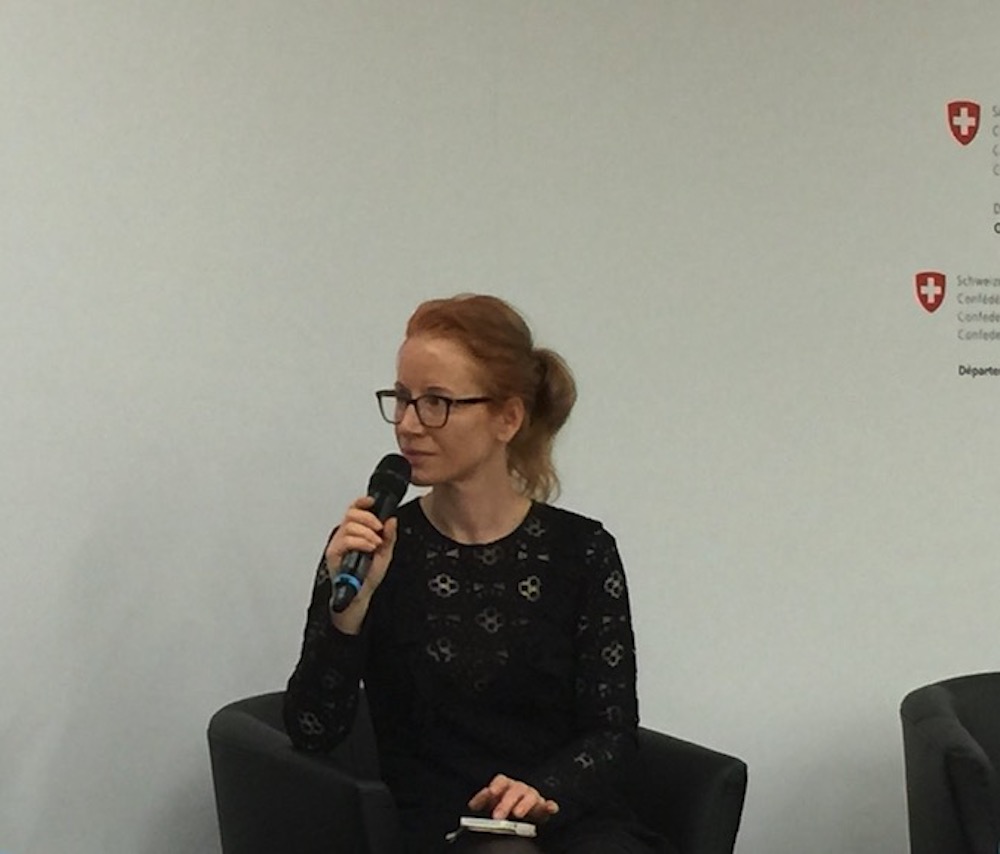
Following Mettan's departure in 2019, the Club entered a period of instability. Pierre Ruetschi, former editor-in-chief of the Tribune de Genève, took the helm with a mission to restore credibility and smooth over relations with the Canton. His tenure was short, ending in 2023. He was succeeded by Isabelle Falconnier, who attempted to modernize the Club's operations and moved its headquarters to the Domaine de Penthes. Even with these efforts, the structural reliance on public funds remained. Falconnier announced her resignation September 2025, leaving the organization facing 2026 with a leadership vacuum and renewed questions about its relevance in a digital era where physical press clubs are becoming anachronisms.
| Period | Director | Key Event / Status | State Funding Status |
|---|---|---|---|
| 1997, 2017 | Guy Mettan | Founding; Establishment of "International Geneva" brand. | Stable; Unquestioned support. |
| 2017, 2019 | Guy Mettan | White Helmets controversy; RSF exit. | Threatened; 100k CHF cut proposed. |
| 2019, 2023 | Pierre Ruetschi | Post-Mettan restructuring; Pandemic operations. | Restored scrutinized. |
| 2023, 2025 | Isabelle Falconnier | Move to Domaine de Penthes; Modernization attempts. | Conditional on "relevance". |
| 2026, Present | Vacant / Interim | Search for new direction; Identity emergency. | Under review. |
The financial mechanics of the CSP reveal a transfer of wealth from the taxpayer to a select group of media professionals and diplomats. While the Club frames its subsidies as support for "press freedom," the data suggests the funds primarily maintain a venue for diplomatic theater. The 2017 budget dispute showed that the Canton views the subsidy not as a grant for free speech, as a service contract for reputation management. When the service provided (promoting Geneva) was compromised by controversy, the payment was withheld. This transactional relationship undermines the Club's claim to be an independent arbiter of information.
As of March 2026, the Geneva Press Club stands at a crossroads. The departure of Falconnier and the lingering shadow of past controversies have left the institution searching for a purpose beyond mere survival. The Canton continues to provide funds, the "blank check" era is over. The Club must justify its existence not just as a historical artifact of the 1990s, as a functional entity that delivers value to the taxpayer, a metric that is increasingly difficult to quantify in a world where digital platforms have rendered physical press centers largely obsolete.
Architectural History of La Pastorale Estate

| Period | Key Event / Phase | Architect / Actor | Details |
|---|---|---|---|
| c. 1710 | Estate Formation | Jean-Alphonse Turrettini | Establishment of the original rural domain, later passing to the Budé family. |
| 1831, 1836 | Construction of Villa | Marc-François Brolliet | Construction of the Neo-classical Maison de Maître for Eugène de Budé. |
| 1952 | Partition of Budé Lands | State of Geneva | Sale of the surrounding Budé estate for housing; La Pastorale remains private. |
| 1955 | Diplomatic Residence | Soviet Delegation | Nikita Khrushchev resides at the villa during the Geneva Summit. |
| c. 1995 | State Acquisition | State of Geneva | Purchase of La Pastorale to serve the International Geneva mandate. |
| 1997 | Major Restoration | Urs Tschumi & François Dugerdil | Conversion of the villa for the Geneva Press Club and CAGI. |
| 2011 | Energy Renovation | State of Geneva | Thermal upgrades to the "Le Bucher" dependency. |
| 2021 | Modernization | Lopreno Architectes | Renovation of reception infrastructure, signage, and interior facilities. |
Governance Structure and Executive Board Composition
Table: Geneva Press Club Governance & Leadership (2026)
| Role | Name | Affiliation / Background | Significance |
|---|---|---|---|
| President | Frédéric Lelièvre | Editor-in-Chief, L'Agefi | Represents the financial press and economic establishment. |
| Vice-President | Christophe Lamps | Partner, Group | Represents the PR and lobbying industry; chance conflict of interest. |
| Executive Director | Géraldine Savary | Former Councillor of States (SP) | Represents political integration; shift from journalist-led to politician-led management. |
| Founding Member | Canton of Geneva | Public Authority | Provides core subsidies; holds ex-officio influence. |
| Founding Member | Geneva Private Bankers | Financial Association | Ensures the Club remains aligned with Geneva's financial center interests. |
The "Founding Members" enjoy privileged status in the statutes. Unlike ordinary members who can be expelled, the founding public institutions and the bankers' association are baked into the Club's DNA. This unshakeable tenure ensures that no matter how the General Assembly votes, the Club cannot drift too far from the strategic imperatives of the local government and the financial sector. The governance model is not designed for adversarial journalism; it is designed for consensus, diplomatic reception, and the promotion of Geneva as a global host city.
The Guy Mettan Directorship Era (1998, 2019)
| Date | Event / Incident | Key Players | Consequence |
|---|---|---|---|
| Feb 2017 | Order of Friendship Award | Vladimir Putin, Guy Mettan | Accusations of conflict of interest; reputational damage. |
| Nov 2017 | "White Helmets" Panel | Vanessa Beeley, RSF | RSF resigns from the Club; global media backlash. |
| Dec 2017 | Budget Vote | Grand Council of Geneva | Commission votes to cut 100, 000 CHF subsidy (later debated). |
| 2019 | Leadership Change | Guy Mettan, Pierre Ruetschi | Mettan exits; Club pivots to restore "neutrality." |
Platforming Controversial Regimes and Non-State Actors
In November 2017, the Geneva Press Club (Club Suisse de la Presse) ignited an international dispute by hosting a panel titled "The White Helmets: Fact or Fantasy?" The event featured speakers who accused the Syrian volunteer rescue group of being a terrorist front and staging chemical attacks. Reporters Without Borders (RSF) and The Syria Campaign condemned the session as a vehicle for Russian disinformation rather than legitimate journalism. Guy Mettan, the Club's executive director at the time and a recipient of the Russian Order of Friendship, defended the event as a matter of free expression. This incident caused the Swiss Federal Department of Foreign Affairs to distance itself from the Club, stating that the venue did not represent the official views of the Swiss government.
The Club also faces frequent pressure from the Chinese diplomatic mission in Geneva regarding its platforming of Tibetan and Uyghur activists. Beijing views these events as direct attacks on its sovereignty and has attempted to block panels featuring the Tibet Bureau or the World Uyghur Congress. Even with these objections, the Club has hosted the "Geneva Forum," where dissidents document mass detention and cultural erasure in Xinjiang and Tibet. The Chinese government dismisses these reports as "misleading information," creating a recurring diplomatic standoff between Swiss local authorities, who fund the Club, and Chinese officials who demand censorship of what they term anti-China separatism.
European politics have similarly spilled into the Club's halls, most notably regarding the Catalan independence movement. Following the 2017 referendum in Catalonia, the Club provided a venue for separatist leaders, drawing sharp rebukes from Madrid. The Spanish ambassador to Switzerland, Aurora Díaz-Rato, characterized the separatist narrative presented in Geneva as "fake news" and asserted that the only sovereign entity was the Spanish people. This platforming of fugitives and dissidents places the Canton of Geneva, a primary funder of the Club, in the difficult position of subsidizing a stage that allied nations view as hostile to their internal stability.
Middle Eastern governments have also targeted the Club for hosting opposition figures. In 2015, a conference organized by the Bahraini opposition at the Club was labeled by Bahraini MP Jamal Buhassan as a "failure" that served an "Iranian agenda." Human rights defenders like Nabeel Rajab have been the subject of events at the venue while imprisoned in Bahrain, with speakers detailing torture and repression by the Al Khalifa monarchy. These sessions frequently provoke accusations from Bahraini state media that the Club is facilitating "traitors," further complicating the diplomatic neutrality that the City and Canton of Geneva attempt to maintain.
Allegations of Pro-Kremlin Bias and Propaganda Dissemination

Between 1998 and 2019, the Geneva Press Club (Club Suisse de la Presse) faced intense scrutiny regarding the geopolitical alignment of its long-serving executive director, Guy Mettan. Critics frequently pointed to Mettan's public defense of the Russian government as evidence of institutional bias. In February 2017, Russian President Vladimir Putin awarded Mettan the Order of Friendship, a state decoration recognizing foreign nationals who work to improve relations with the Russian Federation. Mettan, who also holds Russian citizenship, authored the book Creating Russophobia: From the Great Religious Schism to Anti-Putin Hysteria, in which he that Western media systematically distorts facts to demonize Russia.
Tensions reached a breaking point in November 2017 when the club scheduled a conference titled "They Don't Care About Us," focused on the White Helmets humanitarian group in Syria. The event featured Vanessa Beeley, a blogger known for characterizing the White Helmets as terrorists and a propaganda construct of Western powers. Reporters Without Borders (RSF), a partner of the club at the time, demanded the event's cancellation, condemning it as a platform for Russian disinformation. RSF's Swiss section publicly dissociated itself from the conference, stating that the club had become a vehicle for "war propaganda."
Mettan rejected these demands, framing the dispute as a matter of free speech and open debate. He argued that the club's mission required it to host diverse viewpoints, even those considered controversial or dissenting by mainstream outlets. This defense did not quell the backlash; the controversy led to a permanent rift between the club and RSF, which subsequently withdrew its support. The incident remains a primary case study for critics who allege that the club, under Mettan's tenure, provided a sanitized venue for Kremlin-aligned narratives within International Geneva.
Following Mettan's departure in 2019, the club's leadership sought to restore its reputation for neutrality. Under executive director Pierre Ruetschi, the organization shifted its tone, particularly after the full- invasion of Ukraine in 2022. In May 2022, the club hosted events explicitly discussing Russian war crimes and the role of the UN Human Rights Council, signaling a departure from the previous era. Yet, the legacy of the Mettan years in discussions about the vulnerability of Swiss institutions to foreign influence operations, a concern amplified by Swiss intelligence reports in 2025 warning of increased Russian disinformation campaigns targeting the country.
Conflict with Reporters Without Borders and Swiss Authorities
Financial Dependence on the City and Canton of Geneva
The financial architecture of the Geneva Press Club (Club Suisse de la Presse or CSP) is not that of a private association of journalists, rather that of a semi-state entity designed to serve the diplomatic interests of the host country. While the organization projects an image of editorial autonomy, a forensic examination of its accounts and governance reveals a foundational dependence on the Canton of Geneva and the City of Geneva. This reliance is not incidental; it is structural. The CSP operates as a Foundation (Fondation du Club Suisse de la Presse), a legal status that subjects it to stricter state oversight than a simple association, and its board includes direct representatives of the public authorities that fund it.
For the majority of its existence, the CSP has relied on a direct annual subsidy from the Canton of Geneva, historically set at 100, 000 CHF. This cash injection is supplemented by support from the City of Geneva and the Swiss Confederation, creating a revenue stream that is detached from the commercial success or failure of its journalistic activities. In 2017, the total budget of the CSP hovered around 600, 000 CHF. Membership fees from media professionals, the nominal owners of a "press club", accounted for a fraction of this sum. The bulk of the operating capital came from public grants and "shared memberships," a euphemism for fees paid by diplomatic missions, NGOs, and corporate entities seeking access to the platform.
The most significant component of state support, yet, does not appear as a cash transfer in the banking records. It comes in the form of real estate. For over two decades, the CSP occupied the Villa "La Pastorale," a prestigious 19th-century mansion in the diplomatic quarter of Grand-Saconnex. The market value of renting such a property, complete with conference halls and secure grounds, exceeds 200, 000 CHF annually. The Canton provided this venue largely rent-free or at a symbolic rate, tripling the value of its visible subsidy. When the CSP relocated to the Domaine de Penthes in Pregny-Chambésy, it moved from one state-subsidized palace to another. This arrangement tethers the club's physical existence to the goodwill of the State Council. Without this "in-kind" contribution, the CSP would face immediate insolvency.
The dangers of this financial umbilical cord became undeniably clear in late 2017. The Finance Commission of the Grand Conseil (Geneva's parliament) voted to eliminate the 100, 000 CHF annual subsidy. This move was not a simple austerity measure; it was a political sanction targeted at the club's then-director, Guy Mettan. Mettan had scheduled a press conference featuring critics of the Bahraini government. The Kingdom of Bahrain, a diplomatic partner of Switzerland, lodged a protest. Fearing diplomatic friction, cantonal officials pressured the CSP to cancel the event. When Mettan refused, citing freedom of speech, the State threatened to cut the money.
This incident, known as the "Bahrain Affair," stripped away the illusion of independence. François Longchamp, then President of the Geneva State Council, publicly criticized the club's editorial choices, arguing that state funds should not support activities that damage Geneva's diplomatic reputation. The message was blunt: the money is provided to promote "International Geneva," not to host dissidents who annoy foreign dignitaries. Although the subsidy was eventually preserved after a fierce parliamentary debate, the precedent was set. The CSP learned that its financial lifeline is conditional on its alignment with the diplomatic objectives of the Canton.
The structure of the "Contrat de prestations" (performance contract) between the State and the CSP further codifies this relationship. Unlike a grant given to an artist with no strings attached, these funds come with a mandate. The CSP is tasked with "welcoming" foreign journalists and "promoting exchanges" between the international community and Swiss society. In bureaucratic terms, the CSP is a marketing agency for the brand "Genève Internationale." This mandate creates an inherent conflict of interest. A press club exists to scrutinize power; a state marketing agency exists to smooth over contradictions. The CSP attempts to do both, the source of its funding dictates that when push comes to shove, the marketing mandate frequently takes precedence.
Membership data reinforces this imbalance. As of the mid-2020s, the club listed approximately 35 media members (newspapers, broadcasters) compared to over 70 "shared members." These shared members include foreign missions, corporate lobbies, and international organizations. These entities pay higher dues than individual journalists, shifting the financial of the club away from the press and toward the very institutions the press is supposed to cover. The CSP thus functions less as a sanctuary for reporters and more as a venue where institutions pay for the privilege of holding court.
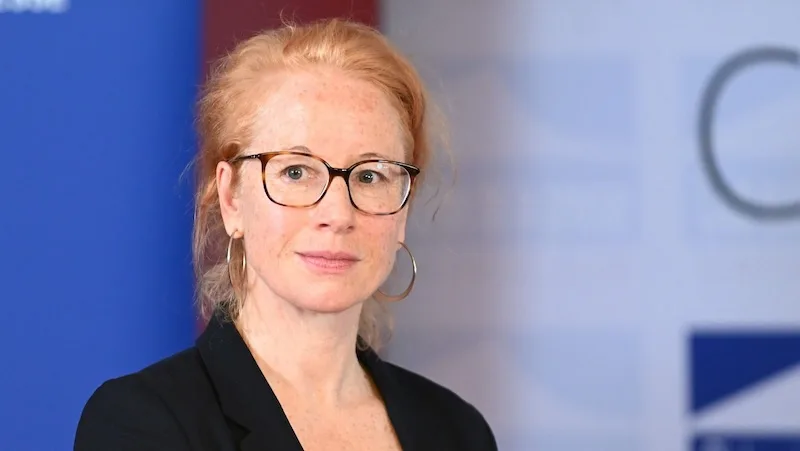
The departure of Guy Mettan in 2019 and the subsequent appointment of Isabelle Falconnier in 2023 did not alter this financial reality. Falconnier, who led the club until September 2025, focused on stabilizing the organization and professionalizing its events. Her tenure saw an increase in "sponsored content" events, lunch talks and debates funded by external partners, to diversify revenue. Yet, the core dependency on the Canton remained. The 2024 and 2025 budgets continued to rely on the "subvention cantonale" to cover base salaries and administrative costs. The search for a new director in late 2025 and early 2026 highlighted this constraint; the job description implicitly required a candidate capable of navigating the complex political waters of the Grand Conseil to ensure the funds kept flowing.
| Revenue Source | Estimated Annual Value (CHF) | Nature of Dependence |
|---|---|---|
| Cantonal Subsidy (Direct) | 100, 000, 150, 000 | Subject to annual parliamentary vote; politically. |
| Real Estate (In-Kind) | 200, 000, 300, 000 | Provision of Villa La Pastorale / Domaine de Penthes. Revocable. |
| City of Geneva / Federal Grants | 50, 000, 80, 000 | Project-based support for specific "International Geneva" events. |
| Membership Fees (Media) | ~40, 000 | Minor contribution; insufficient for operational solvency. |
| Corporate/shared Fees | ~150, 000 | High reliance on diplomatic missions and corporate lobbies. |
The reliance on the State also exposes the CSP to the shifting political winds of the Geneva electorate. The rise of populist and budget-conscious factions in the Grand Conseil means that the "automatic" nature of the subsidy is no longer guaranteed. In 2024, debates regarding the allocation of cultural and media funds saw increased scrutiny of "intermediary bodies" like the CSP. Critics argued that in an era of digital media, a physical clubhouse subsidized by taxpayers is an anachronism. The CSP has had to justify its existence not by the quality of its journalism, by its utility to the State's foreign policy apparatus.
also, the "Fondation" structure ensures that the State has a seat at the table. The Foundation Council includes seats for the Canton and the City. While these representatives may not dictate the daily agenda, their presence ensures that the club never strays too far from the acceptable consensus. The "Bahrain Affair" was the exception that proved the rule:, the self-censorship method works before a emergency erupts. Directors know that biting the hand that feeds, or the hands of the friends of the one that feeds, results in immediate fiscal instability.
By 2026, the Geneva Press Club stands as a paradox. It hosts debates on press freedom while operating under a financial model that makes total freedom impossible. It serves as a hub for global media while being kept alive by local tax money allocated for diplomatic marketing. The exit of Falconnier and the ongoing search for leadership has only deepened the question of sustainability. Without a radical shift toward private endowment or a massive increase in member dues, both unlikely in the current media economic terrain, the CSP remain a ward of the State, its independence existing only as far as the Grand Conseil permits.
Operational Restructuring Under Isabelle Falconnier
| Period | Director | Key Operational Focus | Location |
|---|---|---|---|
| 1997, 2019 | Guy Mettan | Open platform, geopolitical diversity, high controversy. | Villa La Pastorale |
| 2019, 2023 | Pierre Ruetschi | Repositioning, damage control, digital transition start. | Villa La Pastorale / Transition |
| 2023, 2025 | Isabelle Falconnier | Commercialization of services, alignment with "International Geneva", industry-focused events. | Domaine de Penthes |
| 2025, 2026 | Interim / New Appointee | Navigating fiscal turbulence, managing impact of NGO budget cuts. | Domaine de Penthes |
By March 2026, the Geneva Press Club stands as a sanitized version of its former self. The "Falconnier Restructuring" succeeded in integrating the Club into the polite society of multilateralism, functioning as a PR venue for UN agencies and accredited NGOs. Yet, this integration came at the cost of the raw, unpredictable energy that once defined it. The organization is less of a "Club" for rowdy correspondents and more of a subsidized venue for structured communication, heavily dependent on the very state institutions it is meant to cover. The financial pressures of 2026, driven by federal austerity measures, expose the limits of this dependency, leaving the Club's future inextricably tied to the fluctuating generosity of the Swiss taxpayer.
Role in the International Geneva Diplomatic Ecosystem
The Club's structural integration into the Swiss host state policy is absolute. Funded by the Canton of Geneva, the City of Geneva, and a consortium of private banks, the CSP is designed to market the city as the world's neutral meeting ground. This mandate creates an inherent conflict of interest: to maintain Geneva's appeal as a diplomatic capital, the Club must remain open to all actors, including those with abysmal human rights records. This "open door" policy has transformed the venue into a battleground where the line between legitimate diplomatic discourse and state-sponsored propaganda is frequently obliterated. The withdrawal of Reporters Without Borders (RSF) from the Club in 2017 serves as the definitive case study of this widespread failure.
The 2017 rupture with RSF was not a sudden administrative dispute the culmination of a long-standing drift under the directorship of Guy Mettan. Mettan, who led the Club for over two decades until 2019, frequently used the platform to amplify narratives aligning with the Kremlin's foreign policy. The breaking point arrived when the Club hosted a press conference featuring fringe figures who accused the "White Helmets", a Syrian civil defense group, of being organ traffickers and terrorists. This event, indistinguishable from Russian state disinformation campaigns, prompted RSF to sever ties, declaring that the Club had become a vehicle for "propaganda." This incident exposed the fragility of the Club's claim to independence; the "neutrality" it championed was weaponized to provide a prestigious Geneva dateline for conspiracy theories.
Beyond the Russian sphere, the Club has served as a amplifier for other authoritarian states seeking to sanitize their image. In October 2022, the Ambassador of Azerbaijan, Fuad Isgandarov, used the Club's podium to frame the conflict with Armenia through a lens of "peace" and "reconstruction," focusing on landmines while deflecting from military aggression. Such events are not anomalies features of the system. By paying membership fees or booking the venue, diplomatic missions can secure a veneer of journalistic legitimacy for their talking points. The Club's "neutrality" thus functions as a commodity, available for purchase by any state to pay the price of admission, turning the venue into a clearinghouse for Government-Organized Non-Governmental Organizations (GONGOs) and state proxies.
The historical lineage of this traces back to the 18th century, when Geneva emerged as a continental information hub. During the 1700s, the city was a center for printing and smuggling banned texts into monarchist France, establishing a tradition of information arbitrage that today. yet, the modern iteration has inverted this legacy. Instead of exporting revolutionary ideas to challenge power, the infrastructure of "International Geneva", epitomized by the CSP, frequently imports the narratives of power to challenge the facts. The rise of Chinese influence operations further illustrates this trend, with Beijing deploying a network of GONGOs to flood Geneva's side events and press conferences, diluting criticism of its policies in Xinjiang and Tibet.
Financially, the Club remains tethered to the establishment it covers. Its reliance on public subsidies and corporate sponsorship from the banking sector creates a dependency that discourages rigorous scrutiny of its benefactors. While the directorship passed to Pierre Ruetschi in 2019 and later to Isabelle Falconnier, the structural imperatives remain unchanged. The Club must serve the "ecosystem", a euphemism for the dense network of UN agencies, NGOs, and diplomatic missions that constitute the local economy. Consequently, the CSP prioritizes "access" and "dialogue" over investigative rigor, ensuring that even as the world fractures, the cocktail receptions at the Domaine de Penthes continue uninterrupted.
| Year | Event / Topic | Controversy Factor | Key Actors Involved |
|---|---|---|---|
| 2017 | "White Helmets" Press Conference | Promotion of Russian state disinformation regarding Syrian civil defense. | Guy Mettan, Vanessa Beeley, RSF (withdrew in protest) |
| 2019 | Bahrain Human Rights | Tension between state whitewashing and NGO criticism. | Bahraini opposition, Human Rights Watch (visas revoked) |
| 2022 | Azerbaijan "Peace" Briefing | State narrative on Nagorno-Karabakh conflict presented as neutral analysis. | Ambassador Fuad Isgandarov |
| 2022 | Uyghur Tribunal Findings | Battleground for competing narratives on Xinjiang camps. | World Uyghur Congress, Chinese state proxies |
The Geneva Press Club stands as a monument to the contradictions of Swiss neutrality in the 21st century. It is a space where the "free press" is celebrated in the abstract, while the concrete of the institution provides a megaphone for those who would silence it. For the investigative journalist, the Club is less a partner than a subject of inquiry, a node in the global information war where the battles are fought not with soldiers, with press releases, panel discussions, and the silent complicity of a host state desperate to remain the world's favorite salon.
2022, 2026 Policy Adjustments Regarding Political Neutrality
Table: The Evolution of Admissibility at the Geneva Press Club (2015, 2026)
| Era | Director | Admissibility Standard | Key Exclusions/Inclusions | Relationship to State |
|---|---|---|---|---|
| 2015, 2019 | Guy Mettan | Radical Inclusion Hosted anyone, including sanctioned regimes and conspiracy theorists. |
Included: Russian officials, Assad apologists, White Helmet critics. Excluded: None. |
Antagonistic Frequent clashes with Canton/RSF over "propaganda." |
| 2020, 2022 | Pierre Ruetschi | emergency Management Distancing from Mettan; navigating Covid and Ukraine invasion. |
Included: WHO, Swiss health officials. Excluded: Gradual freeze on Russian state media. |
Re-alignment Restoring trust with funders. |
| 2023, 2025 | Isabelle Falconnier | Institutional Alignment Service to "International Geneva" ecosystem. |
Included: UN Rapporteurs, "Don't Buy Into Occupation," AI Ethics. Excluded: Russian narratives, anti-NATO dissent. |
Subservient Operations strictly aligned with "Brand Geneva." |
| 2026 (Q1) | Interim/New | Sanitized Platform Focus on "Media Innovation" and approved NGO advocacy. |
Included: Climate activists, Tech regulators. Excluded: Geopolitical disruptors. |
Integrated Functionally an extension of the Cantonal PR apparatus. |
### The 2026 Status: A sanitized Venue By March 2026, following Falconnier's departure in September 2025, the Geneva Press Club had completed its transformation. It is no longer a "Press Club" in the gritty, investigative sense of the 20th century. It has morphed into a conference center for the "NGO-Industrial Complex." The "adjustments" made regarding political neutrality were not adjustments at all, a capitulation to the reality of state funding. The Club operates under a tacit understanding: it is free to host debates on the *mechanics* of journalism (AI, funding models, safety of reporters in Gaza), it must avoid providing a platform for the *political adversaries* of the Western bloc. The "neutrality" of the Geneva Press Club in 2026 is a curated product, carefully packaged to ensure that the Canton's subsidies continue to flow and that the "Spirit of Geneva" remains undisturbed by the uncouth realities of multipolar geopolitical conflict. The institution survives, its claim to being an open forum for "all" voices has been archived alongside the Mettan directorship.
Membership Demographics and Corporate Sponsorship Data
Membership Demographics: The Dilution of the Fourth Estate
As of early 2026, the CSP's membership data indicates a significant imbalance between working reporters and communication professionals. While the club boasts approximately 800 cardholders, the composition of this group undermines the "Press Club" moniker.
| Membership Category | Count (Approx.) | Description & Influence |
|---|---|---|
| Media Members | 35 | Newspapers, TV, and radio stations. Their financial contribution is nominal compared to corporate members. |
| Individual Journalists | 450 | Freelancers and staff reporters. They hold voting rights absence the capital influence of the shared block. |
| Corporate & shared | 70+ | Multinationals, banks, PR firms, and state bodies. These entities pay premium fees (up to thousands of CHF annually) for access and venue privileges. |
| PR & Diplomats | 350 | Press attachés, lobbyists, and embassy staff. This group constitutes nearly 44% of the individual membership base. |
The presence of over 350 non-journalists, comprising PR fixers, diplomats, and corporate communicators, creates an environment where the "watchdogs" share their den with the wolves. This integration is not accidental structural. The club's statutes explicitly welcome "shared members," a category that allows entities like the Fédération des Entreprises Romandes (FER) and the Groupement des Banquiers Privés Genevois to hold a seat at the table. The 2024-2025 Swiss Media Directory, published by the CSP, further cements this nexus, serving as a "Who's Who" that intermingles independent editors with corporate spin doctors.
Corporate Sponsorship: The Tobacco and Banking Connection
The most contentious aspect of the CSP's financial anatomy is its long-standing acceptance of funding from industries that are frequent of investigative journalism. Historical data and annual reports confirm that the club has accepted sponsorship and membership fees from major tobacco multinationals headquartered in the Lake Geneva region.
Philip Morris International (PMI) and Japan Tobacco International (JTI) have appeared as "shared members" or partners in club documentation. For instance, JTI's status as a shared member grants it institutional access to the club's facilities, a privilege that raises serious ethical questions regarding the club's ability to host unbiased debates on public health or corporate taxation. Similarly, the Banque Cantonale de Genève (BCGE) and other financial institutions provide a steady stream of revenue, creating a chance conflict of interest when the club hosts events discussing Swiss banking secrecy or financial regulation.
This corporate entanglement extends to the PR industry itself. Group, a prominent reputation management and lobbying firm, is listed among the shared members. The inclusion of such firms transforms the club from a neutral ground for reporters into a networking hub where access to journalists is, in effect, a purchasable commodity.
Historical Trajectory: From "Cercle" to "Club"
The current corporate-heavy model represents a sharp deviation from Geneva's earlier press traditions. In 1920, the Cercle de la Presse et des Amitiés Étrangères was founded to welcome foreign correspondents covering the League of Nations. It was a modest, journalist-centric fraternity. The 1997 founding of the CSP, yet, was a top-down initiative engineered by the State of Geneva and the City of Geneva, alongside private banking interests. The objective was explicitly promotional: to market "International Geneva" to the world.
This mandate explains why the State of Geneva remains the club's primary patron, subsidizing its operations at the Domaine de Penthes. The threat to cut these subsidies in 2017, following controversies over then-director Guy Mettan's pro-Russian programming, demonstrated the fragility of the club's independence. The state's financial leash means the club's survival is perpetually contingent on political goodwill.
2026 Status and Leadership Vacuum
The departure of Executive Director Isabelle Falconnier in September 2025 left the organization at a crossroads. Her tenure (2023, 2025) attempted to modernize the club with events like the "Make the Press Great Again" symposium, yet the structural reliance on state and corporate funds remained unaltered. As the club searches for new leadership in 2026, it faces an existential identity emergency: it cannot fully sever ties with its corporate sponsors without collapsing financially, nor can it claim total editorial purity while cashing checks from Big Tobacco and state treasuries. The data confirms that the Geneva Press Club is less a of the Fourth Estate and more a subsidized interface where the press meets the powers it is meant to police.