
Estates to Industry: The Hunt Family and Rail Expansion 1670, 1950
| Year | Event | Key Figures/Entities | Impact |
|---|---|---|---|
| 1663 | Land Purchase | Jessup, Richardson, Wecquaesgeek Sachems | Transfer of Quinnahung from indigenous to colonial control. |
| 1688 | Hunt Inheritance | Thomas Hunt Jr. | Consolidation of the "Hunts Point" estate name and boundaries. |
| 1909 | Rail Station Opens | NY, NH & Hartford RR, Cass Gilbert | Introduction of heavy rail infrastructure; end of the estate era. |
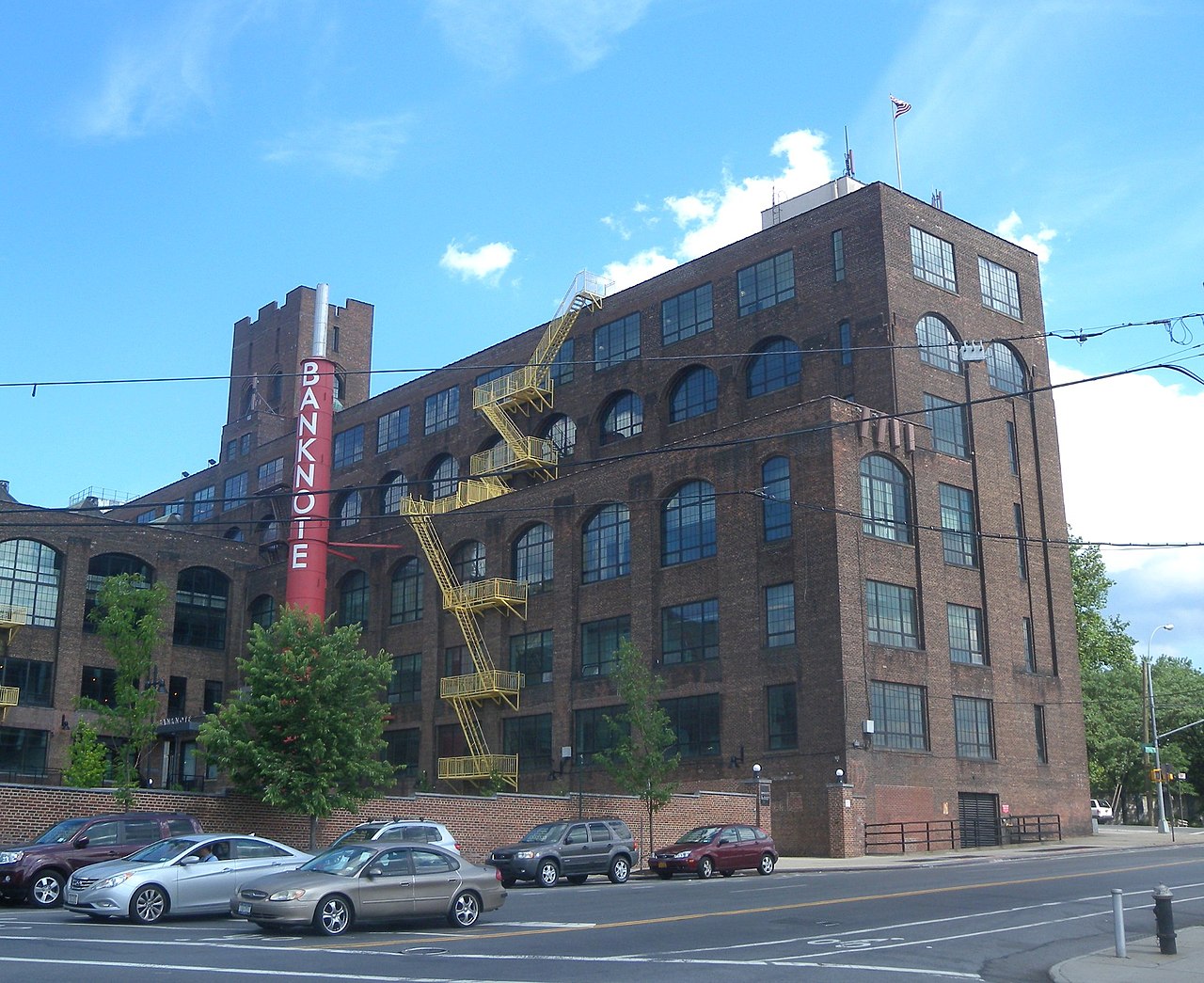
| 1911 | Bank Note Plant | American Bank Note Company | Establishment of major industrial anchor; influx of factory labor. |
| 1940s | Expressway Planning | Robert Moses | Early designs for the Bruckner Expressway begin to isolate the peninsula. |
Displacement of Washington Market and the 1960s Relocation Plan
By the mid-20th century, Washington Market in Lower Manhattan had devolved from a important commercial artery into a logistical nightmare. Established in 1812 on the Hudson River waterfront, the market served as the primary distribution point for fresh produce entering New York City for over 150 years. At its peak, it was a chaotic labyrinth of narrow streets, where horse-drawn carts and later, motorized trucks, gridlocked the area from midnight until dawn. The infrastructure, dating back to the 19th century, absence modern refrigeration and sanitary facilities. Rats were a common sight, and the cobblestone streets were permanently slick with rotting vegetable matter and mud. The congestion was so severe that trucks were frequently forced to idle for hours, spoiling perishable goods before they could reach retailers.
The death knell for the Washington Market was the Washington Street Urban Renewal Plan, officially adopted in 1961. City planners, influenced by the slum clearance philosophies of Robert Moses, viewed the prime waterfront real estate as too valuable for wholesale food distribution. The plan called for the complete demolition of a 24-block area to make way for the World Trade Center, Independence Plaza, and the Borough of Manhattan Community College. The city declared the market an "eyesore" and a "health hazard," prioritizing the development of office towers and high-rise housing over the chaotic, low-rise merchant district. The decision was not about sanitation; it was a calculated seizure of land to reshape the financial district's western edge.
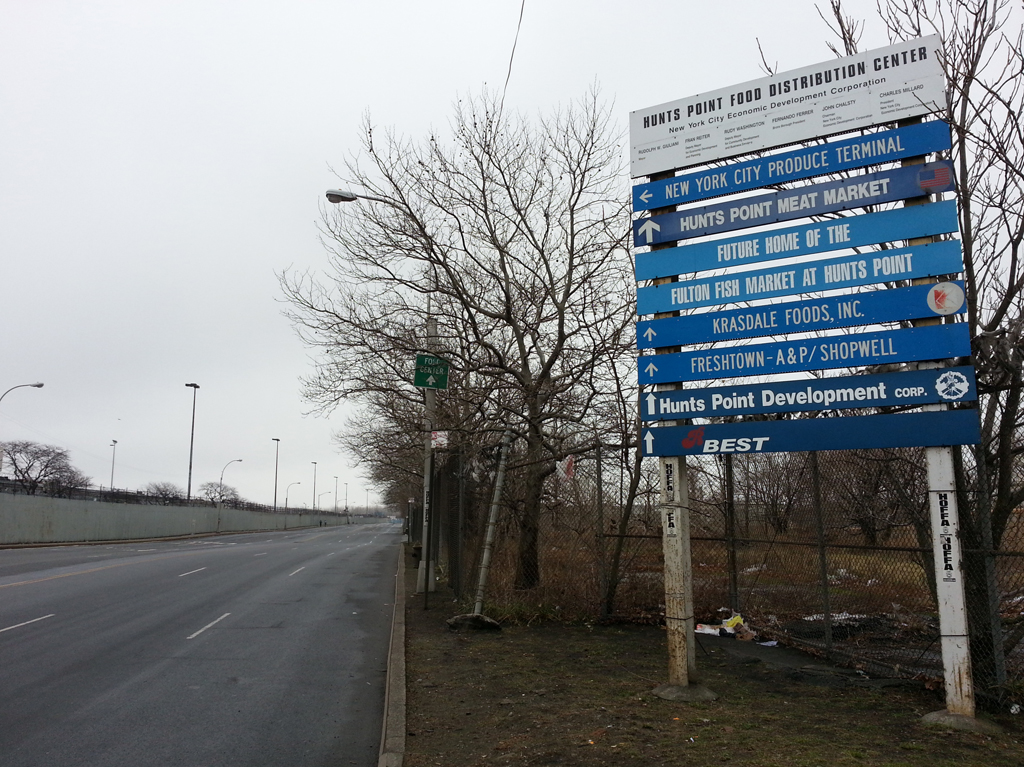
To accommodate the displaced merchants, the city selected a 126-acre site on the Hunts Point peninsula in the South Bronx. The location, described by The New York Times at the time as a "marshy no-man's land," offered what Lower Manhattan could not: direct rail access and vast, open space for modern warehousing. The United States Department of Agriculture (USDA) had conducted studies as early as the 1950s recommending a centralized food distribution hub to reduce handling costs and spoilage. The Hunts Point Terminal Market was designed to be that hub, a of logistics capable of receiving produce directly from rail cars and tractor-trailers without the bottlenecks of downtown streets.
Construction of the new facility began in 1962, a massive municipal undertaking that required transforming the swampy industrial tip of the Bronx into a concrete plateau. The project faced delays and skepticism from merchants, of whom had operated in Tribeca for generations and feared the loss of their customer base. Resistance was futile against the city's use of eminent domain. On the night of March 3, 1967, the "Big Move" began. In a coordinated logistical operation, hundreds of merchants packed their inventory into trucks and caravans, leaving the historic cobblestones of Washington Street for the floodlit concrete ramps of the Bronx. When the Hunts Point Terminal Market officially opened its gates on March 6, 1967, it instantly became the largest wholesale produce market in the world.
The relocation fundamentally altered the economic geography of New York City. In Manhattan, the demolition of the old market erased a century of architectural and social history, paving the way for the sterile canyons of the modern Financial District. In the Bronx, the arrival of the market brought a new industrial anchor to a borough already undergoing rapid demographic shifts. The facility was designed as a self-contained city, with its own police force, fire protection, and rail spurs. yet, the pledge of efficiency came with a cost: the concentration of thousands of diesel trucks in a residential area, a decision that would have long-term environmental health consequences for the surrounding South Bronx communities.
| Feature | Washington Market (Tribeca) | Hunts Point Terminal Market (Bronx) |
|---|---|---|
| Location | Lower Manhattan Waterfront | South Bronx Peninsula |
| Size | Approx. 24 city blocks (congested) | 126 acres (enclosed) |
| Primary Transport | Trucks, Ferries (historical) | Rail, Tractor-Trailers |
| Refrigeration | Scarce / Individual units | Centralized / Integrated warehouses |
| Sanitation | Open-air, poor drainage, rodent problems | Modern enclosed facilities, USDA inspection |
Construction Logistics and Early Operational Failures 1967, 1974
The seven-year interregnum between the opening of the Hunts Point Terminal Produce Market in 1967 and the Cooperative Meat Market in 1974 represents a period of chaotic industrial realignment for New York City. While the produce merchants had already vacated the cobblestones of Washington Market for the Bronx, the city's wholesale butchers remained entrenched in the Gansevoort Market on West 14th Street. This district, a sensory assault of blood, sawdust, and brine, functioned as the city's protein lung, municipal planners viewed it as an obsolete choke point. The push to relocate these butchers to the Hunts Point peninsula was not a logistical exercise a battle against generational inertia and deeply rooted territorial claims.
Construction of the Cooperative Market demanded the transformation of a marshy, industrial wasteland into a sanitary for perishable goods. The site, spanning approximately 40 acres initially, required massive stabilization efforts to support the weight of six colossal refrigerated buildings. Engineers designed these structures to function as a "cold chain" citadel, featuring a central refrigeration plant intended to be the most advanced in the world. This centralized system was a gamble on, promising efficiency that the fragmented 14th Street coolers could never match. Yet, the execution was marred by the fiscal turbulence of the era. The early 1970s brought a contracting economy and soaring inflation, complicating the procurement of materials and labor. The project, initially sold as a streamlined modernization, dragged on as costs fluctuated and deadlines slipped.
The logistical pledge of the Hunts Point Food Distribution Center hinged on rail access, a feature that began to fail before the ribbon was even cut. The site was serviced by the New York, New Haven and Hartford Railroad, which was absorbed into the disastrous Penn Central merger. Planners had envisioned a direct flow of livestock and carcasses arriving by train, bypassing the congested city streets. In reality, the rail service was a bureaucratic nightmare. Penn Central frequently routed Hunts Point traffic through Selkirk, New York, hundreds of miles out of the way, rather than using direct lines. This mismanagement added days to delivery times, a fatal flaw for perishable inventory. By the time the Meat Market opened its doors in 1974, the "rail-to-market" dream was already dying, forcing merchants to rely on an armada of diesel-belching trucks that the local road infrastructure was ill-equipped to handle.
Resistance from the Manhattan butchers was fierce. The Gansevoort Market was not just a place of business; it was a fiefdom where handshake deals and localized power structures reigned. Moving to the Bronx meant entering a controlled facility with gates, guards, and federal oversight. merchants feared the loss of autonomy and the severance of proximity to their high-end Manhattan restaurant clients. The city used a combination of eminent domain threats and financial incentives to force the migration. When the move occurred, it was a logistical violent shove. Companies had to transfer massive specialized equipment and inventory over a single weekend to avoid disrupting the city's food supply. The transition was anything smooth, with immediate complaints about the layout of the new loading docks, which were frequently too narrow for the rapidly expanding size of modern tractor-trailers.
The most corrosive element of the new market's early years was the immediate infiltration by organized crime. The isolation of the Hunts Point peninsula, intended to secure the food supply, paradoxically made it a perfect incubator for racketeering. The Lucchese and Genovese crime families, who had long exerted influence in the Manhattan markets, did not leave their interests behind on 14th Street. They migrated north with the inventory. Cargo theft and truck hijackings became "chronic problems" almost immediately upon the facility's opening. The layout of the industrial park, with its dark corners and limited police presence, facilitated a shadow economy where stolen sides of beef and extorted protection payments became the cost of doing business. Federal investigations later revealed that mob-controlled unions strangled operations, demanding payoffs to ensure labor peace and timely unloading.
Operational data from the year of the Meat Market's existence paints a picture of a facility under its own ambition. While the market successfully consolidated the wholesale trade, handling roughly 50 percent of the region's meat, the efficiency gains were eroded by the friction of corruption and failing infrastructure. The central refrigeration plant, while, was energy-intensive, and the oil shocks of the 1970s sent operating costs skyrocketing. The "state-of-the-art" insulation began to show defects, leading to condensation problem that threatened USDA compliance. also, the rail spurs, built at great expense, sat largely underused as the trucking industry cannibalized the freight volume. The tracks became rusted monuments to a transportation strategy that had failed to anticipate the speed of the shift to rubber-tire logistics.
| Metric | Data Point | Operational Context |
|---|---|---|
| Initial Acreage | ~40 Acres | Expanded to ~60 acres in later decades. |
| Number of Buildings | 6 | Dedicated refrigerated/freezer units. |
| Refrigerated Space | ~700, 000 sq. ft. | Intended to replace fragmented Manhattan cold storage. |
| Market Share | ~50% of Region | Supplied meat to 22 million people in the Tri-State area. |
| Rail Usage | Rapid Decline | Routing led to immediate dominance of trucking. |
By the end of 1974, the Hunts Point Cooperative Market was fully functional, yet it was already a compromised entity. It had succeeded in clearing the chaotic markets from Manhattan, in doing so, it had concentrated the industry's vulnerabilities in a single, geographic point. The butchers were landlords of their own cooperative, they were also captives of a physical plant that required constant, expensive maintenance and a sociopolitical environment rife with predation. The "modern" market was, from its infancy, a place where the mechanics of food distribution ground against the friction of urban decay and criminal enterprise.
La Cosa Nostra Infiltration and Racketeering Indictments

The relocation of New York City's wholesale food markets from the chaotic streets of Lower Manhattan to the peninsula of Hunts Point in the 1960s and 1970s was intended to modernize distribution. In reality, it consolidated organized crime. When the Produce Market opened in 1967, followed by the Meat Market in 1974, the Genovese and Lucchese crime families treated the new facilities not as public utilities, as feudal fiefdoms. The physical isolation of the peninsula, accessible only by a few choke points, allowed the Mafia to enforce a stranglehold on the food supply of the entire tri-state area. Federal prosecutors would later estimate that this "mob tax" inflated food prices for millions of consumers, siphoning tens of millions of dollars annually into the coffers of La Cosa Nostra.
The Lucchese family claimed dominion over the Hunts Point Produce Market. Alphonse D'Arco, the former acting boss of the Lucchese family who became a government witness in 1991, bluntly described the arrangement to federal investigators: "It's ours." This control was exercised primarily through Teamsters Local 202, the union representing the market's workers. Union officials, handpicked by the mob, turned the local into an extortion machine. James Bagley Jr., a Local 202 official and Lucchese operative, embezzled pension funds and enforced labor peace only for those merchants who paid tribute. The union did not serve the workers; it served the crime family, ensuring that any merchant who attempted to bypass the mob-sanctioned "unloading" services faced strikes, slowdowns, or physical violence.
The mechanics of the racketeering were widespread and brazen. The most lucrative racket involved "lumping", the unloading of trucks. Merchants were prohibited from using their own employees to unload produce. Instead, they were forced to hire mob-controlled unloading firms at inflated rates. These firms frequently employed "phantom" workers, associates of the crime families who appeared on payrolls to accrue salary and benefits without ever stepping foot on a loading dock. The Genovese family, led by figures such as Anthony "Fat Tony" Salerno, exerted similar control over the Hunts Point Cooperative Meat Market. They dictated which trucking companies could transport meat and which firms could provide security, taxing every pound of beef and poultry entering the city.
Violence remained the enforcer of these unwritten contracts. In November 1994, Glenn Walker, a businessman attempting to operate independently at Hunts Point, refused to pay the extortion fees demanded by the mob. He had previously endured the firebombing of his inventory. Two gunmen entered his office and executed him with a point-blank shot to the head. Police classified the murder as a "mob-style" killing, a brutal signal to other merchants that the federal crackdowns of the 1980s had not yet broken the Mafia's grip on the peninsula.
Corruption permeated the upper echelons of the market's legitimate administration. Stephen Karsch, the president of the Hunts Point Terminal Produce Cooperative Association, was identified by D'Arco as a mob associate. In 1993, Karsch pled guilty to a fraud scheme involving the redemption of over $5 million in discount store coupons. Even with his conviction and a prison sentence, the Cooperative Association attempted to rehire him as a "consultant" in 1996, a move that exposed the deep-seated loyalty, or fear, that the market leadership harbored toward their criminal overseers.
The rot extended to the federal government itself. In a scandal that broke in 1999, the FBI arrested eight U. S. Department of Agriculture (USDA) inspectors and thirteen wholesalers at Hunts Point. The investigation, dubbed "Operation Forbidden Fruit," revealed a decades-long bribery scheme known as "knocking the load." Wholesalers paid cash bribes to federal inspectors to downgrade the quality rating of perfectly good produce, for example, marking Grade A strawberries as Grade C. This allowed the wholesalers to pay farmers significantly less for the "damaged" goods while selling them to retailers at full price. The Inspector General estimated this scheme defrauded American farmers of over $100 million, turning the USDA's seal of quality into a tool for theft.
The table summarizes key indictments and figures associated with organized crime at Hunts Point between 1980 and 2000:
| Year | Figure/Entity | Affiliation | Charge/Event |
|---|---|---|---|
| 1986 | Anthony Salerno | Genovese Boss | Indicted in the "Commission Case" for controlling meat industry rackets. |
| 1993 | Stephen Karsch | Co-op President | Pled guilty to $5M coupon fraud; identified as mob associate. |
| 1994 | Glenn Walker | Independent Merchant | Murdered for refusing extortion payments. |
| 1996 | Teamsters Local 202 | Lucchese Front | Subject of federal trusteeship to purge organized crime influence. |
| 1999 | USDA Inspectors | Federal Agents | Arrested for accepting bribes to downgrade produce quality ("Knocking the load"). |
this apparatus required aggressive federal intervention. The establishment of the Business Integrity Commission (BIC) in 2001 marked a turning point. The BIC was granted broad powers to license and regulate businesses in the city's public wholesale markets, specifically to root out organized crime. They denied licenses to companies with mob ties and installed monitors to oversee union elections. The transition was hostile; the Hunts Point Terminal Produce Market filed a lawsuit against the city in 2006, challenging the BIC's authority to regulate markets outside the cooperatives. The courts, yet, upheld the commission's powers, affirming the need of strict oversight to prevent a slide back into the era of "Fat Tony" Salerno and the Lucchese strongmen.
By 2026, the overt violence and flagrant racketeering of the 20th century have largely receded, replaced by corporate consolidation and stricter municipal surveillance. The "mob tax" is no longer a line item on the ledger of every grocer in New York, the legacy of that era in the complex regulatory frameworks governing the market. The history of Hunts Point serves as a case study in how a serious infrastructure node, if left unguarded, can be captured by a shadow government, extracting wealth from the supply chain at the expense of farmers and families alike.
Cooperative Governance and Shareholder Financial Structures
Key Governance Entities (2026 Status)
| Entity | Structure | Primary Function | Revenue Scope |
| Hunts Point Terminal Produce Cooperative Association | Shareholder Corporation | Manages Produce Market operations, security, and rail logistics. | ~$2. 3 Billion/Year |
| Hunts Point Cooperative Market Inc. | Shareholder Corporation | Manages the Meat Market (52 member companies). | ~$2. 0 Billion/Year |
| NYCEDC (Landlord) | Public Benefit Corporation | Owns the land; negotiates long-term ground leases. | Collects Ground Rent |
The board's power is absolute within the market's gates. They control the **Hunts Point Department of Public Safety**, a private police force that patrols the facility, distinct from the NYPD. This autonomy has historically been a double-edged sword. In the 1990s, the insular nature of the board allowed organized crime elements, specifically the Lucchese crime family, to exert influence over union locals and loading contracts. It took federal intervention and the installation of a court-appointed monitor to purge these elements, a process that transitioned the market from mob-influenced fiefdom to a modern corporate entity. ### The Landlord-Tenant War: NYCEDC vs. The Cooperatives The financial relationship between the Cooperatives and the City of New York is defined by perpetual conflict. The Cooperatives pay a ground rent to the NYCEDC, the terms of this lease have been the subject of brinksmanship for decades. In 2011, as the Produce Market's lease neared expiration, the Board of Directors played their strongest card: the threat of relocation to New Jersey. The Cooperative argued that the Bronx facility was obsolete, citing broken rail spurs and insufficient cold chain integrity. The threat was credible enough to force the City into a series of short-term extensions and eventually into the massive capital commitment seen in the 2020s. The tension is not just about rent; it is about control. In 2006, the Produce Cooperative sued the NYCEDC over the leasing of adjacent land to **Baldor Specialty Foods**, a non-member distributor. The Cooperative argued the bidding process was rigged. Although the courts ruled in favor of the City, the lawsuit demonstrated the Cooperative's willingness to litigate against its own landlord to protect its territorial dominance. ### Financial Structures and the $635 Million Modernization By 2026, the financial narrative of Hunts Point is dominated by the **$635 million revitalization project**. This deal, cemented in the final days of the Adams administration and executed through 2026, fundamentally alters the financial obligations of the shareholders. The funding stack for this project reveals the Cooperative's success in leveraging public money for private benefit: * **$130 Million:** New York City capital funding. * **$130 Million:** New York State Empire State Development funding. * **$145 Million:** Federal grants (INFRA/BUILD). * **~$230 Million:** Federal loans (TIFIA/RRIF). For the individual shareholder, this modernization comes at a cost. While the public sector covers the heavy infrastructure, the Cooperative is responsible for servicing the federal loans. This debt service is passed down to the merchants through increased "maintenance fees" and per-square-foot assessments. The cost of entry is prohibitive. Buying into the Cooperative requires purchasing shares associated with a specific physical unit (bay). These shares are rarely traded on an open market; they are transferred through private sales or inheritance. When a merchant fails, as seen in the bankruptcies of firms like **Rosenthal & Klein** (2005) or the restructuring of **Featherstone Foods** (2020), the shares and the lease rights revert to the control of the bankruptcy courts or are absorbed by larger, solvent members. This method has led to a consolidation of power, where fewer "families" control more of the market's square footage. ### The Meat Market: A Parallel Power While frequently overshadowed by the larger Produce Market, the **Hunts Point Cooperative Market Inc.** (Meat Market) operates a similar distinct fiefdom. Opened in 1974, it spans 60 acres and generates approximately $2 billion in annual revenue. Its governance structure is equally insular, with a board composed of meat processing executives. The Meat Market has been aggressive in securing its own modernization funds, breaking ground in 2025 on an $18 million renovation of "Building C" to install energy- facades. Unlike the Produce Market, which relies heavily on rail, the Meat Market's logistics are almost entirely truck-based, creating a different set of financial priorities focused on diesel reduction grants and electrification infrastructure. ### The 2026 As of March 2026, the governance of Hunts Point represents a successful, if combative, public-private partnership. The Cooperatives have successfully extracted over half a billion dollars in public investment while retaining operational autonomy. The "families" that run the board have secured their tenure for another generation, protected by a new long-term lease and a of modern concrete and steel. The days of the Washington Market's handshake deals are gone, replaced by a sophisticated corporate machine that functions as the gatekeeper for New York City's food supply.
Teamsters Local 202 Labor Disputes and the 2021 Strike
The labor history of the Hunts Point Cooperative Market is defined not by constant conflict, by long periods of silence punctuated by explosive confrontations. For thirty-five years, the relationship between the market's cooperative board and Teamsters Local 202 remained dormant, a truce maintained through the intricate of New York's food distribution network. This peace shattered on January 17, 2021, when 1, 400 produce handlers, drivers, and warehouse workers initiated the strike at the facility since 1986. The walkout halted the movement of over 300 million pounds of produce and exposed the fragile economics of the city's food supply chain during the height of the COVID-19 pandemic.
Tensions in 2021 stemmed from a between the "essential worker" narrative promoted by city officials and the economic reality on the loading docks. Throughout 2020, the market remained operational while New York City entered lockdown. The workforce, predominantly Black and Latino residents of the Bronx, continued to unload freight trains and trucks even with the absence of vaccines or adequate protective gear in the early months. By January 2021, six Local 202 members had died from COVID-19, and approximately 400 others had contracted the virus. Against this backdrop, contract negotiations collapsed when the Cooperative Board offered a wage increase of $0. 32 per hour. The union, led by President Daniel Kane Jr., demanded a $1. 00 hourly raise and greater contributions to health coverage. The management's offer was perceived not as insufficient, as an insult to the workforce's mortality risk.
The strike paralyzed the peninsula. Picket lines formed at the market's main gates, blocking the entry of long-haul trucks. In a demonstration of logistical solidarity, twenty-one freight train cars carrying produce were turned away on January 20, refusing to cross the picket line. The New York Police Department deployed officers in riot gear to the scene, resulting in the arrest of five picketers on January 19 for obstructing traffic. These arrests drew immediate political attention, transforming a local labor dispute into a national referendum on the treatment of frontline workers. High-profile figures, including Representative Alexandria Ocasio-Cortez, joined the picket line, amplifying the union's slogan: "Stop the War on Workers."
The economics of the strike exerted immediate pressure on the Cooperative Board. With 60% of the city's produce flowing through the facility, the stoppage threatened to hollow out grocery inventories across the five boroughs within days. Restaurants, already reeling from pandemic restrictions, faced supply absence. After six days of halted operations, the two sides reached a settlement on January 23, 2021. The ratified three-year contract delivered a $1. 85 hourly wage increase over the term, $0. 70 in the year, followed by $0. 50 and $0. 65, along with a $0. 40 per hour increase in management's contribution to healthcare. The deal represented the largest wage hike for the unit in three decades, raising the minimum base pay for new hires to $20. 42 by the contract's end.
| Component | Management Initial Offer | Union Demand | Final Settlement (3-Year Term) |
|---|---|---|---|
| Hourly Wage Increase | $0. 32 | $1. 00 (Year 1) | $1. 85 Total ($0. 70 / $0. 50 / $0. 65) |
| Health Contribution | Minimal/ | $0. 60 | $0. 40 increase (Management funded) |
| Contract Approval | N/A | N/A | 97% Ratification Vote |
To understand the significance of the 2021 event, one must examine the market's deeper history of labor control. The thirty-five-year gap between strikes masks a darker era of labor relations characterized by organized crime influence. A 1996 report by the New York City Department of Investigation detailed the widespread infiltration of the Hunts Point market by the Lucchese crime family. During the 1980s and early 1990s, the union was not an independent advocate for workers a tool for racketeering. Alphonse D'Arco, the former acting boss of the Lucchese family who later turned state's evidence, explicitly stated regarding the market: "It's ours."
In that era, labor peace was frequently purchased rather than negotiated. The 1996 investigation revealed that union officials were frequently complicit in schemes involving phantom employees, loan sharking, and the theft of produce. Wholesalers paid kickbacks to avoid labor disruptions, while the union leadership, compromised by mob ties, suppressed dissent among the rank and file. The federal crackdown on the Teamsters in the late 1990s and early 2000s, including the establishment of the Independent Review Board, forced a cleansing of Local 202. The 2021 strike, therefore, marked a functional shift: it was a legitimate exercise of shared bargaining power by a reformed union, rather than a theater of organized crime extortion.
The resolution of the 2021 strike set a new baseline for labor costs at the market. Stephen Katzman, co-president of the Cooperative Board and owner of S. Katzman Produce, acknowledged the settlement as a "fair and equitable deal," though it significantly increased operating expenses for the merchant families. The agreement expired in January 2024. Unlike the volatile negotiations of 2021, the 2024 renewal pattern proceeded without a work stoppage, resulting in a new contract that continued the trajectory of wage growth established three years prior. This quiet renewal suggests a recalibration of the relationship between the Cooperative and the Union, recognizing that the cost of labor disruption in a just-in-time supply chain exceeds the expense of higher wages.
Current labor at Hunts Point are shaped by the modernization of the facility. As the market seeks federal funding for a complete redevelopment (discussed in Section 10), the union's role is evolving. Automation and logistics software threaten to reduce the headcount required to move produce, shifting the focus from raw manpower to skilled equipment operation. The 2021 strike demonstrated that even with technological advances, the physical act of moving food remains the choke point of the city's survival. The workers proved that without their labor, the "world's largest food distribution center" is a collection of cold storage warehouses filled with rotting fruit.
Diesel Emissions and Respiratory Health Metrics in South Bronx
| Metric | Hunts Point / South Bronx | NYC Average | Upper East Side (Manhattan) |
|---|---|---|---|
| Asthma Hospitalizations (Children < 5, per 10, 000) | 42. 3 | 18. 4 | 5. 1 |
| Annual Mean PM2. 5 (µg/m³) | 9. 2 | 7. 5 | 6. 8 |
| Diesel Particulate Matter Exposure | 3. 4x National Percentile | 1. 8x National Percentile | 0. 9x National Percentile |
| Daily Truck Traffic Volume | 15, 000+ | N/A | < 500 (Heavy Freight) |
Attempts to mitigate this damage have historically relied on zoning adjustments rather than widespread overhaul, yet recent infrastructure projects show a shift in strategy. The $1. 7 billion Hunts Point Access Improvement Project, completed in November 2025 under Governor Kathy Hochul, reconfigured the interchange at the Bruckner Expressway and Sheridan Boulevard. The project aimed to remove 13, 000 trucks daily from local residential streets by providing direct highway access to the market gates. While state officials celebrated the completion as a victory for environmental justice, community advocates note that the *volume* of trucks remains unchanged; the pollution has been shifted from the front door to the back window, dispersing over a slightly wider area still settling within the same airshed. The transition to electrification presents the current frontier of the conflict. The "Bronx is Breathing" initiative, funded by a $10 million NYSERDA prize, launched a pilot in 2024 to introduce electric trucks and a dedicated charging hub. By early 2026, the project had installed 24 fast-charging stations beneath the Bruckner Expressway. Yet, the of the solution pales in comparison to the problem. With 15, 000 diesel trips daily, a facility capable of charging two dozen vehicles represents a fractional offset. The resistance from fleet operators remains economic; the cost of replacing a refrigerated diesel heavy-duty truck with an electric equivalent is prohibitive without massive federal subsidies, and the grid infrastructure in the South Bronx requires significant upgrades to support fleet-wide charging. Legal and regulatory pressure continues to mount. In 2025, a coalition of South Bronx residents and environmental law firms filed suit against the city, arguing that the continued operation of the markets without aggressive emissions caps violates the state's Climate Leadership and Community Protection Act. The lawsuit the "cumulative impact" of pollution, asserting that the city cannot permit new industrial leases in Hunts Point until baseline air quality meets World Health Organization standards. This legal theory challenges the historical precedent that prioritized the efficiency of the food supply chain over the biological integrity of the host community. The narrative of Hunts Point is written in particulate matter. From the 1700s, when the air carried only the scent of salt marsh and livestock, to the 2026 reality of nitrogen dioxide plumes, the peninsula serves as a case study in the externalization of industrial costs. The markets feed the region, the South Bronx pays the bill in breath. The completion of the Access Improvement Project marks the end of one construction phase, yet the data indicates that without the total elimination of diesel TRUs, the health gap between Hunts Point and the rest of New York.
USDA Inspections and Food Safety Violation Records
The regulatory footprint of the United States Department of Agriculture (USDA) at Hunts Point is not a bureaucratic formality; it is a permanent, physical occupation. Within the Hunts Point Cooperative Market (the meat market), the USDA's Food Safety and Inspection Service (FSIS) maintains an on-site office, embedding inspectors directly into the daily workflow of the world's largest meat distribution hub. This proximity is born of need. The market handles hundreds of millions of pounds of animal protein annually, creating a high- environment where a single refrigeration failure or sanitation breach can trigger a multi-state health emergency. While the market serves as the digestive tract of New York City, its history with federal oversight is scarred by episodes of widespread corruption, infrastructure failure, and persistent battles against biological risks.
The most significant rupture in the integrity of federal inspections occurred not in the meat market, in the adjacent Terminal Produce Market, involving USDA Agricultural Marketing Service (AMS) graders. In October 1999, federal authorities launched "Operation Forbidden Fruit," a three-year undercover investigation that exposed a deeply entrenched bribery scheme. The FBI and the USDA Office of Inspector General revealed that eight USDA inspectors and thirteen wholesalers had engaged in a racketeering conspiracy. Wholesalers paid inspectors cash bribes, $50 per truckload, to downgrade the quality rating of fresh produce. This fraudulent downgrading allowed wholesalers to pay farmers significantly less for "damaged" goods while selling the produce to retailers at premium Grade A prices. The scandal resulted in twenty-one arrests and shattered the trust between American growers and the Hunts Point hub, revealing how federal authority could be monetized to defraud the agricultural supply chain.
In the Cooperative Market, where FSIS inspectors enforce safety rather than quality grades, the battle is fought against pathogens and physics. The primary method of enforcement is the Noncompliance Record (NR). Between 2000 and 2024, the most frequent citations issued to distributors within the Cooperative Market related to Sanitation Standard Operating Procedures (SSOP). The aging infrastructure of the facility, originally built in the 1970s, frequently struggled to meet modern hygiene standards before the recent modernization initiatives. Inspectors routinely documented condensation dripping from ceiling pipes onto boxed meat, a direct violation of 9 CFR 416. 2(d) regarding ventilation and moisture control. Such condensation poses a severe Listeria monocytogenes risk, as the pathogen thrives in cool, damp environments and can contaminate sealed packaging.
The "Cold Chain" represents the single most fragile point of failure at Hunts Point. USDA regulations mandate that specific meat products remain 40°F (4. 4°C) at all times. The sheer volume of traffic, thousands of diesel trucks idling and docking daily, creates thermal fluctuations that inspectors monitor rigorously. In 2018 and 2019, intensified scrutiny on "temperature abuse" during offloading led to a spike in detained product. Unlike a slaughterhouse where fecal contamination is the primary risk, the distribution center's main enemy is time and temperature. A delay on the loading dock in July can render a shipment of poultry adulterated before it ever reaches a bodega in Brooklyn. The 2025 redevelopment project, backed by over $400 million in public funding, explicitly these vulnerabilities by replacing diesel-powered transport refrigeration units (TRUs) with electric infrastructure to stabilize temperatures and reduce the particulate matter that settles on facility surfaces.
Pest control remains a persistent, documented struggle across the entire Hunts Point peninsula. While the Cooperative Market's enclosed design offers better protection than the open-air stalls of the produce market, USDA sanitation reports from the 2010s through 2023 frequently note "harborage conditions" around the perimeter. The high density of organic waste attracts rodent populations that require aggressive, constant mitigation. FSIS inspectors operate with a zero-tolerance policy for rodent activity inside official establishments; a single evidence of excreta can trigger a "Notice of Intended Enforcement" (NOIE) or a suspension of inspection, shutting down a business until the problem is remediated. These shutdowns are rarely publicized in consumer news appear in the granular enforcement data as "abeyance" periods where operations cease to purge the facility of pests.
The modernization of food safety laws, specifically the shift toward the Food Safety Modernization Act (FSMA), altered the liability terrain for Hunts Point tenants in the 2020s. Distributors are responsible for verifying the safety controls of their suppliers. This legal shift forced a purge of smaller, less compliant operators who could not afford the digital tracking systems required to prove the "chain of custody" for every box of beef. The 2024 economic snapshot of the market indicates a consolidation of power, where larger firms with the capital to automate USDA compliance are displacing legacy family businesses that relied on paper logs and handshake agreements.
| Period | Agency | Event / Violation Type | Operational Impact |
|---|---|---|---|
| 1999, 2000 | USDA AMS | Operation Forbidden Fruit | 8 inspectors arrested for bribery; exposed "pay-to-downgrade" racket. |
| 2005, 2010 | USDA FSIS | SSOP Infrastructure Failures | Recurring NRs for condensation and peeling paint in aging cold storage. |
| 2014 | USDA FSIS | Listeria Control Intensification | New testing led to increased "hold and test" delays for distributors. |
| 2019, 2021 | USDA/FDA | Cold Chain Deviations | Increased citations for temperature abuse during loading/unloading. |
| 2023, 2025 | USDA FSIS | Pest Harborage Enforcement | Strict perimeter enforcement linked to new construction/disturbance of nests. |
The relationship between the market and its regulators is adversarial by design. The USDA's "grant of inspection" is a privilege, not a right, and the threat of withdrawal hangs over every tenant. As the market transitions into its 2026 configuration, the focus of inspections has moved beyond visual checks to microbiological swabbing and data audits. The corruption of the "cash-in-envelope" era has largely been replaced by a regime of digital surveillance, where a missing temperature log can be as damaging as a positive pathogen test.
CSX Rail Infrastructure and Intermodal Freight Limitations
The steel arteries that once promised to feed New York City have calcified. While the Hunts Point peninsula was engineered in the 1960s and 70s to function as a rail-fed of sustenance, the modern reality of the Hunts Point Cooperative Market is defined by the internal combustion engine, not the locomotive. The rail infrastructure, ostensibly the backbone of the Food Distribution Center, has into a secondary appendage, strangled by corporate consolidation, logistical rigidity, and a century of shifting industrial priorities. The history of this decline reveals a clear disconnect between public infrastructure investment and private operational reality.
The rail lineage of the peninsula traces back to the New York, New Haven and Hartford Railroad (NYNH&H), which established the Harlem River Branch in the late 19th century. By 1909, the architect Cass Gilbert had designed the Hunts Point station, a French Renaissance structure that signaled the area's suburban aspirations before its industrial turn. When the city planners conceived the food distribution center in the 1960s, they assumed rail would remain the dominant mode of freight transport. The Meat Market (Cooperative Market), opening in 1974, and the Produce Market, opening in 1967, were stitched into the national grid via spurs connecting to the Oak Point Yard. This yard, a massive classification facility at the southern tip of the Bronx, was intended to act as the valve regulating the flow of millions of tons of protein and produce.
The collapse of the Penn Central Transportation Company in 1970 and the subsequent formation of Conrail in 1976 plunged the region's rail service into chaos. For decades, the rail connection to Hunts Point was by low clearance that prevented modern, high-capacity freight cars from entering the Bronx. This physical bottleneck forced a reliance on trucking that became culturally and operationally before the rail lines could be fixed. The solution, the Oak Point Link, became a case study in bureaucratic delay. Proposed in the late 1970s to bypass passenger congestion and accommodate larger freight cars, the 1. 9-mile concrete trestle along the Harlem River did not open until 1998. By the time this $200 million "freight highway" was operational, the trucking industry had already secured a near-monopoly on the market's logistics.
In 1999, the breakup of Conrail handed control of the Oak Point Yard and the feeder lines to CSX Transportation. This acquisition created a rail monopoly for the peninsula. While the physical capacity for rail freight exists, the operational friction between the market merchants and the Class I railroad has been severe. The introduction of "Precision Scheduled Railroading" (PSR) by CSX in the late 2010s exacerbated these tensions. PSR, an operating method focused on minimizing asset downtime and maximizing train length, frequently clashed with the high-touch, time-sensitive needs of perishable food distribution. Merchants reported that missed switching windows or delayed arrivals, tolerable for coal or lumber, were fatal for fresh beef and produce. Consequently, the rail share of inbound freight to the Cooperative Market plummeted to negligible levels, with the broader Food Distribution Center receiving less than 1 percent of its total volume by train in 2024.
The infrastructure within the market boundaries reflects this abandonment. The rail spurs that run behind the loading docks of the Cooperative Market frequently sit rusting, used more for storage than transit. In the Produce Market section, where rail usage is slightly higher, the "common carrier" obligation of the railroad collides with the reality of the "cold chain." A rail car from the West Coast takes approximately 8 to 10 days to reach the Bronx, compared to 3 to 4 days for a team-driven truck. For meat wholesalers in the Cooperative Market, where shelf life is measured in hours, this renders rail economically non-viable for all the most durable frozen commodities.
| Metric | Rail (CSX) | Truck (Long-Haul) |
|---|---|---|
| Transit Time (West Coast) | 8, 10 Days | 3, 4 Days |
| Cost Per Unit | Lower (Bulk) | Higher (Premium) |
| Reliability (On-Time) | Variable (PSR impacts) | High (98%+) |
| Volume Share (Est.) | < 1% | > 99% |
| Infrastructure Status | Aging / Shared Docks | Congested / Upgraded |
Attempts to revive rail freight have faced repeated failures. The "Green Express" initiative, which aimed to run dedicated unit trains of refrigerated goods from the Capital Region to the Bronx, struggled to overcome the "last mile". The tracks inside the market are not grade-separated, meaning rail operations interfere with truck movements, creating a logistical hazard on the docks. also, the specialized "reefer" (refrigerated) rail cars required for meat and produce are supply compared to the ubiquitous refrigerated truck trailers. The railroad's preference for moving massive, uniform commodities does not align with the fragmented, pallet-level distribution model of the Cooperative Market's fifty-plus independent merchants.
By 2026, the focus of infrastructure investment had shifted decisively toward mitigating the damage caused by trucks rather than replacing them with trains. The completion of the $1. 7 billion Hunts Point Access Improvement Project in November 2025 reconfigured the Bruckner Expressway and Sheridan Boulevard to remove commercial traffic from local streets. While this project improved road access, it signaled a tacit admission that the "rail renaissance" promised by the Oak Point Link had failed to materialize. The New York City Economic Development Corporation (NYCEDC) secured a $110 million federal INFRA grant in 2022, the primary allocation was for modernizing buildings and installing electric vehicle charging stations for trucks, not for expanding rail capacity.
The CSX line remains active, its primary function in the South Bronx has shifted away from feeding the city and toward waste removal. The same tracks that bring a trickle of frozen goods into the peninsula are used heavily to haul municipal solid waste out of the borough, cementing the Bronx's role in the city's metabolic excretion rather than its nourishment. For the Hunts Point Cooperative Market, the rails are a historical artifact, a reminder of a centralized distribution model that could not survive the demand for speed and flexibility. The market feeds New York, it does so on eighteen wheels, leaving the iron road to rust in the shadow of the expressway.
Pandemic Supply Chain Fractures and Workforce Attrition 2020, 2022

Table: Teamsters Local 202 Strike Metrics (January 2021)
| Metric | Management Offer | Union Demand | Final Settlement |
|---|---|---|---|
| Hourly Wage Increase (Year 1) | $0. 32 | $1. 00 | $0. 70 |
| Total Wage Increase (3 Years) | $0. 96 (approx) | Unknown | $1. 85 |
| Healthcare Contribution | Employee contribution increase | No add'l cost | Mgmt pays add'l $0. 40/hr |
| Strike Duration | N/A | N/A | 6 Days |
| Workforce Impacted | 1, 400 | 1, 400 | 1, 400 |
Following the strike, the market faced the secondary economic shocks of 2021 and 2022. Global supply chain fractures led to skyrocketing diesel prices, which disproportionately affected the independent truckers who service the market. The cost of shipping a truckload of produce from the West Coast to the Bronx doubled in instances, compressing margins for the cooperative's merchants. Simultaneously, labor attrition; even with the wage gains, the physical toll of the work combined with the lingering health risks of the pandemic made recruitment difficult. The "Great Resignation" trend of 2022 saw the market struggling to fill night-shift warehouse positions, leading to operational delays that rippled out to city grocers. The pandemic also exposed the serious obsolescence of the market's physical infrastructure. The Produce Market, absence a central backup power system, remained to grid failures, a risk heightened by the increasing frequency of extreme weather events. While the Meat Market had secured funding for generators, the Produce Market relied on diesel-powered transport refrigeration units (TRUs) to keep food cold, the local air quality emergency. The 2020-2022 period functioned as a stress test that the facility barely passed, accelerating calls for the detailed redevelopment that had been stalled for decades. The reliance on 1960s-era loading docks, which were too narrow for modern 53-foot trailers, created bottlenecks that slowed distribution exactly when speed was most required. By the end of 2022, the conversation had shifted from immediate survival to the need of a $600 million modernization to prevent future widespread collapse.
Federal Infrastructure Grants and Modernization Projects 2023, 2025
By 2023, the physical decay of the Hunts Point Cooperative Market had collided with a shift in federal infrastructure policy, ending decades of municipal neglect that had left the peninsula's supply chain hardware rusting in the salt air. While previous administrations offered piecemeal repairs, the period between 2023 and 2025 marked the arrival of substantial federal capital, driven by the Biden-Harris administration's focus on supply chain resilience and environmental justice. The catalyst for this modernization was the $110 million Infrastructure for Rebuilding America (INFRA) grant awarded by the U. S. Department of Transportation. Secured in late 2022 and operationalized in 2023, this grant did not fund repairs; it mandated a structural overhaul of the Terminal Produce Market, the largest and most antiquated component of the Food Distribution Center.
The INFRA grant served as the anchor for a complex capital stack finalized in 2024. Following the federal commitment, New York Governor Kathy Hochul directed $130 million in state funds to the project, matched by a $130 million commitment from the City of New York under Mayor Eric Adams. This tripartite funding structure, totaling nearly $400 million in public money, aimed to use private investment to reach the estimated $650 million required for a full redevelopment. The financial architecture required the Hunts Point Terminal Produce Cooperative Association to agree to long-term lease extensions, binding the merchants to the Bronx for another generation in exchange for a facility capable of meeting Food Safety Modernization Act (FSMA) standards.
In December 2025, the New York City Economic Development Corporation (NYCEDC) and the Produce Cooperative announced the conditional selection of Aurora-Primus, a joint venture between Aurora Contractors and Primus Builders, to execute the design-build phase. The contract, finalized after a procurement process initiated in March 2025, outlines the demolition of the existing saw-tooth warehouse structures, originally built in 1967, and the construction of a single, continuous 1-million-square-foot facility. Unlike the disjointed legacy buildings, the new design integrates 800, 000 square feet of refrigerated warehouse space directly with rail and truck docks, eliminating the "cold chain break" that occurred when produce was transferred across open-air platforms.
The modernization effort prioritized the elimination of diesel emissions, a direct response to the "Asthma Alley" health metrics the South Bronx. For fifty years, the market relied on thousands of diesel-powered Transport Refrigeration Units (TRUs) idling 24 hours a day to keep produce cold. The 2023, 2025 modernization plan funded the installation of electric shore-power infrastructure, allowing trucks to plug in while docked, alongside a rooftop solar array designed to offset the facility's massive energy consumption. By early 2026, the EPA's Clean Ports Program had funneled additional resources through the Port Authority of New York and New Jersey to subsidize the replacement of aging drayage trucks with electric models, specifically targeting the heavy-duty vehicles servicing the Hunts Point peninsula.
While the Produce Market absorbed the majority of the headlines and funding, the Hunts Point Cooperative Meat Market navigated a separate, more modest modernization track. City capital budget data from 2024 and 2025 indicates the "Hunts Point Meat Market 2" project received allocations totaling approximately $29. 8 million, primarily for urgent mechanical upgrades and roof repairs rather than a total rebuild. This in funding created friction between the cooperatives, as the Meat Market facilities, though slightly newer (built in the early 1970s), faced similar structural deficits. Simultaneously, the $71 million Hunts Point Energy Resiliency Project, funded largely by federal Community Development Block Grant-Disaster Recovery (CDBG-DR) money, neared completion in late 2025. This project installed a microgrid capable of isolating the Food Distribution Center from the main Con Edison grid during blackouts, ensuring that the tri-state area's food supply would not spoil during climate events like the Hurricane Sandy.
As of March 2026, the redevelopment has moved from bureaucratic negotiation to physical preparation. The Aurora-Primus team has begun site surveys and geotechnical testing, with heavy construction scheduled to commence in late 2026. The project faces strict timelines tied to the federal grant requirements, necessitating a phased construction method that allows the market to operate at full capacity while sections are demolished and rebuilt. Teamsters Local 202, representing the market's labor force, endorsed the plan after securing guarantees that automation within the new facility would not result in immediate headcount reductions, a tension that remains active as the design phase concludes.
| Source | Grant/Program | Amount (USD) | Primary Purpose |
|---|---|---|---|
| U. S. Dept. of Transportation | INFRA Grant | $110, 000, 000 | Produce Market structural redevelopment and intermodal expansion. |
| New York State | State Budget Allocation | $130, 000, 000 | Matching funds for Produce Market revitalization. |
| New York City | Capital Budget | $130, 000, 000+ | City match for Produce Market; site preparation. |
| U. S. HUD / NYC | CDBG-DR / Resiliency | $71, 000, 000 | Microgrid and backup power generation (Energy Resiliency Project). |
| NYC Capital Budget | Project HUNTMEAT2 | ~$29, 800, 000 | Meat Market mechanical upgrades and roof repairs. |
| U. S. EPA | Clean Ports / DERA | Varies (Regional) | Electrification of drayage trucks and cargo handling equipment. |
2026 Lease Negotiations and Energy Grid Stability Reports
The resolution of the Hunts Point Produce Market lease negotiations in late 2025 marked the end of a volatile fifteen-year standoff between the City of New York and the merchant cooperative that feeds the tri-state area. On December 30, 2025, the New York City Economic Development Corporation (NYCEDC) and the Hunts Point Terminal Produce Cooperative Association finalized a master lease agreement that triggered the release of $405 million in public funding for a complete facility overhaul. This deal, ratified by the Cooperative's board in January 2026, prevents the threatened relocation of the market to New Jersey, a prospect that had loomed over the Bronx since the breakdown of talks in 2011.
The 2026 agreement fundamentally alters the operational structure of the peninsula. Unlike the 1967 lease, which treated the facility as a static asset, the new contract binds the lease renewal to specific modernization milestones. The Cooperative, representing over 30 independent merchant families, agreed to a rent structure that escalates in tandem with the completion of the new "intermodal" facility. This structure aims to recoup a portion of the city's capital investment while shielding merchants from immediate displacement costs. The design-build contract, awarded to the Aurora-Primus joint venture, outlines a phased demolition and reconstruction schedule starting in late 2026, allowing the market to remain operational 24/7 throughout the build.
The financial architecture of the 2026 redevelopment relies on a complex "capital stack" that integrates federal infrastructure grants with municipal bonds. The following breakdown details the confirmed funding sources as of the January 2026 ratification:
| Funding Source | Amount (USD) | Allocation Purpose |
|---|---|---|
| Federal INFRA Grant / USDOT | $110, 000, 000 | Intermodal rail expansion and cold chain logistics |
| New York City Capital Budget | $130, 000, 000 | Site preparation, demolition, and foundation work |
| Empire State Development (NYS) | $130, 000, 000 | Vertical construction and energy efficiency systems |
| Federal Highway Administration | $35, 000, 000 | Traffic flow optimization and emission reduction |
| Total Public Commitment | $405, 000, 000 | Phase 1 Redevelopment |
While the lease secures the market's physical footprint, the "2026 Hunts Point Energy Grid Stability Assessment", a technical report commissioned by Con Edison and the NYCEDC, reveals a serious infrastructure gap. The redevelopment plan mandates the elimination of over 1, 000 diesel-powered Transport Refrigeration Units (TRUs) that currently idle at the docks. These units are to be replaced by electric plug-in stations (eTRUs) to comply with the Bronx's air quality goals. The Assessment warns that the simultaneous electrification of the Produce Market, combined with the proposed electric vehicle charging hub for the Meat Market, increase the peninsula's peak power demand by approximately 18 megawatts by 2028.
The grid stability report indicates that the existing feeder lines from the Mott Haven substation are insufficient to handle this surge without significant reinforcement. The original "Hunts Point Energy Resiliency Project," conceived after Hurricane Sandy to build a tri-generation microgrid, faced delays due to environmental opposition against natural gas turbines. As of March 2026, the revised energy strategy pivots toward a battery energy storage system (BESS) and rooftop solar arrays on the new market structures. The report explicitly states that without the immediate deployment of a 10MW battery storage facility, the market could face brownouts during summer heatwaves, jeopardizing the cold chain for 25% of the city's produce.
The Hunts Point Cooperative Market (Meat Market), a separate legal entity located adjacent to the Produce Market, faces its own set of 2026 challenges. While the Produce Market secured its massive redevelopment deal, the Meat Market's lease negotiations have focused on flood mitigation and insurance liability. The Meat Market sits on lower ground, making it highly susceptible to storm surges. The 2026 lease addendums for the Meat Cooperative incorporate requirements from the FEMA Building Resilient Infrastructure and Communities (BRIC) grant, which funds the installation of deployable flood blocks and dry-floodproofing for serious mechanical rooms. Unlike the Produce Market's total rebuild, the Meat Market's strategy involves hardening existing structures against the rising East River.
Labor heavily influenced the final terms of the 2026 Produce Market lease. Teamsters Local 202, led by Daniel Kane Jr., exerted significant pressure during the design phase to ensure that automation would not the workforce. The 2021 strike, which saw workers picket for a $1 raise, cast a long shadow over the 2024-2025 planning sessions. The union secured guarantees that the new "state-of-the-art" logistics systems, including vertical racking and automated inventory tracking, would be operated by union labor. The lease agreement includes a workforce retention covenant, requiring the Cooperative to maintain current employment levels even as efficiency increases. This clause was a non-negotiable condition for the release of City and State funds.
The environmental justice component of the 2026 negotiations addresses decades of "diesel death zones" in the South Bronx. The transition to an all-electric facility is not an operational upgrade a public health mandate. The NYCEDC estimates that the removal of diesel TRUs eliminate 2. 5 tons of particulate matter annually. yet, the Grid Stability Assessment notes that the transition period (2026-2029) poses a risk. As construction disrupts the rail spurs, truck traffic is projected to temporarily increase to compensate for the loss of rail freight capacity. The lease imposes strict routing to keep these heavy trucks off residential streets, enforced by geofencing technology and heavy fines for violations.
The 2026 status of the Hunts Point peninsula represents a convergence of 17th-century geography and 21st-century logistics. The land that the Hunt family once farmed for hay is a concrete choke point for the regional food supply. The lease signed in December 2025 is less of a landlord-tenant agreement and more of a municipal treaty, acknowledging that the market is too big to fail and too expensive to move. The success of this redevelopment hinges on the ability of the Bronx power grid to absorb the massive electrification load. If the energy infrastructure lags behind the construction schedule, the new market risks becoming a high-tech facility powered by the very diesel generators it was designed to eliminate.