
Founding as Gay Community Services Center and Liberation Front Roots 1969, 1971
The Los Angeles LGBT Center, originally incorporated as the Gay Community Services Center (GCSC), did not emerge from a vacuum of benevolence from a centuries-long legal and social war against homosexual existence. To understand the radical need of its 1971 founding, one must examine the judicial architecture it rose to. Since the adoption of the English common law in 1850 and the subsequent codification of California Penal Code Section 286 in 1872, the state defined "the infamous crime against nature" as a felony punishable by severe imprisonment. By the early 20th century, California law had evolved to categorize homosexuals not as criminals as "sexual psychopaths," a designation that stripped individuals of civil liberties and subjected them to indefinite confinement in state mental hospitals. This legal framework, active through the 1960s, created a population of "legal outlaws" who possessed no recourse to public assistance, healthcare, or housing.
By 1969, the social friction in Los Angeles had reached a combustion point. While the Stonewall Riots in New York City garner historical dominance, Los Angeles possessed its own distinct militant lineage. The 1967 Black Cat tavern raid and subsequent protests predated Stonewall, establishing a local infrastructure of resistance. In this volatile environment, Morris Kight, a seasoned anti-war activist and labor organizer, co-founded the Los Angeles chapter of the Gay Liberation Front (GLF) in late 1969. Unlike earlier "homophile" organizations such as the Mattachine Society, which sought assimilation and respectability, the GLF demanded immediate, unapologetic liberation. They operated initially out of Kight's residence at 1822 West 4th Street, a location that functioned as a de facto command center for protests, bail fund coordination, and emergency intervention.
The transition from political agitation to social service provision began with a spectacular failure. In 1970, GLF activists, including Don Kilhefner, conceived the "Alpine County Project," also known as "Stonewall Nation." The plan involved migrating hundreds of gay people to Alpine County, a sparsely populated California district, to legally seize political control through the ballot box and establish a gay refuge. The project attracted massive media attention collapsed due to logistical impossibilities and local hostility. Yet, the failure of Alpine County proved instructive. It demonstrated that geographic separatism was unworkable. The "nation" had to be built where gay people actually lived: in the urban sprawl of Los Angeles, where thousands of youth were being ejected from their homes and schools.
By early 1971, the streets of Hollywood teemed with what Kight and Kilhefner termed "throwaway kids", young people disowned by families and hunted by the LAPD. The GLF's "Survival Committee" attempted to address this humanitarian emergency, political shouting matches could not feed starving teenagers. A schism formed within the movement. Kight, Kilhefner, and John Platania recognized that a new model was required, one that combined the radical philosophy of gay liberation with the pragmatic of social work. They envisioned a "community center" that would provide the services the state refused to offer, staffed entirely by gay people for gay people.
This vision materialized in the spring of 1971. Operating with a bank balance that reportedly hovered around $35, the founders moved to professionalize their survival networks. They rented a dilapidated two-story Victorian house at 1614 Wilshire Boulevard. The location was strategic, situated near MacArthur Park, a known cruising ground and gathering point for the marginalized. On July 22, 1971, the organization formally incorporated as the Gay Community Services Center. This act of incorporation was itself a form of protest; it was the time an organization with the word "Gay" in its title sought legal recognition as a non-profit entity in the United States.
The Center's initial operations were a chaotic blend of triage and guerrilla bureaucracy. The facility at 1614 Wilshire was in poor condition, requiring massive volunteer labor to become habitable. It functioned as a safe harbor where the "sexual psychopaths" of the California legal code could receive counseling without fear of institutionalization. To bypass the prejudices of the time, the Center frequently had to disguise its operations. Early telephone listings and intake forms sometimes used coded language, such as "Problem Pregnancy Counseling," to deflect hostile scrutiny while connecting gay men and lesbians with sympathetic doctors and lawyers.
Simultaneously, the founders addressed the housing emergency directly. The GLF Survival Committee had already established a "Liberation House" at 1168 North Edgemont Street in 1971. This facility provided emergency shelter for homeless gay youth and served as a prototype for the Center's housing programs. It was a direct response to the exclusion practiced by the Salvation Army and other religious charities, which frequently denied shelter to known homosexuals. The Liberation House operated on a commune-style model, where residents contributed to the maintenance of the household, reinforcing the concept of "community" over "charity."
The most significant battle of 1971 was not fought on the streets, against the Internal Revenue Service. When the Center applied for 501(c)(3) tax-exempt status, a classification necessary to receive federal grants and tax-deductible donations, the IRS balked. Federal officials argued that an organization serving homosexuals was "neither benevolent nor charitable" because it served a population defined by criminal conduct under state law. The application stalled, initiating a multi-year legal struggle. The founders refused to soften their language or their mission. They contended that serving the gay community was a matter of public health and social welfare, identical to serving any other marginalized group.
Even with the absence of federal recognition in 1971, the Center expanded rapidly. The sheer volume of need overwhelmed the volunteer staff. By the end of its year, the Center was logging thousands of client visits. The services included a 24-hour hotline, legal clinics to assist those entrapped by police vice squads, and peer counseling groups. The medical needs of the community, particularly regarding sexually transmitted infections, became a primary focus. At the time, gay men seeking treatment at public health clinics frequently faced humiliation or reporting to authorities. The Center began laying the groundwork for its own venereal disease clinic, which would fully open the following year, creating a protected medical environment that prioritized patient dignity over moral judgment.
The founding of the GCSC marked a definitive pivot in the history of the LGBT movement. It represented the moment when the energy of the 1960s counterculture was harnessed into permanent infrastructure. Kight, Kilhefner, and their cohorts did not demand rights; they built a parallel institution to sustain their people until those rights were won. The Victorian house on Wilshire Boulevard stood as a physical rejection of the 1872 Penal Code, proving that the "criminals" of the state were capable of caring for their own with a sophistication and compassion that the government itself absence.
Victorian House Headquarters and Early Social Service Infrastructure

The physical manifestation of the Gay Community Services Center (GCSC) began not in a sterile medical facility, within the decaying grandeur of a Victorian mansion at 1614 Wilshire Boulevard. Secured in 1971, this Queen Anne-style structure served as the operational headquarters for what would become the world's largest LGBT organization. The building itself was a symbol of the movement's early condition: structurally unsound, aesthetically distinct, and existing on the margins of Los Angeles respectability. Volunteers, rather than paid contractors, performed the necessary renovations, scrubbing floors and patching walls to convert a condemned residence into a functional social service agency. This "do-it-yourself" ethos was not a budgetary need a political statement that the gay community would build its own infrastructure independent of the hostile state apparatus.
The immediate catalyst for the Center's service model was the rampant spread of venereal disease and the refusal of mainstream medicine to treat it with dignity. In the early 1970s, a gay man seeking treatment for syphilis or gonorrhea at a Los Angeles county hospital faced moral lectures, humiliation, and the very real threat of being reported to the police, as sodomy remained a felony in California until 1975. The GCSC responded by opening a Venereal Disease Clinic in October 1972. Operating initially on a shoestring budget, the clinic provided non-judgmental testing and treatment. It became known colloquially as the "Clap Shack," a moniker that reclaimed the stigma of sexual health. By providing a safe environment, the Center achieved compliance rates for treatment that far outstripped county facilities, a metric that eventually forced local health officials to acknowledge the Center's utility.
Housing was the second pillar of the early infrastructure. The "Liberation House" project, spearheaded by Jon Platania, addressed the emergency of homelessness among gay youth and adults who had been disowned by families or fired from jobs. The facility opened at 1168 North Edgemont Street in 1971. It was not a shelter in the traditional sense a commune; residents paid approximately $1. 50 per day and participated in the shared maintenance of the household. A second location followed at 1322 North Van Ness Avenue, a property formerly owned by film mogul Jack Warner. These "Liberation Houses" functioned as incubators for radical consciousness, where the "personal is political" philosophy of the era was lived daily. Residents were not treated as passive recipients of charity as displaced members of a tribe regrouping for survival.
The legal status of the organization proved to be a battleground as significant as the streets. When the GCSC applied for tax-exempt 501(c)(3) status, the Internal Revenue Service initially denied the application in 1972. The IRS argued that the organization was "neither benevolent nor charitable" because it served homosexuals, a group the federal government viewed as deviant and chance criminal. The Center appealed, engaging in a two-year legal fight that challenged the federal definition of charity. In 1974, the GCSC won, becoming the organization with the word "gay" in its name to secure federal tax-exempt status. This victory was not administrative; it forced the US government to legally recognize the gay community as a minority group deserving of charitable aid rather than a criminal class deserving of prosecution.
With tax-exempt status secured, the Center achieved a financial breakthrough that fundamentally altered its trajectory. In 1974, the National Institute of Mental Health (NIMH) and the Department of Health, Education, and Welfare (HEW) awarded the Center a series of grants. The most significant was a massive multi-year grant from the National Institute on Alcohol Abuse and Alcoholism (NIAAA), eventually totaling over $1 million, to establish the Women's Alcoholism Program. This funding was. Never before had the federal government directed such capital to a gay organization. yet, the grant was a double-edged sword. To access the funds, the Center had to frame its community building through the lens of "treatment" and "pathology", specifically alcoholism, to fit the bureaucratic requirements of federal agencies. This created an internal tension between the radical liberationists, who saw the Center as a revolutionary vehicle, and the emerging class of non-profit administrators who needed to maintain compliance with federal guidelines.
The influx of federal money necessitated a shift in operations. The volunteer-driven anarchy of the Victorian House era began to give way to professionalization. Staff members who had previously worked for "survival stipends" or free rent in the Liberation Houses demanded regular salaries. The administrative load of managing federal grants required detailed record-keeping, a practice that radical members viewed with suspicion, fearing that lists of names could be seized by the police. This fear was not unfounded; the Los Angeles Police Department, under Chief Ed Davis, maintained a hostile stance toward the gay community, frequently raiding bars and bathhouses. The Center stood as a against this harassment, with leaders like Morris Kight and Don Kilhefner using the institution's growing legitimacy to shield the community from law enforcement excesses.
By 1975, the Victorian House at 1614 Wilshire had become too small to contain the exploding demand for services. The Center's metrics were for a grassroots organization: thousands of client visits per month for medical, legal, and counseling services. The counseling department, rejecting the American Psychiatric Association's classification of homosexuality as a mental illness, pioneered "peer counseling." This model relied on the premise that gay people were best equipped to help other gay people navigate a homophobic society, a direct rejection of the "sickness" model propagated by the medical establishment. This peer support network became a serious lifeline, reducing suicide rates and providing a psychological buffer against the hostility of the outside world.
The transition from the Victorian House to a larger facility on Highland Avenue in 1975 marked the end of the Center's infancy. The move was driven by the condemnation of the Wilshire property, which had beyond the capacity of volunteer repair crews. The acquisition of the Highland property, a former motel, signaled the Center's permanence in the Los Angeles geography. It was no longer a temporary experiment in radical living a fixed institution with a budget, a board of directors, and a federal mandate. This evolution alienated of the original Gay Liberation Front founders, who saw the professionalization as a betrayal of the movement's anti-establishment roots. Yet, without this pivot to a "social service" model backed by federal coin, the Center likely would have collapsed under the weight of its own operational costs.
The early 1970s infrastructure of the Los Angeles LGBT Center was built on a paradox: it used the tools of the establishment, grants, tax codes, and medical clinics, to the establishment's hold on gay life. The Victorian House era proved that the gay community could self-govern and self-sustain. It demonstrated that "gay power" was not just a slogan shouted at protests a logistical reality capable of housing the homeless, curing the sick, and suing the federal government. This period laid the groundwork for the massive expansion that would follow, establishing the for how a marginalized community could construct a parallel welfare state in the absence of government protection.
HIV/AIDS Epidemic Response and Jeffrey Goodman Special Care Clinic
The trajectory of the Los Angeles LGBT Center changed permanently on June 5, 1981. On that date, the Centers for Disease Control (CDC) published a Morbidity and Mortality Weekly Report describing five cases of Pneumocystis carinii pneumonia in young, previously healthy gay men in Los Angeles. Two were already dead. This report marked the official beginning of the AIDS epidemic, though the virus had likely circulated silently for years. The Center, then known as the Gay and Lesbian Community Services Center (GLCSC), found itself at ground zero of a biological massacre that the federal government ignored. The organization, founded to provide social liberation and counseling, was forced to militarize into a triage unit for a community facing extinction.
In April 1983, U. S. Representative Henry Waxman convened the congressional hearings on the disease at the Center's Highland Avenue location. This event signaled the Center's role not as a victim support group as a political command post. While Washington stalled, the Center established the Southern California AIDS Hotline, which became the primary information artery for a terrified population. By 1985, the Center opened California's HIV testing site. This operation was not a standard medical service; it was a psychological air-raid shelter. Men arrived in secret, used pseudonyms to protect against the very real threat of state-sanctioned quarantine or employment termination, and waited weeks for results that frequently carried a death sentence.
The infrastructure for treating these patients did not exist in the private sector. Insurance companies dropped coverage for men with "gay-related" symptoms, and hospitals frequently left food trays in hallways, refusing to enter patient rooms. The Center's response to this medical apartheid culminated in the creation of the Jeffrey Goodman Special Care Clinic. The clinic's origin story is rooted in the grief of a single mother, Betty Goodman, whose son Jeffrey died of AIDS-related complications in 1986 at the age of 33. Unlike families who hid the cause of death in shame, the Goodmans channeled their loss into capital. Betty Goodman provided the seed funding to establish a clinic that would treat anyone, regardless of their ability to pay. When the clinic opened its doors in 1993, it provided a sanctuary where the staff did not wear hazmat suits to touch their patients, a radical departure from the standard of care in Los Angeles emergency rooms.
The operational reality of the Goodman Clinic shifted dramatically in 1996 with the introduction of protease inhibitors and Highly Active Antiretroviral Therapy (HAART). almost overnight, the clinic's mission transformed from palliative hospice care, managing the decline of dying men, to chronic disease management. This "Lazarus Effect" presented new logistical blocks. Patients who were expected to die in six months were suddenly living for decades. The Center had to evolve its medical to address the long-term toxicity of early HIV drugs, the mental health of "survivor's guilt," and the complex needs of an aging HIV-positive population. By the 2000s, the Goodman Clinic had achieved designation as a Federally Qualified Health Center (FQHC), cementing its status as a safety net provider recognized by the federal government.
, the Center's strategy moved from defense to offense. The introduction of Pre-Exposure Prophylaxis (PrEP) in 2012 and the later adoption of DoxyPEP (doxycycline post-exposure prophylaxis) for bacterial STIs allowed the clinic to prevent infections before they occurred. Data from 2014 to 2017 showed the Center initiated PrEP for over 3, 000 patients, a massive intervention that contributed to the stabilization of new HIV cases in West Hollywood. Yet, the fight remains uneven. While infection rates dropped among white gay men, the Center's data in 2024 and 2025 revealed persistent disparities among Black and Latino men, who faced higher blocks to access and lower retention rates in care.
The political terrain turned hostile again in the mid-2020s. In May 2025, the Los Angeles County Department of Public Health announced the termination of $3. 8 million in HIV and STI prevention contracts, a move Center CEO Joe Hollendoner described as a "direct threat to public health." This local defunding was compounded in February 2026 by a Trump administration cut of $383, 000 in federal HIV prevention grants targeting "Blue" states. These twin financial strikes threatened to the prevention infrastructure built over four decades. The Center responded by mobilizing its private donor base and "Vanguard" supporters to plug the deficit, proving that even in 2026, the survival of LGBTQ+ Angelenos relied on community self-sufficiency rather than government reliability.
The following table contrasts the operational reality of the Center's HIV response across two distinct eras, illustrating the shift from emergency management to widespread prevention and the recurring theme of funding instability.
| Metric | 1985 (The Plague Years) | 2025-2026 (The Prevention Era) |
|---|---|---|
| Primary Medical Goal | Palliative care; management of opportunistic infections (PCP, Kaposi's Sarcoma). | Viral suppression (U=U); PrEP/PEP distribution; aging with HIV. |
| Testing Technology | ELISA/Western Blot (2-week wait); high false-positive anxiety. | 4th Gen Rapid Tests (20 minutes); At-home self-testing kits. |
| Life Expectancy at Diagnosis | 12, 18 months. | Near normal life span with adherence to ART. |
| Public Funding Status | Near zero federal support; hostile administration (Reagan). | Heavy reliance on Ryan White CARE Act; threatened by renewed cuts (Trump/County). |
| Key Prevention Method | Condoms; "Safe Sex" education; behavioral modification. | Biomedical intervention (Truvada/Descovy/Apretude); DoxyPEP. |
By early 2026, the Jeffrey Goodman Special Care Clinic stood not just as a medical facility as a monument to the failure of the American public health system to protect its most citizens. The clinic's waiting room, once filled with emaciated young men with lesions, serves a diverse demographic seeking sexual health wellness, gender-affirming care, and long-term HIV management. yet, the 2026 funding cuts serve as a clear reminder that the biological war may be controlled, the political war against queer health infrastructure continues with undiminished ferocity.
Real Estate Expansion and The Village at Ed Gould Plaza Acquisition
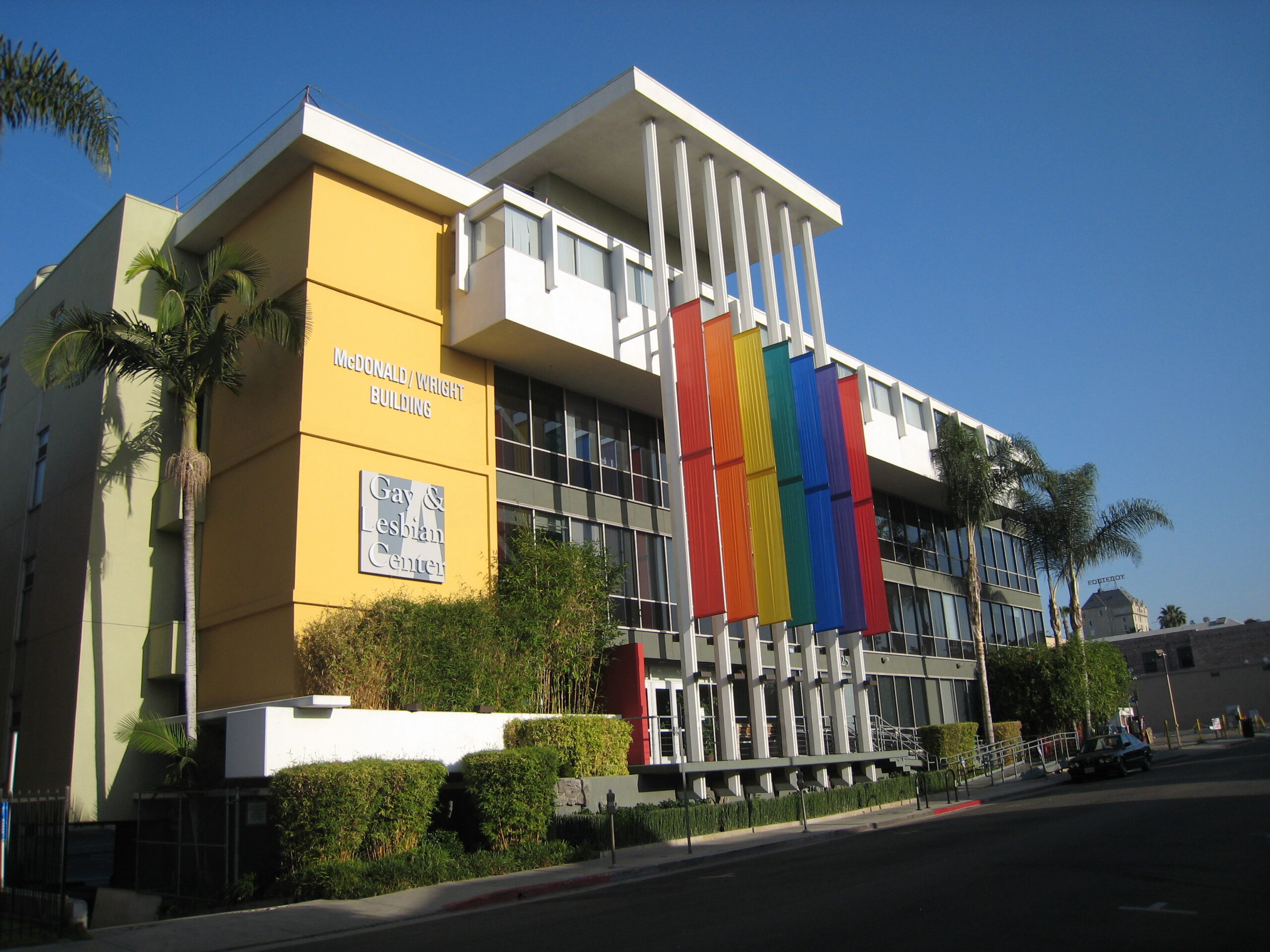
The Los Angeles LGBT Center's transition from a renter of unstable, makeshift spaces to a major Hollywood landowner marked a definitive shift in its operational strategy and political permanence. For nearly three decades following its 1969 inception, the organization operated out of leased properties, including the Victorian house on Wilshire Boulevard and later the Highland Avenue location. These sites, while historically significant, left the Center to landlords, market fluctuations, and the physical limitations of aging residential structures. The strategic pivot toward property ownership began in 1992 with the acquisition of the McDonald/Wright Building on Schrader Boulevard, it was the 1998 opening of The Village at Ed Gould Plaza that signaled the Center's evolution from a social service provider into a cultural institution.
Located at 1125 North McCadden Place, The Village was constructed on the site of a foreclosed post-production house. The acquisition and renovation were funded by a $15 million capital campaign, a massive financial undertaking for an LGBT organization at the time. The complex was named for Ed Gould, a publisher and philanthropist whose significant donation anchored the project. Unlike the Schrader building, which focused on "dire needs" such as HIV clinics and legal services, The Village was designed to nourish the community's cultural and social life. Architects renovated the industrial structure into a "funky" and open campus featuring the 200-seat Renberg Theatre, the Davidson/Valentini Theatre, and the Advocate & Gochis Galleries. The design deliberately retained elements of the building's history, such as exposed wooden ceilings and cement floors, while creating a central courtyard that became a safe, visible gathering space in the heart of Hollywood.
The opening of The Village on June 21, 1998, fundamentally altered the Center's footprint. It provided a permanent venue for theatrical productions, gallery exhibitions, and community events, declaring that the LGBT community deserved not just survival services, art, leisure, and public space. This expansion also served a tactical real estate purpose: it anchored the Center's presence on McCadden Place, setting the stage for a far more ambitious acquisition two decades later.
By the mid-2010s, the demand for senior housing and youth services had outstripped the capacity of the existing facilities. In a move to create a unified, intergenerational "campus," the Center targeted the property directly across the street from The Village: a California Employment Development Department building at 1116 North McCadden Place. The acquisition of this site allowed for the construction of the Anita May Rosenstein Campus, a project that would span more than a city block and physically link the organization's cultural and service arms. The project was spearheaded by a capital campaign that initially sought $25 million eventually raised over $57 million in private gifts, contributing to a total project cost exceeding $141 million.
The Anita May Rosenstein Campus, which opened in April 2019, represented the culmination of the real estate strategy initiated with The Village. Designed by architecture firms Leong Leong and KFA, the 180, 000-square-foot complex included 100 beds for homeless youth, a new Senior Community Center, a Youth Academy, and administrative offices. Crucially, the project utilized a complex stack of financing, including New Market Tax Credits and Low-Income Housing Tax Credits, to fund 99 units of affordable housing for seniors and 25 supportive housing units for youth. The lead gift of $8 million from Anita May Rosenstein was, at the time, the largest donation by a living donor to an LGBT organization.
The physical proximity of The Village and the new campus created a of safety and service in Hollywood. The two sites, facing each other across McCadden Place, transformed the street into a de facto "safe zone" where youth and seniors could move between housing, medical care, and cultural events without leaving the Center's orbit. This consolidation was not logistical; it was a statement of endurance. By 2026, the Center's real estate portfolio had grown to include multiple satellite locations, the McCadden Place corridor remained its symbolic and operational heart, proving that the community had moved from the margins of the city to owning a permanent, unmovable stake in its future.
| Facility Name | Location | Opening Year | Primary Function | Key Metric/Cost |
|---|---|---|---|---|
| McDonald/Wright Building | 1625 N. Schrader Blvd | 1992 | Medical, HIV/AIDS Services | major owned property |
| The Village at Ed Gould Plaza | 1125 N. McCadden Pl | 1998 | Culture, Arts, Theaters | $6. 7M complex cost (part of $15M campaign) |
| Triangle Square | 1602 Ivar Ave | 2007 | Senior Affordable Housing | 104 units (Nation's affordable LGBT senior housing) |
| Anita May Rosenstein Campus | 1116 N. McCadden Pl | 2019 | Housing, Youth/Senior Services | $141M total project cost |
Lorri L. Jean Executive Tenure and Institutional Growth 1993, 2022
Lorri L. Jean assumed leadership of the Los Angeles Gay and Lesbian Center in 1993, bringing a bureaucratic precision forged during her tenure as a deputy regional director at the Federal Emergency Management Agency (FEMA). Her arrival marked a definitive pivot from the organization's radical, liberationist roots toward a model of corporate institutionalism. When Jean took the helm, the Center operated on an annual budget of approximately $8 million, a figure that, while substantial for a gay organization of that era, reflected a community still besieged by the AIDS emergency and political marginalization. By the time she concluded her second tenure in July 2022, the Center had metamorphosed into a financial leviathan with net assets exceeding $192 million and an annual revenue stream surpassing $149 million.
Jean's term, lasting from 1993 to 1999, focused on stabilizing the Center's finances and professionalizing its operations. The chaotic, volunteer-heavy structure of the 1970s and 80s gave way to departmental hierarchies and grant-driven service delivery. During this period, the Center solidified its presence in the McDonald/Wright Building on Schrader Boulevard, a four-story structure that became the hub for medical and mental health services. Jean left in 1999 to lead the National Gay and Lesbian Task Force returned in 2003 after the Center struggled under interim leadership. Her return initiated an era of aggressive physical expansion that would permanently alter the geography of Hollywood.
The most visible manifestation of this expansion was the construction of the Anita May Rosenstein Campus, a project that stands in clear historical contrast to the clandestine existence of LGBTQ life in previous centuries. In the 1700s and 1800s, queer existence was relegated to molly houses and back alleys, hidden from the punitive gaze of the state. In 2019, the Center opened a 180, 000-square-foot glass-and-steel complex costing over $141 million. This facility, designed to house both homeless youth and seniors, asserted a permanent, highly visible claim to public space. The campus included 100 beds for homeless youth, 99 units of affordable housing for seniors, and a commercial-grade kitchen. Funding for this of social services came from a complex stack of financing, including $57 million in private donations and significant government tax credits.
The of the Center's growth under Jean's direction is best illustrated by its financial filings. A review of IRS Form 990 documents reveals a trajectory of exponential capital accumulation.
| Fiscal Year | Total Revenue | Total Assets | CEO Compensation |
|---|---|---|---|
| 1993 | ~$8, 000, 000 | (Data Unavailable) | (Data Unavailable) |
| 2011 | $53, 450, 327 | ~$45, 000, 000 | ~$350, 000 |
| 2016 | $87, 485, 166 | $98, 200, 000 | $500, 000+ |
| 2022 | $149, 105, 104 | $192, 115, 981 | $780, 075 |
This financial explosion drew criticism regarding the "corporatization" of LGBTQ advocacy. As the Center's budget ballooned, so did executive compensation. In the fiscal year ending June 2022, Lorri Jean's total compensation reached $780, 075, while her Chief of Staff, Darrel Cummings, received $544, 651. These figures placed the Center's leadership among the highest-paid executives in the non-profit sector, earning salaries more than 15 times that of the average staff member. Critics argued that such pay disparities mirrored the corporate inequalities the gay liberation movement originally sought to. The Center defended these salaries as necessary to retain top-tier talent capable of managing a complex healthcare and housing conglomerate.
The Village at Ed Gould Plaza, opened in 2007 across the street from the McDonald/Wright building, served as the cultural counterpart to the Center's medical services. It featured the Renberg Theatre and the Davidson/Valentini Theatre, providing a dedicated venue for queer arts. This expansion signaled the Center's intent to control not just the health and housing of the community, its cultural production as well. The acquisition of these properties also positioned the Center as a major real estate player in Hollywood, navigating zoning laws and gentrification debates that frequently pitted development against the preservation of lower-income neighborhoods.
Jean's administration also prioritized political integration over radical outsider tactics. The Center became a mandatory campaign stop for Los Angeles mayoral candidates and California gubernatorial hopefuls. By leveraging its massive donor base and voter mobilization capacity, the Center secured millions in government contracts for HIV prevention, homeless services, and mental health programs. This reliance on state funding, yet, bound the organization's survival to the whims of government budgets and policy shifts, a vulnerability that Jean's FEMA background helped the organization navigate never fully eliminate.
The transition of power in July 2022 marked the end of the "Jean Era." Joe Hollendoner, formerly of the San Francisco AIDS Foundation, assumed the role of CEO after a year-long co-leadership period. He inherited an organization that bore little resemblance to the grassroots shared founded in 1969. The Center had become a "non-profit industrial complex" prototype:, wealthy, politically connected, and deeply stratified. The Anita May Rosenstein Campus, with its gleaming facade and intergenerational housing, stands as the physical embodiment of this legacy, a monument to how far the community had come from the shadows of the 18th century, and a testament to the capital required to maintain that visibility in the 21st.
Anita May Rosenstein Campus Construction and Intergenerational Housing

The following table details the specific housing and service capacity established at the Anita May Rosenstein Campus as of its full operation period (2019, 2026):
| Facility Component | Capacity / Unit Count | Target Demographic | Primary Funding / Function |
|---|---|---|---|
| Senior Housing Tower | 98 Units | Adults 62+ (Low Income) | Affordable Housing (LIHTC) |
| Youth Supportive Apts | 25 Units | Youth 18-24 | Permanent Supportive Housing |
| Transitional Living | 60 Beds | Homeless Youth | 24-Month Stay + Case Mgmt |
| Emergency Shelter | 40 Beds | Homeless Youth | Immediate emergency Housing (Overnight) |
| Culinary Arts Kitchen | 115, 000 Meals/Year | Youth & Seniors | Vocational Training & Food Security |
Operational data from 2024 and 2025 show the functional mechanics of this intergenerational experiment. The Culinary Arts program serves as the primary between the groups. Youth and seniors train together in the commercial-grade kitchen, producing over 100, 000 meals annually for the Center's clients. This shared activity disrupts the isolation common to LGBT seniors and provides mentorship for youth who have frequently been rejected by their biological families. The Harry & Jeanette Weinberg Senior Center, within the campus, provides a physical venue for this socialization, offering case management and health navigation to over 2, 600 older adults annually. Even with the of the Rosenstein Campus, the facility acts as a microcosm rather than a total solution. By March 2026, the Los Angeles housing market remains hostile to low-income renters, and the 123 permanent units (98 senior, 25 youth) represent a fraction of the county's need. The "housing " model used here prioritizes stability as a precursor to mental health and employment, yet the exit rate from the transitional beds into market-rate housing remains constrained by external economic factors. The campus functions at maximum capacity, with the emergency shelter beds filling nightly. The construction of this facility also marked a consolidation of the Center's administrative footprint. By centralizing operations at McCadden Place and the neighboring Village at Ed Gould Plaza (located directly across the street), the Center freed up its previous headquarters at the McDonald/Wright Building on Schrader Boulevard to be converted entirely into a health and medical facility. This strategic reshuffling allowed for an expansion of medical services, including HIV care and transgender health programs, while the Rosenstein Campus absorbed the social service and housing workload. The site's history prior to the Center's acquisition reflects the urbanization of Hollywood. In the late 19th century, the land was part of the agricultural holdings that characterized the Cahuenga Valley. By the mid-20th century, as Hollywood solidified its status as the entertainment capital, the blocks surrounding Santa Monica Boulevard and Highland Avenue became a dense grid of light industrial support services for film studios, including prop houses, film vaults, and eventually, surface parking. The transformation of 1118 North McCadden from a parking lot into a $141 million social safety net hub mirrors the trajectory of the LGBT rights movement itself: moving from the margins of the city's infrastructure to owning a significant stake in its physical. Critics of the project during the planning phases in the early 2010s questioned the high cost per unit of the housing and the concentration of services in Hollywood, an area already saturated with social service demand. Yet, proponents argued that the centralization was necessary to create economies of for service delivery. The data from the seven years of operation supports the latter view; the proximity of the Youth Academy to the housing units has streamlined the route from homelessness to employment for hundreds of clients. The campus stands not as a shelter as a complex logistical engine designed to intervene in the pattern of poverty and displacement that disproportionately affect the LGBT community.
Youth Homelessness Interventions and Emergency Shelter Statistics
The trajectory of youth homelessness interventions at the Los Angeles LGBT Center cannot be understood without examining the legal status of minors in California dating back to the state's inception. While the Center itself formed in 1969, the emergency it addresses is the result of centuries of legal architecture that treated children as the property of their parents. Under English common law, imported to the American colonies in the 1700s and later codified in California, a minor fleeing a home, even an abusive one, was a "status offender." Until the mid-20th century, running away was not a cry for help a crime of "incorrigibility," punishable by incarceration in juvenile detention centers where LGBTQ youth faced violence and forced conversion therapies. The "runaway" statutes criminalized survival for queer youth rejected by their families, creating a state-sanctioned pipeline from the closet to the street to the prison.
When the Gay Community Services Center (GCSC) opened its doors in 1971, it immediately confronted this legal and humanitarian disaster. The Center's response was the "Liberation House," a radical experiment in community-based sheltering. The Liberation House, located at 1168 North Edgemont Street, opened in 1971 and charged residents $1. 50 per day for room and board. This was not a charity; it was a defiance of police practices that frequently targeted "vagrant" homosexuals. By 1972, demand was so high that the GCSC expanded to operate multiple Liberation Houses. These facilities were frequently chaotic, volunteer-run, and under constant threat of raids, yet they provided the alternative to the predatory streets of Hollywood or the brutality of state custody.
The passage of the federal Runaway Youth Act in 1974 marked a pivot point, legally permitting shelters to house minors for short periods without parental consent. This allowed the Center to professionalize its operations, moving from the ad-hoc "crash pad" model to structured social services. Throughout the 1980s and 1990s, as the HIV/AIDS epidemic ravaged Los Angeles, the demographic of homeless youth shifted. The Center began seeing "throwaway" youth, minors explicitly ejected by parents due to their sexual orientation or HIV status. In response, the Center established the Jeff Griffith Youth Center (JGYC) on Highland Avenue. For decades, the JGYC served as the primary triage point, offering meals, showers, and case management to thousands of young people annually, though it absence sufficient onsite beds to meet the exploding demand.
By the early 2000s, data collection began to reveal the disproportion of LGBTQ representation among the homeless population. Consistent metrics gathered by the Center and external researchers showed that while LGBTQ youth comprised only 10% of the general population, they made up 40% of the homeless youth population in Los Angeles. This statistic has remained horrifyingly durable for twenty years. The Center's data from 2010 to 2020 further clarified the racial disparities within this group, showing that Black and Latino LGBTQ youth were overrepresented even within the homeless cohort, frequently facing the "double minority" stress of racism and homophobia.
The modern era of intervention began with the opening of the Anita May Rosenstein Campus (AMRC) in April 2019. This facility represented a paradigm shift from scattered services to a centralized, intergenerational "housing " model. The campus was designed to integrate youth and senior housing, a community where queer elders and rejected queer youth could coexist. The AMRC dramatically expanded the Center's capacity, introducing 100 emergency overnight beds specifically for youth, alongside transitional and permanent supportive housing units. The architecture itself serves as an intervention, replacing the hidden, -like shelters of the past with a visible, glass-walled complex on Santa Monica Boulevard.
Current operational statistics for the 2024, 2026 period show the of the Center's youth housing network. The intervention hierarchy is strict and data-driven, moving youth from emergency status to stability through a multi-tiered bed system. The "Host Homes" pilot program, launched in 2019, adds another by matching youth with stable community members who have spare rooms, attempting to bypass the shelter system entirely for lower-needs individuals.
| Program / Facility | Capacity / Volume | Target Demographic | Max Stay Duration |
|---|---|---|---|
| Emergency Overnight Beds (AMRC) | 100 Beds | Youth (18, 24) | Overnight / Short-term |
| Transitional Living Program (TLP) | 52 Beds | Youth (18, 24) | Up to 18, 24 Months |
| Permanent Supportive Housing | 25 Units | Youth with disabilities/chronic homelessness | Indefinite |
| Youth Center Meals Served | ~117, 000 / Year | Drop-in clients & Residents | N/A |
| Mental Health Visits | ~55, 000 / Year | All ages (High utilization by TLP youth) | N/A |
The Transitional Living Program (TLP) serves as the serious engine for long-term stability. Unlike emergency shelters which focus on immediate survival, the TLP requires residents to engage in employment or education tracks. Data from 2023 indicates that youth who complete the full 18-month TLP pattern have significantly higher rates of permanent housing retention than those who only access emergency beds. The program forces a savings regimen, requiring residents to save a percentage of their income to build a safety net before graduation. Even with these resources, the "aging out" problem remains severe; when residents turn 25, they lose eligibility for youth-specific services, a "cliff" the Center attempts to through its intergenerational housing programs.
The Center's Culinary Arts program acts as both a vocational training tool and a food security engine. Producing over 100, 000 meals annually, the kitchen feeds the residents of the AMRC while training youth for employment in the Los Angeles hospitality sector. This internal supply chain reduces operational costs and provides immediate, low-barrier job training for youth who frequently absence formal education or employment history due to housing instability. The 100-day challenge initiatives, participated in by the Center in collaboration with city agencies, have repeatedly shown that rapid re-housing is possible, yet the inflow of newly homeless youth, driven by economic instability and persistent family rejection, continues to outpace the expansion of bed capacity.
As of 2026, the Center faces the challenge of the "acuity" of cases. Post-pandemic data suggests that incoming youth present with higher rates of untreated severe mental illness and substance dependency than in previous decades. The "low barrier" entry model is tested by the need for intensive psychiatric care that exceeds standard case management. The Center has responded by integrating Department of Mental Health (DMH) services directly into the housing navigation teams, acknowledging that a bed alone does not cure the trauma of street life. The fight that began with a $1. 50 cot in a bungalow in 1971 has evolved into a multi-million dollar housing enterprise, yet the fundamental driver, the expulsion of queer children from their homes, remains a constant societal failure the Center is forced to absorb.
Senior Services and Triangle Square Affordable Residence Operations
The history of aging in America, dating back to the colonial "poor laws" of the 1700s, relied entirely on a familial social contract: the elderly were cared for by their biological offspring. For three centuries, this structure inherently disenfranchised those who lived outside heterosexual norms. By the mid-20th century, the institutionalization of the elderly in nursing homes forced a "second closet" upon homosexual seniors, who faced abuse, isolation, or eviction if their sexuality was discovered. The Los Angeles LGBT Center's entry into senior services was not an expansion of care; it was a tactical intervention into a demographic emergency that the state had ignored. By 2026, the Center's data indicated that LGBT seniors were four times less likely to have children and twice as likely to live alone compared to their heterosexual peers, creating a vacuum of support that necessitated a radical architectural and operational response.
The major counter-offensive against this isolation was the construction of Triangle Square. Opened in 2007 at the corner of Selma and Ivar Avenues in Hollywood, this $21. 5 million project represented the affordable housing development in the nation specifically designed for LGBT elders. Before this facility, the concept of "gay retirement" was an oxymoron reserved for the wealthy; for the working class, it meant a return to invisibility. The 104-unit complex was developed in partnership with McCormack Baron Salazar and the City of Los Angeles, funded through a complex matrix of low-income housing tax credits and redevelopment funds. Its opening revealed the of the need: thousands of applications flooded the system for a mere hundred spots, necessitating a lottery system that underscored the desperate scarcity of safe harbor for the generation that had survived the AIDS plague.
Triangle Square operated not just as a residence as a against economic erasure. Data from the Williams Institute and Center internal audits consistently show that LGBT older adults face higher poverty rates than the general population, a cumulative result of lifetime employment discrimination and the absence of spousal survivor benefits prior to marriage equality. In 2023, the Center executed a strategic consolidation of this asset. Partnering with April Housing, the Center assumed full ownership of Triangle Square in a "reverse ribbon-cutting" ceremony. This transfer secured the building's affordability covenants in perpetuity, preventing the units from reverting to market rates, a common fate in the gentrifying Hollywood terrain that would have displaced the very pioneers who revitalized the neighborhood.
The operational philosophy of the Center's Senior Services Department extends beyond housing into the Harry & Jeanette Weinberg Senior Center. Located initially near the Village and later integrated into the Anita May Rosenstein Campus, this hub serves as the logistical brain for senior care. In 2025 alone, the department recorded 92, 463 total visits and served 2, 637 unique older adults. These metrics reflect a population that is active yet economically precarious. The Senior Services team manages a high-volume case management load, navigating a labyrinth of social security, disability, and housing voucher systems that are frequently hostile to non-normative applicants. The "Veterans" of the movement, those who marched in the 1970s and nursed partners through the 1980s, rely on the institution they helped build for their daily meals and medical advocacy.
The opening of the Anita May Rosenstein Campus marked the second phase of the Center's housing strategy. Recognizing that 104 units at Triangle Square were insufficient, the Center constructed the Ariadne Getty Foundation Senior Housing, which opened in the early 2020s. This facility added 98 affordable units to the inventory, specifically targeting seniors aged 62 and older. Unlike traditional retirement communities, this development was engineered with an intergenerational mandate. The senior housing sits adjacent to the youth center and youth housing, a deliberate architectural choice designed to the "age apartheid" common in social services. Programs facilitate interaction between homeless youth and seniors, creating surrogate family structures where elders provide historical continuity and youth assist with digital literacy.
even with these expansions, the demand continues to outpace capacity by a margin. As of 2026, waitlists for both Triangle Square and the Ariadne Getty building remain closed or years long. The economic reality for the Center's senior clients is clear. Internal surveys reveal that a significant percentage of these residents live on fixed incomes the federal poverty line, with relying solely on the Center's culinary arts program for their nutritional needs. The "Senior Prom," an annual event organized by the department, serves as a poignant metric of this community's resilience; for attendees, it is the time in their lives they have attended such a function with a same-sex partner or in their true gender identity.
The following table outlines the key housing assets managed or utilized by the Center's Senior Services as of 2026, illustrating the physical footprint of this operation:
| Facility Name | Location | Opening Year | Unit Count | Target Demographic |
|---|---|---|---|---|
| Triangle Square | Hollywood (Selma & Ivar) | 2007 | 104 | Low-income LGBT Seniors (62+) |
| Ariadne Getty Foundation Senior Housing | Anita May Rosenstein Campus | 2022 | 98 | Low-income Seniors (62+), formerly homeless |
| Harry & Jeanette Weinberg Senior Center | Anita May Rosenstein Campus | 2019 | N/A (Service Hub) | General Senior Population (50+) |
The Center's method to senior care also addresses the specific vulnerabilities of transgender elders. This subgroup faces the highest rates of poverty and health disparities within the LGBT spectrum. The Senior Services team has developed specialized housing navigation to assist transgender clients who frequently face rejection from mainstream nursing facilities. By 2024, the Center had established training modules for external care providers, attempting to force a widespread shift in how the broader medical industry treats aging trans bodies. Yet, the internal capacity remains the primary safety net. The 25 units within the Ariadne Getty building as permanent supportive housing for homeless seniors represent a serious lifeline for this demographic, pulling individuals directly from the streets into stable, affirming environments.
The trajectory from the 1700s model of familial dependence to the 2026 model of institutional support highlights a fundamental shift in the American social fabric. The Los Angeles LGBT Center has replaced the biological family unit with a community-based care infrastructure. This substitution is not a luxury a survival method. The "Silver Tsunami" of aging Baby Boomers includes the generation of openly gay adults to reach retirement age in mass numbers. Their medical needs, compounded by the long-term effects of HIV management and the psychological scars of pre-liberation discrimination, require a level of specialized care that generic senior centers fail to provide. The Center's operations at Triangle Square and the Rosenstein Campus stand as the only large-, proofs of concept for how to house and heal this population.
In the absence of federal interventions targeting LGBT elder poverty, the Center bears the weight of this demographic shift. The 2023 purchase of Triangle Square signaled a move from service provision to asset holding, ensuring that the community controls the land and the leases. This shift protects residents from the volatility of the Los Angeles real estate market, where the median rent far exceeds the monthly social security check of a typical client. As the Center moves through 2026, the integration of health services, social programming, and affordable housing remains the only viable method to prevent the wholesale displacement of the generation that started the fight for civil rights.
Federally Qualified Health Center Status and Medical Revenue Metrics
| Metric | FY 2023 | FY 2024 |
|---|---|---|
| Total Revenue | $162. 4 Million | $211. 5 Million |
| Program Service Revenue (Medical/Pharmacy) | $101. 5 Million | $112. 2 Million |
| Grants & Contributions | $62. 9 Million | $100. 1 Million |
| Medi-Cal Refund Reserve (Liability) | $4. 79 Million | $2. 81 Million |
| Total Medical/Behavioral Visits | ~100, 000 | 101, 000 |
| Unique Patients Served | ~14, 500 | 15, 000 |
Political Advocacy Mobilization and Proposition 8 Campaign History

The political weaponization of the Los Angeles LGBT Center began in earnest not in the radical 1970s, in the ashes of November 4, 2008. While the Center had long engaged in advocacy, the passage of Proposition 8, which amended the California Constitution to ban same-sex marriage, marked a catastrophic failure of the established political. The Center had invested heavily in the "No on 8" campaign, with CEO Lorri L. Jean serving on the executive committee and the organization contributing $1 million directly from its coffers. even with raising over $43 million shared, the opposition failed to stop 52% of California voters from stripping away marriage rights. The loss forced a brutal internal audit: the standard method of 30-second television ads and scripted door-knocking had failed to move the moral needle.
In the immediate aftermath, the Center launched the Leadership LAB (Learn Act Build) under the direction of Dave Fleischer. The mandate was to ignore conventional political wisdom and determine, through rigorous experimentation, how to actually change a voter's mind. Fleischer and his team spent years in Los Angeles neighborhoods, frequently those that had voted overwhelmingly for Prop 8, conducting thousands of experimental conversations. They discovered that reciting facts or legal arguments frequently caused voters to retrench in their bigotry. Instead, the LAB developed a technique eventually termed "Deep Canvassing." This method required canvassers to listen non-judgmentally for 10 to 15 minutes, asking voters to share personal experiences of marriage or discrimination, and then connecting those stories to the problem at hand.
The validation of this method became the subject of one of the most dramatic scientific controversies in modern political science. In December 2014, UCLA graduate student Michael LaCour and Columbia University professor Donald Green published a study in Science claiming that Deep Canvassing produced massive, almost miraculous shifts in voter opinion. The study was celebrated globally until May 2015, when two other researchers, David Broockman of Stanford and Joshua Kalla of UC Berkeley, exposed LaCour's data as fraudulent. LaCour had never conducted the surveys; he had fabricated the numbers to match the Center's hopes. The retraction was a humiliating blow to the field, yet the Center's Leadership LAB insisted their internal data showed the method worked, even if LaCour had lied about the external validation.
Broockman and Kalla, the very detectives who uncovered the fraud, returned to the Center in 2016 to conduct a legitimate, rigorous test of the methodology. Partnering with the Center and the Miami-based organization SAVE, they deployed Deep Canvassing to combat anti-transgender prejudice. The resulting study, published in Science in April 2016, provided verified empirical proof that a single 10-minute conversation could reduce transphobia by approximately 10 percent. Crucially, this reduction for at least three months and withstood attack ads. The study overturned decades of psychological consensus which held that prejudice was easy to activate nearly impossible to diminish. The Center had engineered a social technology that could bigotry at the doorstep.
| Metric | Traditional Canvassing | Deep Canvassing (Leadership LAB) |
|---|---|---|
| Interaction Length | 60, 90 seconds | 10, 15 minutes |
| Voter Engagement | Scripted monologue | Two-way narrative exchange |
| Prejudice Reduction | Statistically insignificant | ~10% reduction (equivalent to 14 years of social change) |
| Durability | Fades within days | 3+ months |
By the 2020s, the Center had exported this methodology to campaigns across the United States, training organizers to defend abortion rights, immigrant protections, and transgender healthcare. The political terrain, yet, shifted aggressively in 2023 and 2024 as conservative groups targeted local school boards to enact "parental notification" policies designed to out transgender students. The Center's Policy and Mobilization team pivoted to these hyper-local battles, specifically in districts like Chino Valley and Glendale, deploying the Resistance Squad to counter the "culture war" tactics of the far right. This marked a return to the Center's 1970s roots of direct confrontation, balanced with the sophisticated data operations developed post-2008.
The 2024 election pattern served as a final exorcism of the Proposition 8 ghost. The Center mobilized its "TurnOut & Vote" campaign to support Proposition 3, a ballot measure designed to repeal the unenforceable language of Prop 8 from the state constitution and enshrine the fundamental right to marry. Unlike 2008, the 2024 campaign succeeded overwhelmingly, closing a sixteen-year wound. Simultaneously, the Center threw its weight behind Los Angeles County's Measure A, securing a dedicated sales tax revenue stream for homeless services, a serious pipeline for the organization's housing programs which serve the disproportionately high number of unhoused LGBTQ+ youth.
As of 2026, the Center's political arm operates as a distinct power center within California politics. The "Liberation Forever" initiative, launched in late 2025, signals a strategy that moves beyond defense. With the election of Sarah McBride to Congress and the passage of Prop 3, the Center has shifted focus toward "future-proofing" civil rights against federal. The advocacy department commands a budget and volunteer force that rivals mid-sized political parties, using the Deep Canvassing infrastructure to inoculate voters against the rising of anti-trans legislation before it can take root in state legislatures.
Fiscal Reliance on Government Grants and 2024, 2026 Budget Data
By the fiscal year ending June 30, 2024, the Los Angeles LGBT Center had mutated from its 1971 origins as a radical, volunteer-run liberation front into a massive corporate entity with total revenues exceeding $211 million. This financial expansion, driven by a strategic integration into the "nonprofit industrial complex," fundamentally altered the organization's allegiance. No longer solely answerable to the grassroots community, the Center operates as a primary vendor for the state, with its survival tethered to federal, state, and county contracts. Financial disclosures from 2023 and 2024 reveal that over 60% of the Center's revenue stream flows directly from government sources, specifically through "program service revenue" which includes Medi-Cal reimbursements, Ryan White HIV/AIDS Program grants, and housing contracts. This dependency created a serious vulnerability: when political winds shift or government budgets contract, the Center's operational stability fractures.
The danger of this reliance materialized sharply between 2024 and 2026. In May 2025, California Governor Gavin Newsom proposed cutting over $17 million in dedicated funding for LGBTQ+ health equity programs to address the state's ballooning deficit. The Center, led by CEO Joe Hollendoner, publicly condemned the move as a "betrayal," yet the structural weakness lay in the Center's business model itself. Having built an infrastructure that costs over $180 million annually to maintain, any retraction in state support threatens immediate service reductions. The situation worsened in February 2026, when the Trump administration targeted "blue state" public health funding, slashing $600 million from federal grants. The Center faced an immediate loss of $383, 000 in HIV prevention funding, a cut that spokesperson Brian De Los Santos admitted would directly reduce their ability to provide care. These sequential shocks expose the fragility of a liberation movement that has become a government subcontractor.
Executive compensation at the Center remains a point of contention for critics who recall the organization's anti-capitalist roots. In the fiscal year 2023, former CEO Lorri L. Jean received a total compensation package of $780, 075, while her successor, Joe Hollendoner, commanded a salary package method $490, 000 by 2024. This pay places the Center's leadership firmly within the top 1% of income earners in Los Angeles, creating a class divide between the executives in the boardroom and the homeless youth or seniors they serve. The ratio of the highest-paid employee to the average staff member stands at approximately 15: 1, a that mirrors the corporate structures the Gay Liberation Front once sought to. While the Center these salaries are necessary to attract top talent to manage a $200 million operation, the optics suggest a drift toward professionalized advocacy where career advancement competes with community service.
The following table details the Center's financial escalation and government reliance based on audited financial statements and IRS Form 990 filings from 2021 to 2024:
| Fiscal Year | Total Revenue | Total Expenses | Gov. Contracts & Program Revenue | CEO Compensation |
|---|---|---|---|---|
| 2021 | $149, 031, 271 | $131, 416, 382 | $98, 400, 000 (approx) | $600, 000+ (L. Jean) |
| 2022 | $149, 105, 104 | $142, 837, 442 | $105, 200, 000 (approx) | $780, 075 (L. Jean) |
| 2023 | $162, 444, 453 | $162, 287, 218 | $101, 534, 874 | $484, 249 (J. Hollendoner) |
| 2024 | $211, 510, 542 | $180, 239, 094 | $112, 189, 330 | $489, 365 (J. Hollendoner) |
The 2024 revenue surge to $211 million masks the underlying operational risks. While total assets grew to $180 million, liabilities also increased, and the "net income" margin in 2023 was razor-thin at roughly $157, 000 before the 2024 bump. This leaves little room for error. The Center's expansion into affordable housing, such as the Anita May Rosenstein Campus, adds heavy fixed costs. Unlike flexible grassroots programs, real estate development requires constant capital infusion for maintenance and staffing. When Los Angeles County froze contracts with 39 community health providers in mid-2025 due to delayed federal CDC funds, the Center had to scramble to cover gaps. This incident proved that even with hundreds of millions in revenue, the organization lives paycheck-to-paycheck on the government's schedule.
Looking ahead through 2026, the Center faces a hostile fiscal environment. The dual pressure of California's state budget deficits, forcing cuts to the Office of Health Equity, and federal antagonism creates a pincer movement against the organization's bottom line. The Center's response has been to mobilize political pressure, urging lawmakers to restore funding. Yet, this strategy highlights the trap: the Center cannot bite the hand that feeds it without risking its own insolvency. The radical autonomy of 1971 is gone, replaced by a permanent need to lobby the state for the resources to exist. In becoming "too big to fail," the Los Angeles LGBT Center has also become too dependent to truly rebel.
Internal Labor Relations and NUHW Collective Bargaining Agreements
| Position | Individual | Total Compensation | Ratio to Avg. Staff |
|---|---|---|---|
| Chief Executive Officer (Outgoing) | Lorri L. Jean | $780, 075 | 15. 1x |
| Chief of Staff | Darrel Cummings | $544, 651 | 10. 5x |
| Chief Executive Officer (Incoming) | Joe Hollendoner | $484, 249 | 9. 4x |
| Average Staff Member | N/A | $51, 657 | 1. 0x |
The labor dispute escalated in the summer of 2023. Workers staged protests and authorized a strike, threatening to shut down services at the world's largest LGBT organization. The threat of a work stoppage during a period of heightened anti-LGBTQ+ political rhetoric forced management back to the table. In July 2023, the Center and NUHW ratified a three-year shared bargaining agreement that marked a historic shift in power. The contract secured an average wage increase of 22 percent over the life of the agreement, a method to address the retention emergency. Crucially, the 2023 agreement dismantled the long-standing policy that forced employees to bear the full cost of health insurance for their children and spouses. The contract established a tiered contribution model where the Center would pay 25 percent of dependent premiums in 2024, rising to 50 percent by 2026. This provision was not financial; it was a symbolic victory for a workforce that argued an organization dedicated to "families" should support the families of its own workers. also, in response to the rising of hate crimes, the union won language requiring the hiring of security consultants to assess safety at clinics and housing facilities, acknowledging that staff were on the front lines of a culture war. yet, the internal peace secured in 2023 faced an immediate existential threat in January 2025. The inauguration of a hostile federal administration brought an Executive Order freezing federal funding for government contracts, a move that targeted social service agencies serving marginalized populations. CEO Joe Hollendoner issued a blistering statement on January 28, 2025, characterizing the order as "illegal" and a "descent into fascism." While the statement aligned management and labor politically, the financial were catastrophic. The freeze jeopardized the revenue streams necessary to fund the raises promised in the 2023 union contract. Throughout 2025 and into early 2026, the Center navigated a precarious terrain. Management warned that without the restoration of federal funds, the gains made by the union might be untenable, raising the specter of layoffs or contract renegotiations. The union, conversely, argued that the Center's $111 million in net assets (as of 2023 filings) should serve as a buffer to protect workers, rather than balancing the political emergency on the backs of the lowest-paid employees. This period saw a shift in union strategy from internal wage fights to joint political advocacy, as workers and executives found themselves in a forced alliance against external defunding attempts. The labor history of the Center also reflects a broader reckoning within the non-profit sector regarding the "professionalization" of activism. The 2024 financial reports showed the Center generating over $211 million in revenue, yet the reliance on government grants (over $100 million) exposed the fragility of this corporate model. The unionization drive was not simply about money; it was a demand for democratization within a structure that had become hierarchical and unclear. Workers demanded a say in how services were delivered, arguing that their proximity to clients gave them insights that executives in the Schrader Boulevard offices absence. By March 2026, the relationship between the Center and NUHW remained one of "adversarial cooperation." The grievance procedures established in the contract became active channels for challenging disciplinary actions and enforcing safety standards. The "Weingarten Rights" of employees, the right to union representation during investigatory interviews, became a frequently exercised tool, signaling the end of the informal, "family-style" conflict resolution that characterized the Center's early decades. The evolution of labor relations at the Los Angeles LGBT Center serves as a case study in the maturation of LGBTQ+ advocacy. No longer a scrappy band of volunteers, the Center is a major employer subject to the same economic laws and labor struggles as a hospital or a university. The union contract stands as a document of this reality, codifying that the fight for dignity is not only for the clients walking through the doors, also for the workers unlocking them each morning. The survival of the organization depends on its ability to reconcile its massive operational costs with its moral obligation to prevent the exploitation of the very community it employs.