
Colonial Gold Logistics and the Bandeirante Base Operations (1700, 1800)
Sao Paulo did not begin as a metropolis; it began as a paramilitary staging ground. Throughout the 18th century, the settlement functioned not as a center of production, as a kinetic pump for the Portuguese Crown, expelling manpower into the interior to extract mineral wealth. The discovery of gold in Minas Gerais (1693), Mato Grosso (1718), and Goiás (1725) by Bandeirantes, militias frequently romanticized as explorers operationally functioning as slave-hunting contractors, triggered a demographic. As the gold rush accelerated, Sao Paulo emptied. Census data from 1730 reveals a "hollow frontier": while the mining camp of Ouro Preto swelled to 40, 000 inhabitants, the city of Sao Paulo stagnated at fewer than 8, 000 residents. The able-bodied male population abandoned the plateau, leaving behind a subsistence economy managed largely by women and the elderly.
The logistics of this extraction defined the region's geography for the three centuries. The Caminho do Ouro (Gold Trail) and the river-based Monções were the arteries of the Portuguese Empire. The Monções, departing from the Tietê River in Sao Paulo, were amphibious convoys that took five to six months to reach the mines of Cuiabá. These expeditions were industrial in; a single convoy in 1726 included 305 canoes and 3, 000 people. The mortality rate was, driven by rapids, malaria, and Payaguá indigenous resistance. Yet, the profit margins on the gold extracted justified the human cost in the eyes of the Crown. Sao Paulo provided the logistical expertise and the indigenous slave labor, known as the "hands and feet" of the masters, required to move tons of bullion from the interior to the ports of Paraty and Rio de Janeiro.
By 1748, the economic drain was so severe that the Portuguese Crown dissolved the Captaincy of Sao Paulo, subordinating it to Rio de Janeiro. The region had become a ghost province, its utility as a slave-hunting base diminished by the shift to African slavery in the mines. This administrative erasure lasted until 1765, when the geopolitical need to secure the southern borders against Spain forced a restoration. The arrival of Luís António de Sousa Botelho Mourão, the Morgado de Mateus, marked the beginning of state-sponsored modernization. He implemented a brutal policy of forced urbanization, compelling the dispersed rural population into new grid-based towns (vilas) to facilitate taxation and military conscription. This was the systematic attempt to transform Sao Paulo from a transit zone into a production hub.
| Operational Metric | 18th Century (Gold pattern) | 2026 (Agro-Industrial pattern) |
|---|---|---|
| Primary Commodity | Gold (approx. 800 tons official export 1700, 1800) | Soybeans, Iron Ore, Sugar (Rumo Rail moved 74. 9 billion TKM in 2022) |
| Transport Velocity | Monções: 5, 6 months (SP to Cuiabá) | Rail/Truck: 3, 4 days (Mato Grosso to Santos) |
| Logistical Hub | Sorocaba (Mule Fairs) | Campinas/Viracopos (Intermodal Nexus) |
| Infrastructure Route | Caminho dos Goiases / Caminho Velho | Rodovia dos Bandeirantes (SP-348) / Anhanguera (SP-330) |
The economic vacuum left by the gold exodus was eventually filled by the muleteer (tropeiro) trade. As the mines in Minas Gerais required food and heavy equipment that the local soil could not provide, Sao Paulo reinvented itself as the transport broker of the colony. The town of Sorocaba became the continental hub for the mule trade, connecting the pampas of the south with the mines of the center. This trade network created a capital accumulation method that remained in Sao Paulo even as the gold went to Lisbon and London. The tropeiros did not just move goods; they mapped the interior. The route they cut, following indigenous foot trails, are the exact alignments of the modern Rodovia Anhanguera and Rodovia dos Bandeirantes. The 2026 toll road network, managed by concessionaires like CCR, sits atop the blood and hoofprints of the 1700s.
The restoration of 1765 also introduced the reliable census data, driven by military need. In 1775, the census recorded a population of approximately 116, 000 for the entire captaincy, a figure that reflects the slow recovery from the mining migration. The Morgado de Mateus used this data to enforce production quotas, shifting the region toward sugar and cotton. This pivot laid the groundwork for the agricultural potentate that would emerge in the 19th century. The administrative structure he imposed, rigid, militarized, and focused on export logistics, remains visible in the state's governance DNA. The "Captaincy" mentality, where the state acts primarily to facilitate the flow of commodities to the coast, in the strategic planning of the 2020s.
British influence during this period was indirect decisive. The Methuen Treaty (1703) meant that much of the gold extracted by Paulistas and refined in Rio flowed to the Bank of England to pay for Portuguese trade deficits. Sao Paulo was the remote engine room of a global wealth transfer that capitalized the Industrial Revolution in Britain while leaving the extraction zone undeveloped. The city's stagnation during the height of the gold boom (1700, 1750) demonstrates the "resource curse" in its earliest colonial form: the closer a region was to the method of extraction, the less it retained of the value created.
By the end of the 18th century, the gold deposits were exhausted, and the "hollow frontier" began to refill. The return of populations from the mines, combined with the administrative reforms of the Morgado de Mateus, set the stage for the coffee pattern. Yet, the physical and bureaucratic infrastructure established between 1700 and 1800, the radial road network converging on the plateau, the militarized administration of the interior, and the reliance on commodity export, became the permanent operating system of Sao Paulo. In 2026, when heavy rail lines transport soy from Mato Grosso through the interior of Sao Paulo to the Port of Santos, they utilize the same geopolitical logic established by the Monções: the interior exists to feed the port, and Sao Paulo exists to manage the flow.
Coffee Export Oligopolies and Railway Grid Expansion (1850, 1930)

The transformation of Sao Paulo from a provincial backwater into the industrial engine of the Southern Hemisphere was not an organic evolution; it was a calculated engineering project driven by the coffee oligarchy. Following the prohibition of the transatlantic slave trade in 1850 via the Eusébio de Queirós Law, the capital previously locked in human trafficking was violently redirected toward infrastructure and land development. The coffee frontier, having exhausted the soil of the Paraíba Valley, marched westward into the terra roxa (purple earth) of the Paulista West. This geographical shift necessitated a logistical revolution that would bind the state's economy to global markets with steel and steam.
The primary obstacle to this expansion was the Serra do Mar, a formidable coastal escarpment rising 800 meters abruptly from the Atlantic. For centuries, this geological wall had the plateau from the port of Santos, restricting cargo to mule trains that were slow, expensive, and incapable of handling industrial tonnage. The solution arrived in 1867 with the completion of the Sao Paulo Railway (SPR), a British-capitalized venture spearheaded by the Baron of Mauá owned by the San Paulo Railway Company Ltd. of London. Known locally as "A Inglesa" (The English Lady), this line was an engineering marvel that used a system of funiculars and stationary steam engines to hoist trains up the cliff face. It was also a choke point. The SPR held the monopoly on the only viable route to the ocean, granting British shareholders a stranglehold on the export economy of the entire state.
The friction between the British monopoly and the Brazilian agrarian elite birthed a unique railway network. Resenting the high tariffs imposed by the SPR, the coffee barons of the interior pooled their own capital to construct feeder lines. The Companhia Paulista de Estradas de Ferro, founded in 1868, was the major railway in Brazil built entirely with domestic capital, raised directly from the planters who needed to ship their harvest. This marked a decisive shift in the region's financial maturity. The railway grid assumed a "fan" configuration: lines like the Paulista, Mogiana, and Sorocabana spread outward into the coffee zones to collect the crop, all were forced to funnel their freight into the British-owned SPR at Jundiaí to reach the port. This funnel effect turned the city of Sao Paulo, located at the convergence of these lines, into a mandatory commercial hub, processing every sack of coffee before it descended the mountains.
The expansion of this grid coincided with a demographic substitution of massive proportions. The abolition of slavery in 1888 threatened the labor supply of the coffee fazendas. In response, the Sao Paulo state government, controlled by the planters, initiated a program of subsidized mass immigration. Between 1880 and 1930, more than 2. 5 million immigrants entered the state, primarily Italians, Portuguese, Spanish, and later, Japanese. Unlike the spontaneous immigration seen in North America, this was a state-managed labor procurement system. The "colonato" system replaced slave quarters with tenant farming, where immigrant families were contracted to tend specific numbers of coffee trees. While this system offered a theoretical route to land ownership, it frequently functioned as a method of debt bondage and social control, ensuring the oligarchy retained cheap hands to harvest their "green gold."
The economic power of the coffee barons translated directly into political hegemony during the Republic (1889, 1930). Through the "Politics of Coffee with Milk" (Política do Café com Leite), Sao Paulo and Minas Gerais alternated the presidency, privatizing the federal government to serve agrarian interests. The apex of this manipulation was the 1906 Taubaté Agreement. Facing a global surplus that threatened to crash prices, the governors of the coffee states agreed to a federal intervention scheme. The government would borrow foreign capital to purchase and stockpile millions of sacks of coffee, artificially inflating the price. This policy of "valorization" socialized the risks of the oligarchy while guaranteeing their profits, transferring the financial load to the public treasury and the currency exchange rate.
The wealth generated by this export machine did not remain entirely in the countryside. The surplus capital from coffee exports, combined with the wages of the immigrant workforce, created a consumer market that sparked early industrialization. The coffee barons began to diversify, investing their profits into textile mills, glass factories, and banks within the capital city. By 1920, Sao Paulo had ceased to be a mere transit point; it was becoming a metropolis. The population data from this era reveals the explosive velocity of this urbanization, driven by the dual engines of coffee money and railway logistics.
| Year | City Population | Coffee Production (Bags) | Railway Network (km) |
|---|---|---|---|
| 1872 | 31, 385 | 2, 600, 000 | 139 (SPR only) |
| 1890 | 64, 934 | 4, 500, 000 | 2, 400 |
| 1900 | 239, 820 | 9, 000, 000 | 3, 300 |
| 1920 | 579, 033 | 14, 000, 000 | 6, 500 |
This period also witnessed the arrival of foreign utility conglomerates that would wire the city for the future. In 1899, the Sao Paulo Tramway, Light and Power Company was incorporated in Toronto. "The Light," as it was known, monopolized the city's electricity and public transport, powering the electric trams (bondes) that allowed the urban footprint to sprawl into new neighborhoods like Higienópolis and Campos Elíseos. These districts became the showcases of the coffee elite, lined with eclectic mansions that mimicked European architectural styles, physically separating the bourgeoisie from the working-class tenements (cortiços) springing up in Brás and Mooca.
Yet, the very success of the coffee monoculture sowed the seeds of its own destabilization. The Taubaté Agreement encouraged overproduction, creating larger surpluses that required ever-larger loans to warehouse. The reliance on a single commodity left the state's economy exposed to global shocks. When the New York Stock Exchange crashed in 1929, the credit lines sustaining the valorization policy evaporated. The price of coffee collapsed, bankrupting the barons who had leveraged their estates to buy more land. The economic emergency shattered the political legitimacy of the Sao Paulo oligarchy, paving the way for the Revolution of 1930 and the end of the Republic. The railways and factories they built, yet, remained, forming the skeleton of the industrial giant that would dominate the 20th century.
Industrialization Surges and the 1932 Constitutionalist War
The transformation of Sao Paulo from a provincial outpost into an industrial leviathan was not a gradual evolution; it was a violent rupture fueled by coffee capital and hardened by trench warfare. Between 1890 and 1900, the city's population exploded, growing at a rate of 14 percent annually, a demographic shock that saw the inhabitant count surge from 64, 000 to 239, 000 in a single decade. This influx was not biological; it was the kinetic energy of a new economic machine. The coffee barons, sitting on surplus capital from the "green gold" extracted in the interior, began to hedge their bets. They transferred liquidity from the plantations to the urban plateau, financing a new grid of textile mills, glass factories, and foundries. By 1920, the city housed 580, 000 souls, and the skyline began to rise, not with church steeples, with smokestacks.
At the center of this industrial vortex stood Francisco Matarazzo, an Italian immigrant who arrived in 1881 and built an empire that would eventually dwarf the fiscal capacity of Brazilian states. By 1934, the Indústrias Reunidas Fábricas Matarazzo (IRFM) generated a gross income of 350, 000 contos, a figure nearly equal to the entire tax revenue of the State of Sao Paulo itself. Matarazzo did not just build factories; he constructed a vertical integration monopoly that controlled everything from the tin for his lard cans to the ships that transported his wheat. His complex in the Água Branca district became a city within a city, a prototype for the industrial zones that would later engulf the ABC region. This concentration of capital created a gravitational pull that sucked in labor from Southern Europe and Japan, fundamentally altering the genetic and cultural makeup of the plateau.
The friction generated by this rapid industrialization ignited in July 1917. Following the police killing of the young shoemaker José Martinez, the city erupted into its General Strike. For days, Sao Paulo was paralyzed. Anarchist syndicates, organized by Italian and Spanish immigrants who brought radical traditions from the Old World, shut down the tramways and the textile mills. The 1917 strike was a stress test for the new industrial elite, proving that the city was no longer a passive administrative center a volatile reactor of class conflict. The state responded with repression, yet the infrastructure of labor organization had been laid, a network that would into the 21st century.
The global economic collapse of 1929 served as the final accelerant for Sao Paulo's industrial dominance. As coffee prices plummeted on international markets, the oligarchy's reliance on agricultural exports became a liability. Capital fled the fields and locked itself into urban manufacturing. This economic pivot coincided with a political decapitation; the Revolution of 1930, led by Getúlio Vargas, ended the "coffee with milk" politics that had favored Sao Paulo. Stripped of federal political power, the Paulista elite retreated to their economic stronghold, a deep resentment that would boil over two years later.
The Constitutionalist Revolution of 1932 was the climax of this tension, a conflict that functioned as a total war mobilization for the state's industrial park. Triggered by the killing of four students, Martins, Miragaia, Dráusio, and Camargo (MMDC), on May 23, 1932, the state declared war on the Vargas dictatorship on July 9. For 87 days, Sao Paulo fought alone against the rest of the federation. The logistics of this conflict reveal the extent of the city's industrial maturity. The Polytechnic School of Sao Paulo converted its laboratories into munitions plants. Engineers designed and built armored trains, flamethrowers, and aerial bombs using local materials. The factories of Matarazzo and others switched from producing pasta and textiles to manufacturing uniforms and cartridges.
| Metric | 1900 Status | 1932 War Mobilization | 1940 Status |
|---|---|---|---|
| Population | 239, 000 | ~1, 000, 000 | 1, 326, 000 |
| Industrial Focus | Textiles, Food Processing | Heavy Ordnance, Armored Vehicles | Metallurgy, Chemicals |
| Key Infrastructure | Light & Power Co. (Tramways) | Polytechnic Munitions Lines | Via Anchieta (Planning Phase) |
| Strategic Asset | Coffee Export Revenue | "Gold for the Good of SP" Campaign | Integrated Industrial Park |
The "Campanha do Ouro para o Bem de São Paulo" (Gold for the Good of Sao Paulo) illustrated the total commitment of the populace. Residents donated wedding rings, jewelry, and family heirlooms to the state treasury to fund the war effort. This extraction of private wealth for public defense yielded tons of gold, much of which was eventually incorporated into the assets of the Santa Casa de Misericórdia after the defeat. The war was fought with a ferocity that surprised the federal forces. Trench warfare in the Paraíba Valley mimicked the conditions of World War I, with Paulista troops holding the line against superior federal numbers. Official records list 934 Paulista deaths, though independent estimates suggest the toll exceeded 2, 200. The federal government, utilizing superior numbers and a naval blockade of the port of Santos, eventually strangled the rebellion.
Sao Paulo surrendered on October 2, 1932. Yet, the military defeat masked a economic victory. The war had forced the state to develop a self-sufficient military-industrial complex overnight. The networks of suppliers, the engineering expertise, and the logistical chains developed during those three months did not with the peace treaty. Instead, they were repurposed for civilian industrial expansion. The defeat convinced the Vargas regime that Sao Paulo could not be governed by force alone; a political compromise ensued, leading to the 1934 Constitution and the founding of the University of Sao Paulo (USP) in 1934, intended to create a technocratic elite to lead Brazil through science rather than arms.
By 1940, the city had reached 1. 3 million inhabitants. The industrial zones established during this era, Mooca, Brás, and the nascent ABC region, became the engines of the "Brazilian Miracle" in subsequent decades. The infrastructure laid down to move troops and munitions became the arteries for the automotive industry that would arrive in the 1950s. The 1932 war consolidated Sao Paulo's position as the economic locomotive of Brazil, a status it retains in 2026 even as it transitions from a manufacturing hub to a service-oriented global city. The deindustrialization observed in the 2020s, with factories in the ABC region closing or moving away, represents the unwinding of the specific industrial fabric woven during the frantic months of 1932. The empty shells of factories visible today in districts like Ipiranga are the skeletal remains of the leviathan born in that conflict.
The legacy of 1932 remains etched in the city's terrain. The obelisk at Ibirapuera Park, which houses the remains of the MMDC martyrs and the soldiers of 1932, stands as a physical anchor to this history. the true monument is the metropolis itself, a sprawling, chaotic, and entity built on the capital of coffee and forged in the fires of a failed secessionist war. The transition from the "hollow frontier" of the 18th century to the industrial powerhouse of the 20th was absolute. By the time the smoke cleared in October 1932, Sao Paulo was no longer just a city in Brazil; it was the machine that pulled the entire nation forward.
Automotive Manufacturing Dominance and ABC Region Labor Strikes

The following table details the major shifts in automotive manufacturing presence in Sao Paulo state between 2019 and 2026, highlighting the transition from Western legacy automakers to Asian high-tech consolidation.
| Automaker | Location | Action Taken | Year | Impact & Strategic Shift |
|---|---|---|---|---|
| Ford | São Bernardo do Campo | Permanent Closure | 2019 | Exit from heavy truck market; loss of 3, 000 direct union jobs. |
| Ford | Taubaté | Permanent Closure | 2021 | Complete cessation of manufacturing in Brazil; shift to import-only model. |
| Toyota | Indaiatuba | Closure & Transfer | 2026 | Ending 27 years of Corolla production; consolidating operations to Sorocaba. |
| Toyota | Sorocaba | Expansion | 2025-2026 | R$11 billion investment to create a "mega-hub" for hybrid flex-fuel vehicles. |
| Great Wall Motors (GWM) | Iracemápolis | Acquisition & Opening | 2024-2025 | Purchased former Mercedes plant; 50, 000 unit/year capacity for EVs/Hybrids. |
| Volkswagen | São Bernardo do Campo | Restructuring | 2022-2025 | Reduction in workforce via buyouts; focus shifting to the "MQB" platform. |
The trajectory of the ABC region and the wider Sao Paulo industrial belt serves as a microcosm of global manufacturing trends. The era of the "mass worker", the thousands of men in blue in total marching in unison, is extinct. It has been replaced by a fragmented, highly technical workforce operating in "smart factories" where the ratio of robots to humans continues to climb. The strikes of 1978 are historical artifacts, celebrated in museums impossible to replicate in an environment where capital is fluid and production is modular. Sao Paulo remains the industrial command center of South America, its power no longer rests on the sheer volume of sweat on the shop floor, on the integration of software, logistics, and energy transition technologies.
First Command of the Capital (PCC) Structure and Prison Control
The Command of the Capital (Primeiro Comando da Capital, or PCC) is not a criminal gang; it is a shadow bureaucracy that functions as the de facto governing body of Sao Paulo's penal system and vast swathes of its urban periphery. Born on August 31, 1993, in the Taubaté House of Custody, a facility known as "Piranhão" for its brutal conditions, the organization emerged as a direct response to the Carandiru Massacre of 1992, where military police executed 111 prisoners. Eight founders, including Mizael "Geleião" and Sombra, drafted a statute (Estatuto) that framed their criminal enterprise as a brotherhood for prisoner protection. By 2026, this entity had evolved into a transnational holding company with annual revenues exceeding $1 billion, controlling the Port of Santos and infiltrating municipal services.
The PCC's operational genius lies in its corporate structure, which mimics the efficiency of a multinational logistics firm. The organization rejects the charismatic "don" model typical of drug cartels in favor of a decentralized franchise system. Membership requires a monthly due ("cebola") and strict adherence to the statute. The hierarchy is divided into specialized departments known as "Sintonias" (frequencies or tunings), ensuring that the incarceration of specific leaders does not decapitate the organization. By 2025, intelligence reports identified fourteen distinct Sintonias managing everything from legal defense to international cocaine exports.
| Unit (Sintonia) | Operational Mandate |
| Sintonia Final | The supreme executive board. Composed of the highest-ranking members (frequently incarcerated in federal prisons), they authorize high-level assassinations and strategic shifts. |
| Sintonia dos Gravatas | "The Ties." A legal department managing a network of attorneys who facilitate communication between prisons and the streets, frequently under the guise of attorney-client privilege. |
| Sintonia do Progresso | The revenue engine. Manages the logistics of drug trafficking, specifically the wholesale movement of cocaine from Bolivia and Paraguay to the Port of Santos. |
| Sintonia do Sistema | Internal affairs. Governs the prison yards ("pátios"), enforcing the PCC's code of conduct, mediating disputes, and maintaining order to prevent police intervention. |
| Setor da Padaria | "The Bakery." A financial laundering division identified in 2024, responsible for washing illicit profits through shell companies and digital banking platforms. |
| Setor do Raio-X | Compliance and audit. Investigates internal theft, disloyalty, or failure to pay dues. Functions as an internal intelligence agency. |
Control over the prison system is absolute. The PCC enforces a "Pax Monopolista" within Sao Paulo's penitentiaries, drastically reducing inmate-on-inmate homicide rates by 73% between 2000 and 2010. This drop was not a triumph of state policy a result of the PCC's monopoly on violence. Disputes are settled through the "Debate," a formal trial system where evidence is presented, and judges (Sintonias) problem verdicts. Unauthorized killings are punished by death. This method allows the PCC to negotiate with the state: they trade prison tranquility for the ability to operate their business. The primary tool for this command and control is the illicit cell phone, which the organization treats as essential infrastructure, smuggling thousands of devices into facilities annually to maintain the "Salve" (communication network).
The state's failure to recognize the PCC's kinetic capacity culminated in the attacks of May 2006. On Mother's Day weekend, after the government attempted to transfer 765 leaders to maximum-security units, the Sintonia Final issued a "Salve Geral" (General Order). The result was a synchronized insurrection: 74 prisons rioted simultaneously, and on the streets, soldiers attacked 299 police stations and public buildings. The city of Sao Paulo paralyzed. Public transport halted, schools closed, and the streets emptied. Official statistics record 59 public agents killed, though the police retaliation was far deadlier, with over 500 civilians killed in the aftermath. The 2006 attacks proved that the PCC held a "veto power" over public security in the state.
Following 2006, the organization shifted focus from guerrilla warfare to logistical dominance. The "Sintonia do Progresso" capitalized on Sao Paulo's infrastructure, specifically the Port of Santos, the largest in Latin America. By forging alliances with the Italian 'Ndrangheta and West African syndicates, the PCC transformed Santos into the primary exit point for South American cocaine bound for Europe. Seizures at the port skyrocketed from 435 kilograms in 2014 to over 27 tons in 2019, a metric that reflects only a fraction of the total volume. The PCC does not grow coca; they are a logistics contractor, securing the route from the Paraguayan border to the ship's hull.
The years 2024 and 2025 marked a disturbing evolution: the vertical integration of the PCC into the legal economy. Operation "Fim da Linha" (End of the Line), launched by the Public Ministry in April 2024, exposed that the organization had captured the public transport system. Two major bus companies, UPBus and Transwolff, which transported 700, 000 passengers daily and held contracts worth R$ 800 million, were identified as money-laundering fronts. The investigation revealed that PCC accountants used the cash-heavy nature of bus fares to mix drug profits with legitimate revenue. Simultaneously, Operation "Hidden Carbon" in August 2025 uncovered a network of 1, 000 gas stations controlled by the group, generating $9. 6 billion in retail sales over four years through fuel adulteration and tax evasion.
As of March 2026, the PCC faces its most dangerous internal threat: a schism in the Sintonia Final. A rift between the historical leader, Marco Willians Herbas Camacho ("Marcola"), and other high-ranking members like Roberto Soriano ("Tiriça") has created a "Racha" (split). While Marcola remains in the federal penitentiary system, the bureaucratic machine he helped build continues to function. The organization's resilience lies in its depersonalization; the "Statute" and the "Sintonias" operate regardless of who sits in the executive chair. The PCC governs the underworld of Sao Paulo, collecting taxes, adjudicating justice, and managing a global export business, all while the state remains a reactive observer to its own hollowed-out authority.
B3 Stock Exchange and Faria Lima Financial District Economics

The financial architecture of Sao Paulo was not designed; it was secreted by the coffee oligarchy. In 1895, the Bolsa de Fundos Públicos de São Paulo opened its doors, not as a speculative casino for the masses, as a clearinghouse for the agrarian elite to park surplus capital. For decades, the exchange operated in the shadow of Rio de Janeiro, serving the coffee barons who controlled the Republic. The transition from agrarian ledger to modern financial hegemony began only when the coffee economy collapsed in 1929, forcing capital to flee into industry and banking. By 2026, this capital had calcified into B3 (Brasil Bolsa Balcão), a monopoly exchange with a market capitalization oscillating near R$ 4. 8 trillion, holding the Brazilian economy hostage to the liquidity of a single zip code.
The geography of this wealth shifted with surgical precision, abandoning the decay of the historic center for the glass canyons of the southwest. In the late 1960s, Mayor José Vicente Faria Lima ordered the construction of a new arterial road, slicing through the residential fabric of Pinheiros and Itaim Bibi. He died before its completion, the avenue that bears his name, Brigadeiro Faria Lima, became the "Brazilian Wall Street." This migration was not logistical; it was a cordon sanitaire. By moving the financial core to Faria Lima, the banking elite physically separated themselves from the chaotic urban reality of the old downtown, creating an island of Triple-A corporate towers known locally as the "Condado" (The Shire).
The consolidation of the exchange itself mirrors the concentration of Brazilian capital. The 2008 merger of the São Paulo Stock Exchange (Bovespa) with the Mercantile and Futures Exchange (BM&F) created a behemoth, which then swallowed the clearinghouse Cetip in 2017. The resulting entity, B3, operates without competition, processing every equity trade, derivative contract, and government bond in the nation. This monopoly grants B3 pricing power and margins that rival global tech giants, turning the exchange into a kinetic pump that extracts fees from the entire financial system. As of 2025, B3 processed an average daily volume exceeding R$ 25 billion, a figure that even as foreign capital flows turn volatile.
Real estate on Faria Lima functions as a separate asset class, detached from the broader Brazilian recessionary pattern. The "Pátio Victor Malzoni" building, an architectural bridging two towers over a preserved 17th-century bandeirante house, commands of the highest rents in the hemisphere. By early 2026, prime office space in the district traded above R$ 250 per square meter monthly, with vacancy rates in top-tier buildings dropping 10 percent. Corporate tenants like BTG Pactual, Google, and XP Inc. pay these premiums not for utility, for proximity to the deal flow. The "Birmann 32" tower, identifiable by the massive metal whale sculpture at its base, stands as a monument to this concentration, a symbol of a financial sector that has grown too large for the tank it swims in.
The demographic profile of the exchange underwent a radical shift between 2019 and 2026. Historically restricted to institutional players, the exchange saw a flood of retail investors (CPFs) enter the market as interest rates hit record lows during the pandemic. The number of individual accounts surged from under 1 million in 2018 to over 6 million by 2025. This "equitization" of the middle class introduced extreme volatility, as millions of novice traders reacted to political noise and fiscal tremors. Yet, the high interest rate environment of 2024-2026 (with the Selic rate frequently in double digits) forced a rotation back to fixed income, leaving B3 to manage a massive, albeit stagnant, pool of retail liquidity trapped in depreciating assets.
| Year | Key Event / Metric | Avg Daily Volume (BRL) | Individual Investors (CPFs) |
|---|---|---|---|
| 2008 | BM&F and Bovespa Merger | R$ 5. 4 Billion | ~0. 5 Million |
| 2017 | Merger with Cetip (Creation of B3) | R$ 8. 7 Billion | ~0. 6 Million |
| 2021 | Post-Pandemic Retail Boom | R$ 33. 0 Billion | ~3. 5 Million |
| 2026 | High Interest Rate Era Consolidation | R$ 24. 5 Billion | ~6. 1 Million |
The cultural disconnect between Faria Lima and the rest of Brazil is palpable. The district operates on "Faria Lima Time," a synchronized pattern of earnings calls and macro-economic analysis that frequently ignores the industrial degradation of the outer periphery. The "Faria Limer" archetype, vest-wearing, English-speaking, and fiercely neoliberal, dominates the national discourse on fiscal policy. In 2025, this enclave clashed repeatedly with the federal government over fiscal, using the B3 index as a weaponized vote of no confidence. Every drop in the Ibovespa index serves as a political signal, a method by which the financial district exerts pressure on Brasilia to maintain austerity measures that favor creditors over public spending.
Foreign capital remains the dark matter of the Sao Paulo exchange. even with the surge in domestic retail investors, international funds control nearly half of the free float. The capital flight observed in late 2024 and early 2025, driven by higher yields in the US Treasury market, exposed the fragility of B3's valuation. When the "gringo" money leaves, liquidity evaporates, leaving the domestic funds and retail traders to cannibalize each other. By 2026, the strategy of the major investment banks on Faria Lima shifted from equity growth to credit expansion, acknowledging that in a high-rate environment, the business of lending money is far more profitable than the business of owning companies.
Cantareira System Water Depletion and Supply Chain Risks
The hydrological collapse of Sao Paulo is not a natural disaster; it is an engineered inevitable outcome of a century-long gamble on infinite growth within a finite basin. While the colonial settlement of the 1700s relied on the Anhangabaú and Tamanduateí streams, the industrial explosion of the 20th century demanded a hydraulic intervention of pharaonic. By the 1960s, local water sources were too polluted or insufficient to sustain the metropolis. The solution was the Cantareira System, a trans-basin diversion project initiated in 1966 to siphon water from the Piracicaba River basin, technically a violation of watershed geography, to quench the thirst of the Alto Tietê plateau. Operational by 1974, this system was designed based on hydrological data from the mid-20th century, a period recognized by climatologists as an anomaly of stability that no longer exists.
The fragility of this engineering feat was exposed in 2014, when the system ran dry. In January 2015, the Cantareira reservoirs dropped to 5 percent of their active capacity. To maintain flow, the state utility, Sabesp, began pumping the "dead volume" (volume morto), sediment-heavy sludge sitting the intake pipes, previously considered unusable. This maneuver, described by officials as a technical triumph, was in reality a desperate measure to avoid total social breakdown. During this period, the industrial supply chain faced immediate contraction. The beverage, pharmaceutical, and automotive sectors, concentrated in the ABC Paulista region, rely heavily on continuous water pressure for cooling towers and processing. Sabesp implemented "pressure management", a euphemism for cutting supply up to 16 hours a day, forcing factories to rely on expensive trucked water or halt production lines.
By March 2026, the situation has beyond the 2014 baseline. The privatization of Sabesp in July 2024, which saw Equatorial Energia acquire a controlling 15 percent stake for R$ 6. 9 billion, fundamentally altered the management logic of the emergency. Corporate strategy shifted from conservation to revenue maximization. Data from late 2025 reveals that Sabesp increased water withdrawals to 72 cubic meters per second ($m^3/s$), well above the post-2015 average of 62. 3 $m^3/s$, even as reservoir levels plummeted. This aggressive extraction, aimed at boosting billable volume before the January 2026 tariff hike of 6. 11 percent, depleted the recovery gains made in the previous decade. As of early 2026, the Jaguari-Jacareí reservoir, the heart of the system, hovers near 18 percent capacity, a serious threshold that threatens to trigger a second "dead volume" operation.
The emergency is compounded by the severing of the "Flying Rivers," the atmospheric moisture conveyor belt from the Amazon. A 2025 study published in Nature Communications attributes 74. 5 percent of the reduction in dry-season rainfall in the Southeast directly to Amazonian deforestation. The biome's inability to recycle moisture has broken the hydrological pattern that the Cantareira depends upon. The system was built to capture rain that no longer falls with predictable regularity. This atmospheric disruption poses a lethal risk to the supply chain; agribusiness in the interior and hydroelectric plants, which power Sao Paulo's industrial core, are facing simultaneous failures. The cost of energy has spiked as hydroelectric reservoirs empty, forcing a switch to expensive thermal generation, further squeezing industrial margins.
The following table compares the metrics of the 2014 collapse against the current 2025-2026 emergency, demonstrating the degradation of both infrastructure and management capability.
| Metric | 2014-2015 emergency | 2025-2026 Emergency |
|---|---|---|
| Reservoir Level (Low Point) | 5% (Active) / Negative (Dead Volume used) | ~18% (Jaguari-Jacareí) |
| Management Strategy | Denial of rationing; "Pressure Reduction" | Privatized extraction; Aggressive withdrawal (72 $m^3/s$) |
| Sabesp Status | State-owned (Mixed capital) | Privatized (Equatorial Energia control) |
| Rainfall Driver | Atmospheric blocking (High pressure) | widespread Amazonian collapse (Flying Rivers failure) |
| Economic Impact | ~R$ 1. 6 Billion (Industrial losses) | High Tariffs (+6. 11%) + Energy Cost Spike |
Current forecasts for the remainder of 2026 offer little reprieve. While sporadic rains in the quarter have prevented a "Day Zero" scenario, the structural deficit remains. The Cantareira is operating on a hydrological overdraft, and the industrial base of Sao Paulo is hostage to a privatized utility prioritizing shareholder dividends over water security. The "hollow frontier" that characterized the 18th-century gold rush has returned, this time, it is not the people leaving the plateau; it is the water.
Cracolândia Drug Trade and Central Zone Revitalization Failures
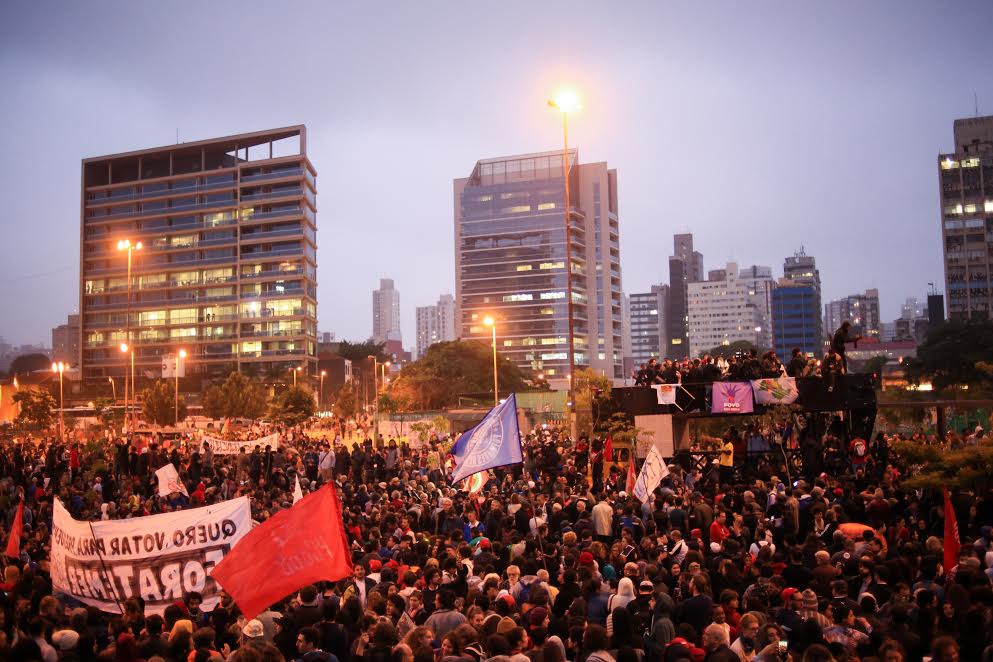
The disintegration of Sao Paulo's historic center is not an accident of urban aging a structured outcome of elite abandonment and criminal enterprise. Once the seat of the coffee aristocracy, the Campos Elíseos district, home to the palatial residences of the 19th-century agrarian oligarchy, collapsed into a vacuum of governance by the late 20th century. This void was filled not by anarchy, by the Primeiro Comando da Capital (PCC), which transformed the region into a highly regimented logistics hub for the domestic crack cocaine trade. By 2020, intelligence estimates valued the revenue generated within the "Fluxo" (the concentration of users and dealers) at approximately $2. 4 million USD per month. The market operates with industrial precision: the PCC regulates the supply chain, enforces order among users to prevent police incursions, and uses the mass of human misery as a biological shield against state intervention.
The transition from the "Boca do Lixo" (a cinema and prostitution hub of the mid-20th century) to "Cracolândia" (Crackland) began in the early 1990s, coinciding with the arrival of crack cocaine in Brazil. For three decades, municipal and state governments have launched expensive, contradictory operations that failed to this economy. The "Nova Luz" project (2005, 2013), championed by Mayor Gilberto Kassab, attempted to use mass expropriation to sanitize the area for real estate developers. The initiative collapsed under legal challenges and the sheer cost of displacing thousands of residents, leaving behind boarded-up storefronts that served only to expand the drug market's footprint.
Policy oscillation has exacerbated the emergency. In 2014, Mayor Fernando Haddad introduced "De Braços Abertos" (With Open Arms), a harm-reduction program that provided housing and low-barrier employment to users. While data showed a stabilization of the area and a reduction in crime, political opponents characterized it as state-subsidized drug use. In 2017, the incoming Doria administration dismantled the program in favor of "Redenção" (Redemption), a police-heavy strategy focused on involuntary hospitalization and dispersal. Doria famously declared Cracolândia "finished" in May 2017, a statement immediately disproven as the Fluxo simply migrated a few blocks away to Praça Princesa Isabel, spreading the degradation to previously stable commercial zones.
The dispersion strategy, continued through 2024 and 2025, turned a localized health emergency into a city-wide security failure. Police operations in 2023 and 2024 succeeded only in fragmenting the concentration of users. Instead of a single containment zone in Santa Ifigênia, smaller "mini-Cracolândias" sprouted in Santa Cecília, Vila Buarque, and beneath the Minhocão elevated highway. By mid-2025, reports confirmed a new concentration at Praça Marechal Deodoro, bordering the upscale Higienópolis neighborhood. The "smart city" surveillance grid, comprising drones and facial recognition cameras, tracks these movements in real-time, yet the state remains unable to intercept the supply lines controlled by the PCC, which has integrated its laundering operations into the legitimate financial systems of Faria Lima.
In a bid to reclaim territory through brute architectural force, Governor Tarcísio de Freitas announced the transfer of the State Government's administrative seat to Campos Elíseos in 2024. The project, estimated at R$ 3. 9 billion, involves the expropriation of entire city blocks to construct a fortified government complex. yet, the initiative faced immediate headwinds; the auction for the construction concession was postponed in November 2025 due to a absence of private sector confidence. Critics that placing a in the middle of an open-air drug market repeats the errors of the past: attempting to solve a socioeconomic collapse with concrete and steel.
| Operation / Program | Period | Strategy | Outcome |
|---|---|---|---|
| Nova Luz | 2005, 2013 | Urban Renewal / Expropriation | Cancelled due to cost and resistance; increased vacancy. |
| De Braços Abertos | 2014, 2017 | Harm Reduction / Housing | Stabilized Fluxo; dismantled by subsequent administration. |
| Redenção | 2017, 2020 | Police Repression / Forced Rehab | Dispersion of users; violence spiked; market remained. |
| Operação Caronte | 2021, 2023 | Criminal Investigation / Arrests | Arrest of mid-level dealers; Fluxo migrated to Princesa Isabel. |
| Campos Elíseos Admin Center | 2024, 2026 | State HQ Relocation | Project stalled in late 2025; users scattered to Santa Cecília. |
The persistence of Cracolândia serves as a functional component of the city's real estate speculation pattern. High vacancy rates in the central zone, hovering between 20% and 25% for Class B and C properties in 2024, keep property values artificially depressed, allowing large developers to acquire land cheaply in anticipation of future state-led "revitalization." This speculative method incentivizes the maintenance of blight until the moment of maximum profitability. As of March 2026, even with official proclamations of victory, the drug trade remains the most resilient economic activity in the historic center, adapting faster to police tactics than the state can adapt its bureaucracy.
Metropolitan Rail Transport Deficits and Commuter Traffic Data
Eighteenth century colonial trails restricted movement across steep coastal mountains. Transportation methods shifted during 1867 when British investors funded Sao Paulo Railway. This route connected inland plateaus with Santos Port. Trains climbed 800 meters using funicular systems. Freight costs dropped by seventy percent. Transit times fell from weeks into hours. Coffee exports surged, reaching five million bags near 1880. Economic booms drove city populations from 31, 000 residents around 1874 up toward 579, 000 by 1920.
Automotive dominance caused transit investments to halt later. Planners eventually recognized high capacity needs. Companhia do Metropolitano formed within 1968. subway segments opened September 1974. That initial North South track spanned seven kilometers covering five stops. Early operations ran strictly between nine AM until one PM. It carried just 3, 000 riders daily then.
State officials created Companhia Paulista de Trens Metropolitanos, consolidating decaying suburban tracks throughout 1992. Modern CPTM networks span 208 kilometers over seven routes. Separate Metro systems operate six lines, covering 104 kilometers plus 91 stations. Combined ridership exceeds seven million people per weekday. Yet infrastructure fails to meet current demand. Commuters frequently spend two hours traveling each way. Surface traffic congestion remains severe.
Addressing these deficits, authorities initiated Line 6 Orange. The 15 kilometer project connects central districts toward northwestern zones. Construction stopped four years before resuming under Acciona partnerships mid 2020. New segments transport 633, 000 individuals daily. Travel durations drop from ninety minutes via bus down to 23 minutes. Eight stations open October 2026. Another monorail, Line 17 Gold, finishes March 2026.
Operation Car Wash Impact on São Paulo Infrastructure Firms

The architecture of public works in Brazil operates through a lineage of monopolistic alliances dating back to the imperial railway expansions of the 19th century. By the 1970s, the military government consolidated this framework, elevating a select group of domestic engineering firms into national champions. Companies including Odebrecht, Camargo Corrêa, and Andrade Gutierrez secured massive federal contracts to build highways, dams, and energy facilities. This concentration of capital birthed an exclusive syndicate known as the Club of 16, which later refined itself into a VIP Club of six dominant contractors. For decades, these entities controlled the physical development of São Paulo and the broader nation. They dictated terms to the government, operating a highly organized bid rigging syndicate. The arrangement functioned smoothly until 2014, when a money laundering investigation at a Brasilia gas station exposed the mechanics of this cartel.
Operation Car Wash broke the operational security of the VIP Club. Investigators discovered that the cartel systematically overcharged national enterprises, particularly Petrobras, by margins ranging from 1 percent to 5 percent on major contracts. The excess capital was then funneled into secret funds used to bribe politicians and finance electoral campaigns across multiple political parties. The syndicate did not limit its operations to federal oil contracts; it infiltrated the Growth Acceleration Program, a national initiative designed to upgrade basic facilities and stimulate the economy. Between 2007 and 2015, this program allocated approximately 2. 1 trillion reais to public works. The exposure of the kickback scheme paralyzed the sector. Executives who previously operated with absolute impunity were arrested, tried, and imprisoned. The judicial actions severed the financial arteries connecting the federal treasury to the construction giants.
The immediate economic consequences for the involved firms were severe. The cartel members faced a combined 11 billion reais in leniency fines negotiated with federal prosecutors. Odebrecht, the largest engineering conglomerate in Latin America, agreed to a global settlement exceeding 2. 6 billion dollars after admitting to paying bribes across twelve countries. UTC Engenharia received a 175 million dollar penalty, representing a clawback of 70 percent of its illegal profits. The monetary penalties, combined with a sudden prohibition from bidding on new public contracts, triggered a catastrophic revenue collapse. Without the artificial inflation of federal contracts, the balance sheets of these companies imploded.
| Company | Estimated Penalty or Settlement | Status as of 2024 |
|---|---|---|
| Odebrecht (Novonor) | 2. 6 billion dollars | Renegotiating terms |
| UTC Engenharia | 175 million dollars | Restructuring |
| Combined Cartel Fines | 11 billion reais | Suspended or under review |
The broader economic damage was equally severe. Academic analysis indicates the scandal reduced national investments by 172 billion reais, specifically targeting energy production and construction. The Fundação Getulio Vargas estimated the event reduced the national gross domestic product by 3. 5 percent. This contraction eliminated approximately 4. 4 million jobs nationwide, with the industrial belts of São Paulo absorbing a massive share of the unemployment.
Locally, the paralysis of the major contractors created a massive vacuum in public works execution. Historically, the regional government relied on the VIP Club to execute its most ambitious engineering projects, from subway expansions to highway concessions. With the traditional giants locked out of the market or fighting bankruptcy, the region faced severe delays in its development pipeline. By 2024 and 2025, the absence of adequately capitalized domestic contractors forced the government to repeatedly postpone major auctions. The planned 6 billion reais public private partnership for a new administrative headquarters in the central districts suffered multiple scheduling revisions. Officials stated the interested consortiums could not secure the necessary financial guarantees. Similarly, the 4 billion reais Bonde light rail project and the expansion of Metro Line 19 faced structural delays. The traditional firms simply did not possess the financial traction they held prior to the corruption probe.
By 2024, the surviving infrastructure firms initiated aggressive lobbying efforts to renegotiate their leniency agreements. Companies including OAS, Andrade Gutierrez, and Novonor stated their collapsed revenues made the original fine schedules mathematically impossible to meet. The Brazilian comptroller general entered discussions to allow up to 50 percent of the penalties to be paid via tax credits, a concession designed to prevent the total liquidation of the sector. The judicial environment also shifted. In 2024, Supreme Court Justice Dias Toffoli annulled specific evidence obtained during the original investigations and temporarily suspended the financial obligations of several companies. This judicial pivot highlighted a growing political consensus that the total destruction of the domestic engineering sector was detrimental to national interests. Yet, the reputational and monetary damage proved difficult to reverse.
The structural void left by the diminished cartel forced a realignment of the local construction market. Smaller domestic engineering firms, previously relegated to subcontracting roles, began forming consortiums to bid on medium sized regional projects. Companies like Construcap and investment firms such as Galápagos stepped forward to evaluate the massive public private partnerships that the VIP Club would have monopolized a decade earlier. Also, foreign capital, particularly from European and Chinese government backed enterprises, accelerated its penetration into the regional logistics and transportation sectors. These international players possessed the capital reserves and clean compliance records required to secure the massive performance bonds demanded by the authorities. The transition from a closed, domestically controlled cartel to a fragmented, internationally competitive market remains incomplete as of 2026. The administration continues to struggle with the administrative load of qualifying new consortiums, resulting in a slower pace of project execution.
The decade following the initial Car Wash raids forced the metropolis to adapt to a harsher, more heavily scrutinized contracting environment. The government implemented rigorous compliance rules and expanded the use of independent auditing for all major public works. While these measures reduced the probability of large bid rigging, they also extended the procurement timelines. The cost of capital for infrastructure projects increased, as financial institutions applied higher risk premiums to construction loans. Banks that previously facilitated the cartel operations faced their own regulatory scrutiny. During the 66th phase of the investigation, known as Minimum Alert, authorities targeted bank managers in the city who allowed black market dealers to open irregular accounts. Investigators tracked 1. 3 billion reais in bribes flowing through institutions including Banco do Brasil, Bradesco, and Itaú Unibanco. This heightened regulatory environment means that building a subway line or a highway in the region requires navigating a complex matrix of compliance checks that did not exist prior to 2014.
The Car Wash operation fundamentally altered the power between the Brazilian republic and private capital. The era of the VIP Club dictating national infrastructure policy ended, replaced by a cautious, highly regulated procurement system. For São Paulo, the transition brought both a cleansing of institutional corruption and a severe contraction in physical development. The regional ability to execute mega projects depends on attracting foreign investment and nurturing a new generation of medium tier domestic contractors. The original giants, load by billions in fines and shattered reputations, operate as shadows of their former selves. Their ongoing attempts to renegotiate penalties in 2025 and 2026 show the lingering fiscal toxicity of the scandal. The built environment of São Paulo, marked by delayed transit lines and postponed administrative centers, serves as a visible ledger of the cost of breaking a century old system of public private collusion.
Real Estate Verticalization and Low-Income Housing Shortages
Sao Paulo residents constructed low dwellings using rammed earth. Taipa de pilao techniques dominated local plateaus until eighteen hundred. Mud walls offered basic shelter restricted structural height. Urban expansion pushed outward rather than upward. Wealthy coffee barons later erected European style mansions along wide avenues. Working class families occupied cramped tenements known as corticos within central districts. Land ownership concentrated among elite groups. This unequal distribution established permanent real estate divides. Ground level space became increasingly expensive while industrialization accelerated. Railroad networks altered regional commerce during late nineteenth centuries. Wealth generated through agricultural exports financed early urbanization projects. Brick manufacturing replaced traditional mud construction methods. Immigrant laborers built sprawling neighborhoods across flat terrains. Property speculation began shaping municipal borders early.
Engineers introduced reinforced concrete during nineteen twenty. Sampaio Moreira became Brazil tall edifice, reaching twelve stories. Five years afterward, Giuseppe Martinelli inaugurated his eponymous thirty floor tower. Reaching one hundred thirty meters, it claimed South American records. Altino Arantes projects followed shortly, soaring toward one hundred sixty meters. Mirante do Vale topped out at one hundred seventy meters by nineteen sixty six. Wealthy citizens abandoned street level residences for elevated luxury flats. Vertical living provided security, exclusive amenities, plus physical separation from chaotic streets. Oscar Niemeyer designed Copan, adding sinuous curves into skyline profiles. Modernist architecture symbolized progress, wealth, plus cosmopolitan ambition. Elevators revolutionized spatial hierarchies, placing affluent populations above smog.
Tragedy struck metropolitan zones during nineteen seventy. Devastating infernos consumed Andraus alongside Joelma towers. These fatal blazes terrified public officials, forcing municipal authorities into rewriting zoning laws. Strict limits halted super tall skyscraper construction for four decades. Simultaneously, massive rural migration flooded urban centers. Millions seeking factory jobs arrived daily. Unable to afford central apartments, new inhabitants settled on extreme peripheries. Informal settlements multiplied rapidly. Favelas swallowed steep hillsides plus protected watershed regions. State governments responded through building massive, segregated public blocks called Cohab, far from transit networks. Peripheral isolation deepened socio spatial segregation. Commuters endured grueling daily journeys aboard overcrowded buses. Core districts lost population as middle classes migrated toward fortified suburban enclaves.
Planners attempted correcting decades involving chaotic sprawl. Two thousand fourteen Strategic Master Plans introduced fresh zoning paradigms. Officials aimed densifying neighborhoods situated near subway lines or bus corridors. Legislation granted developers lucrative incentives toward erecting taller structures along specific transit axes. Politicians hoped such strategies would reduce commute times, optimizing existing infrastructure. Instead, policies triggered intense speculative investment. Firms demolished older, affordable low rise properties. Corporations replaced them with expensive, high density residential complexes. Traditional workers faced aggressive displacement away from newly gentrified hubs. Real estate capital captured regulatory benefits intended for social integration. Land values spiked near metro stations, pushing poorer residents further away.
Builders exploited regulatory gaps maximizing profits. Markets flooded with ultra compact studios. Tiny units frequently measured under thirty square meters. Investors purchased majorities regarding micro flats, renting out via short term digital platforms. Two thousand twenty three legislative revisions expanded dense zones even further. Critics warned that expansions accelerate historic neighborhood demolitions. Family sized rental supplies collapsed entirely. Property values skyrocketed across metropolitan regions. Middle income earners found themselves priced outside formal markets. Verticalization served financial portfolios rather than human needs. Global investment funds acquired whole floors, treating apartments like liquid assets.
Severe shelter deficits paralyze contemporary municipalities. Official statistics reveal deficits totaling four hundred thousand residential units. Paradoxically, two thousand twenty two censuses identified five hundred fifty eight thousand vacant properties within exact same territories. Speculators hoard empty buildings waiting upon asset appreciation. Renters spend huge portions regarding monthly wages just securing basic accommodations. Federal Minha Casa Minha Vida initiatives attempt closing this gap. Governments contracted over one million subsidized homes nationwide by late two thousand twenty four. Yet, sheer demand volume exceeds federal supply lines. Bureaucratic delays slow down affordable project deliveries. Construction costs surged post pandemic, reducing contractor margins.
Defenseless citizens bear brutal consequences from speculative economics. Unsheltered demographics exploded over last decades. By December two thousand twenty four, states recorded one hundred thirty nine thousand seven hundred ninety nine individuals living without shelter. Approximately eighty thousand destitute people reside directly upon capital streets. Figures represent twelve fold increases since two thousand thirteen. Men comprise eighty eight percent concerning marginalized groups, while sixty eight percent identify Black. Economic hardship, unemployment, plus exorbitant rent prices drive humanitarian disasters. Mental health struggles compound daily survival challenges. Hostile architecture prevents rough sleepers from resting comfortably outside commercial storefronts.
Municipal leaders launched Reencontro programs providing temporary modular shelters. Initiatives offer small financial stipends assisting rent payments. These localized efforts barely scratch massive structural voids. Activist groups like Homeless Workers Movement occupy abandoned commercial structures protesting extreme inequality. Occupation Maua converted derelict hotels into refuges serving displaced families. Sharp contrasts between empty luxury towers plus sprawling street encampments define current eras. Financialization continues prioritizing profit above human habitation. Metropolises remain deeply fractured through their own concrete geometry. Supreme Court hearings debated constitutional rights regarding unhoused populations. Legal mandates require humane treatment, yet practical enforcement remains weak.
Future trajectories appear highly contested. Urban planners advocate taxing vacant properties heavily, forcing owners into leasing unused spaces. Social movements demand expropriation concerning abandoned downtown edifices. Mayoral administrations pledge revitalizing historic centers, transferring government offices downtown. Yet, gentrification fears accompany every revitalization proposal. True spatial justice requires decoupling shelter provision from pure market forces. Until policy shifts prioritize habitation rights, vertical skylines cast long shadows across marginalized communities.
2026 GDP Metrics and Post-Recession Economic Output
Eighteenth century mining depletion forced structural shifts across southeastern territories. Mineral extraction peaked near 1750, yielding roughly 20 tons annually before collapsing. This collapse triggered severe regional stagnation. Portuguese colonial administrators had previously banned local manufacturing, leaving populations exposed when veins dried up. Survival required agricultural adaptation. Farmers introduced coffee plants, replacing earlier sugar crops. By 1854, plantations held 50, 000 enslaved workers, producing massive bean harvests. Such yields represented 6 times sugar's monetary value. Agrarian exports funded early infrastructure, converting former transit routes into permanent commercial arteries. Capital accumulated rapidly.
Twentieth century industrialization cemented Paulista dominance. Wealth generated from rural estates financed railways, ports, plus urban electrification. Factories multiplied alongside immigrant arrivals. Fast forward toward modern eras; contemporary metrics reveal massive proportions. Gross Domestic Product figures for 2024 showed national expansion reaching 3. 4 pc. IBGE statisticians confirmed those numbers represented Brazil's strongest performance since 2021. Services, agriculture, plus industrial sectors drove that upward movement. Yet, inflationary pressures began building simultaneously. Central Bank officials reacted aggressively during September, hiking benchmark lending percentages.
Subsequent quarters witnessed cooling activity. Total national output during 2025 expanded barely 2. 3 fractions, hitting 12. 7 trillion reais. Fourth quarter results displayed marginal 0. 1 progression compared against third quarter data. High Selic levels, maintained strictly at 15 pc since June, restricted credit access. Borrowing became expensive, discouraging corporate investments alongside consumer spending. Retail sales contracted 1. 5 shares last December. Stone Index analysts attributed this drop directly toward costly financing options plus heavy household debt loads.
Current projections indicate further deceleration. International Monetary Fund experts lately downgraded their 2026 Brazilian forecast down toward 1. 6 per hundred. Tendencias Consultancy matches that pessimistic outlook. Focus Bulletin surveys suggest slightly better expectations around 1. 8. Regardless, these estimates fall broader Latin American averages. Goldman Sachs researchers predict LA7 nations might achieve 1. 9 in total. Restrictive monetary policies remain primary culprits suppressing domestic dynamism. Policymakers face difficult choices balancing price stability against necessary job creation.
| Institution | 2026 Projection |
| International Monetary Fund | 1. 6 pc |
| Tendencias Consultancy | 1. 6 pc |
| Focus Bulletin | 1. 8 pc |
| Goldman Sachs LA7 | 1. 9 pc |
Public accounts present another serious matter. Government spending continues rising even with sluggish revenues. Primary deficits hover near 0. 3 relative to total economic size. Analysts warn gross public debt could exceed 83 by December. Such trajectories alarm foreign investors. Currency markets reflect growing anxiety; exchange rates currently price American dollars above 5 reais. Capital flight risks loom if fiscal discipline deteriorates further. Upcoming presidential elections add political volatility, complicating long term planning efforts.
Specific industries demonstrate resilience. Agronomy yields remain strong, supported by favorable weather patterns. Soybean plus corn harvests achieved record volumes lately. Extractive businesses, particularly oil alongside gas operations, posted 8. 6 gains last year. Information technology services also expanded 6. 5. These bright spots prevent deeper recessions. Yet, manufacturing struggles under heavy tax load plus infrastructure bottlenecks.
Within this complex environment, Sao Paulo functions as Brazil's absolute anchor. Generating nearly one third national wealth, metropolitan performance dictates broader countrywide trends. Corporate headquarters cluster along Faria Lima avenue, managing billions daily. Real estate markets here show mixed signals; premium office spaces retain value while residential construction slows. Employment metrics suggest steady hiring among tech firms, contrasting with factory layoffs. State governors attempt attracting foreign direct investment through tax incentives, hoping to offset federal interest rate impacts.
Price levels directly impact everyday citizens. IPCA inflation accumulated 4. 4 over previous twelve months. Food costs fluctuated wildly, initially hurting incumbent politicians' approval ratings before stabilizing late last summer. Electricity tariffs spiked during January, keeping headline numbers elevated. Directors target 3 per hundred inflation, meaning current figures remain uncomfortably high. Citizens feel squeezed between stagnant wages plus rising living expenses. Payroll deductible loans offered temporary relief, injecting 2 billion reais into working class households, though long term solvency remains questionable.
Global factors further complicate domestic recovery. United States trade policies, including newly announced 50 pc tariffs on certain exports, threaten crucial revenue streams. Chinese demand for commodities shows signs cooling amid their own demographic shifts. European Union leaders paused Mercosur agreement discussions, delaying possible export boosts. Diplomats navigate these turbulent international waters carefully. Maintaining neutral stances allows continued commerce across rival geopolitical blocs. Still, external shocks could easily derail fragile internal stabilization efforts.
Looking ahead, structural reforms appear mandatory. Economists advocate simplifying Byzantine tax codes, reducing bureaucratic red tape, plus privatizing inefficient state owned enterprises. Without significant changes, maximum ceilings remain artificially depressed. Demographic dividends are fading; aging populations can soon overload pension systems further. Innovation must drive future productivity gains. Artificial intelligence integration offers promising avenues for efficiency improvements across various sectors., navigating post recession realities demands pragmatic leadership, fiscal prudence, plus unwavering commitment toward modernization.
Employment metrics provide additional context regarding latest macroeconomic shifts. Jobless claims dropped slightly early this year, reflecting seasonal hiring patterns rather than permanent structural improvements. Service industries absorbed displaced factory workers, mitigating severe unemployment spikes. Wage growth remains sluggish, failing to outpace rising consumer prices. Consequently, real purchasing power declined across middle class demographics. Labor unions demand higher minimum compensation thresholds, threatening strikes if negotiations fail. Corporate executives resist such demands, citing squeezed profit margins alongside exorbitant operational costs. Finding equitable solutions challenges both private enterprises alongside public officials.
Venture capital inflows slowed dramatically following latest monetary tightening pattern. Startups face immense difficulties securing early stage funding. Angel investors demand clearer profitability route before committing funds. Conversely, fixed income securities attract massive capital due to lucrative government bond yields. Institutional portfolios heavily favor sovereign debt over risky equity markets. Reversing this trend requires substantial macroeconomic stabilization. Until borrowing costs normalize, entrepreneurial ecosystems can suffer. Regional prosperity depends upon cultivating competitive, diversified markets capable weathering global volatility.