
Colonial Outpost to Metropolitan Precinct: Early Infrastructure (1853, 1900)
The 1890s brought a wave of sensational crimes that tested the station's investigative capabilities. On May 24, 1890, the body of George Thomas May was discovered in a right-of-way off Vale Street, sparking the "St Kilda Murder" investigation. Inspector Swale, assisted by Detective Cawsey and Sergeant Joyce, led the inquiry. The case exposed the limitations of 19th-century forensics, relying heavily on witness testimony and the "hue and cry" method rather than physical evidence. Five years later, in December 1895, the station was thrown into turmoil by the "Shocking Murder" of Alphonse Hesse. Leopold Hesse, a wealthy sanitary contractor, shot his son in a pony cart in a fit of "drink and jealousy." The incident, involving prominent local figures, shattered the illusion of suburban tranquility and forced the St Kilda police to arrest one of their own community's patriarchs.
| Year | Officer / Figure | Role / Incident | Details |
|---|---|---|---|
| 1859 | Unknown | Watchhouse Keeper | Oversaw cells described as "worst in Melbourne district." |
| 1870s | Sergeant Boyd | Station Sergeant | Target of "larrikinism" and harassment by local youths. |
| 1890 | Inspector Swale | Lead Investigator | Headed the inquiry into the murder of George Thomas May. |
| 1890 | Sergeant Irwin | Night Duty Sergeant | responder to the Vale Street body discovery. |
| 1891 | Constable Daniel Barry | Constable | Discharged for drunkenness; former Kelly Gang siege veteran. |
| 1895 | Leopold Hesse | Perpetrator | Arrested by St Kilda police for the shooting murder of his son. |
By the late 1880s, the physical condition of the Barkly and Grey Street complex had to the point of embarrassment. As the municipality prepared to declare itself a City in 1890, a grand new Town Hall was commissioned, designed by the renowned architect William Pitt. Yet, the police were left behind. The new Town Hall opened with fanfare, the police force remained in the decaying 1859 structure. The "dwarfed and unprepossessing" station stood in clear opposition to the Boom-style grandeur rising elsewhere in the district. This neglect signaled a dangerous complacency; as the 1890s economic depression hit, St Kilda's mansions began their conversion into boarding houses, importing a transient population that would soon overwhelm the antiquated policing infrastructure. The turn of the century found the St Kilda Police Station at a crossroads. It was a facility built for a colonial village tasked with policing a complex, fracturing urban center. The "Triangle" site opposite the Palais had become the municipal tip, a festering sore that mirrored the social decay beginning to take root. The officers of the 1890s, men like Inspector Swale and the disgraced Constable Barry, bridged the gap between the era of gold escorts and the coming age of forensic science. They worked with gaslight and batons, managing a beat that encompassed the extremes of Victorian society, from the destitute scavengers at the tip to the murderous patriarchs in the mansions, operating out of a crumbling station that the government had all forgotten.
The Squizzy Taylor Era: Gangland Violence and Prohibition (1915, 1930)

| Key Event | Date | Impact on St Kilda Police |
|---|---|---|
| Six O'Clock Closing Act | 1916 | Created immediate sly-grog market; overwhelmed station resources. |
| Barkly Street Raid | Oct 1923 | 12 police cars raided Squizzy Taylor's hideout; marked shift to motorized policing. |
| Victorian Police Strike | Nov 1923 | Station manned by untrained "Specials"; loss of experienced personnel. |
| Station Relocation | c. 1929-1930 | Move from Grey/Barkly to Chapel St; attempt to modernize facilities. |
The legacy of the Squizzy Taylor era for the St Kilda Police Station was a hard lesson in the inadequacy of reactive policing. The station had functioned as a passive receptacle for the district's disorder, the organized nature of the sly-grog trade and the violence of the gang wars proved that a static presence was insufficient. The criminals had cars, safe houses, and deep pockets for bribery; the police had bicycles and a crumbling building. As the 1930s method, the Great Depression would bring a new set of desperate challenges, the structural failure of the 1920s had already necessitated a complete overhaul of how policing was conducted in the precinct. The "Junction" outpost was dead, a casualty of the very modernity it failed to police.
Post-War Demographics and the Expansion of Vice Squads (1945, 1965)
The cessation of hostilities in 1945 did not return St Kilda to its pre-war genteel slumber; instead, it accelerated the district's descent into a high-density, high-crime enclave that would define its reputation for the half-century. While the rest of Melbourne sprawled outward into the quarter-acre dreams of the suburbs, St Kilda turned inward, cannibalizing its own architectural heritage to house a population that the rest of Victoria viewed with suspicion. The grand mansions of the Victorian land boom, once the private fiefdoms of the colony's elite, were aggressively subdivided. Ballrooms became partitions; servants' quarters became family homes. By the 1954 Census, St Kilda had cemented its status as the most densely populated municipality in Victoria, a statistic driven by the proliferation of rooming houses and "flat life", a mode of living that conservative Melbourne equated with moral looseness.
The St Kilda Police Station, still operating out of its increasingly dilapidated quarters at the Junction (the intersection of Grey and Barkly Streets), found itself policing a demographic transformation that its 19th-century infrastructure was never designed to handle. The post-war housing emergency forced a vertical compression of humanity. Returning soldiers, displaced persons from a shattered Europe, and rural laborers seeking factory work crowded into the subdivided terraces. For the constabulary, this density meant that domestic disputes, drunkenness, and petty theft were no longer incidents a continuous, churning baseline of station activity. The logbooks from this era record a relentless procession of "offensive behavior" charges, a catch-all euphemism for the friction generated by thousands of strangers living cheek-by-jowl.
The true catalyst for the station's shifting mandate, yet, was the entrenchment of the vice economy. The Second World War had brought American troops to Melbourne, and with them, a demand for leisure that the rigid local licensing laws could not satisfy. St Kilda, with its dance halls, beaches, and proximity to the city, became the de facto entertainment capital. When the troops left, the infrastructure of vice remained. Prostitution, previously concentrated in the "Little Lon" district of the CBD, migrated south. By the early 1950s, Fitzroy Street and Grey Street had eclipsed the city laneways as the epicenter of Victoria's sex trade. The police response was the expansion of the Vice Squad, a specialized unit tasked with suppressing the very industries that the local economy had come to rely upon.
Policing prostitution in this era was a cynical exercise in containment rather than eradication. The Police Offences Act criminalized soliciting and living off the earnings of prostitution, yet the trade flourished openly. Officers at the St Kilda station operated under a system of unofficial regulation. Streetwalkers were arrested on a rotational basis, paid their fines, a licensing tax, and returned to the beat. This "catch and release" methodology created a symbiotic relationship between the vice operators and the police force. The line between regulation and corruption blurred significantly during this period. Allegations surfaced repeatedly that senior constables and detectives received "rent" from brothel madams to ensure raids were performative rather than punitive. The station at the Junction became the administrative center for this grey economy, where the enforcement of morality was frequently negotiable.
Parallel to the sex trade was the booming industry of "sly grog." Victoria's draconian liquor licensing laws, most notably the "six o'clock swill" which mandated that hotel bars close at 6: 00 PM, created a massive black market for alcohol. St Kilda, with its high concentration of shift workers, musicians, and bohemians, refused to adhere to the curfew. Sly grog shops proliferated in the back rooms of boarding houses and disguised storefronts. The police faced an impossible task: the entire suburb was thirsty. Raids on sly grog establishments were frequent, violent, and largely futile. For every door the police kicked in, two more opened in the basements of the decaying mansions along the Esplanade. The station's property lockers were perpetually overflowing with confiscated beer and spirits, evidence of a war on supply that ignored the insatiable demand.
The demographic shift also introduced a new cultural friction. The influx of European migrants, Greeks, Poles, Jews, and Italians, transformed the streetscape of Acland Street and Fitzroy Street. These "New Australians" brought with them a café culture that baffled the Anglo-centric police force. The practice of sitting outdoors, drinking coffee late into the night, was viewed by officers as loitering or a precursor to disorder. Tensions were common. The police, frequently recruited from rural Victoria or the British Isles, struggled to distinguish between harmless social gatherings and the criminal consorting they were trained to detect. This cultural disconnect exacerbated the "us versus them" mentality that began to permeate the district. The migrant communities, frequently fleeing authoritarian regimes, viewed the uniformed police with deep mistrust, a sentiment reinforced by the heavy-handed raids on their social clubs under the guise of liquor licensing enforcement.
Illegal gambling constituted the third pillar of the St Kilda vice triumvirate. SP (Starting Price) bookmaking was rampant. With off-course betting illegal, the local hotel bars and billiard rooms became betting exchanges. The St Kilda police were tasked with suppressing this trade, the SP bookies were frequently the most well-connected men in the suburb, possessing networks of cockatoos (lookouts) that made surprise raids nearly impossible. The corruption inquiries of later decades would reveal that the protection rackets shielding these bookmakers had their roots in the station cultures of the 1950s. The "envelope" left at the desk or the free drinks at the pub were the currency of a police force that had integrated itself into the local ecosystem rather than standing apart from it.
By the early 1960s, the physical condition of the St Kilda Police Station at the Junction had become a metaphor for the force's standing in the community: structurally unsound and overwhelmed. The building, dating back to the 19th century, was damp, cramped, and infested with vermin. It sat in the middle of a traffic nightmare, as the rise of the private automobile turned the Junction into one of Melbourne's most dangerous intersections. Plans for the widening of the Junction and the demolition of the old station were drawn up, signaling the end of an era. The police were about to lose their physical anchor at the gateway to the suburb, just as the social fabric of St Kilda was about to be torn apart by the counter-culture revolution. The "containment" strategy of the post-war years was failing. The vice was no longer hidden in the shadows of the blackout; it was becoming the defining identity of the precinct, and the station was less a of law than a tollbooth on the highway of excess.
| Category | Description | Police Tactic |
|---|---|---|
| Housing Density | Highest in Victoria (1954 Census). Mansions subdivided into 10+ room tenements. | Frequent "Vagrancy" and "Offensive Behavior" raids on rooming houses. |
| Prostitution | Shifted from CBD to Fitzroy/Grey St. "Street walking" dominant. | Rotational arrests (fines as tax); Consorting Squad surveillance. |
| Sly Grog | Illegal alcohol sales post-6 PM closing. Centered in flats and disguised shops. | "Kick-in" raids; confiscation of stock; heavy fines for operators. |
| SP Bookmaking | Illegal off-course betting in hotels/billiard rooms. | Undercover operations (frequently compromised by leaks/bribes). |
| Migrant Relations | Influx of European migrants (Acland St café culture). | Loitering enforcement; licensing harassment of social clubs. |
Systemic Corruption and the Beach Inquiry Findings (1970, 1976)

By 1970, St Kilda had fully shed its Victorian-era gentility to become the undisputed vice capital of Melbourne. The district functioned as a semi-autonomous zone where state laws applied only when the weekly "rent" envelopes failed to appear on the desks of the Criminal Investigation Branch (CIB). The St Kilda Police Station, then located in the 1929 brick complex on Chapel Street, served less as a guardian of public safety and more as the administrative headquarters for a regulated black market. Prostitution, illegal gambling, and sly-grog shops operated with brazen visibility, protected by a sophisticated graft network that channeled illicit revenue from the streets of St Kilda directly into the pockets of senior Victoria Police officers.
The widespread corruption of this era was not a matter of a few "rotten apples" a highly organized institutional practice. The Kaye Inquiry of 1970 provided the public crack in the blue wall of silence. While the inquiry primarily focused on the Homicide Squad's protection of illegal abortionists, the tentacles of the "Town Hall set", a clique of corrupt officers named after their meeting place, reached deep into the St Kilda division. Dr. Bertram Wainer, the crusading physician who exposed the racket, identified St Kilda as a serious node in the corruption network. Backyard abortionists operating in the suburb paid protection money to ensure local police would ignore the steady stream of women entering their makeshift clinics. When raids did occur, they were frequently theatrical performances designed to appease the public or punish operators who had fallen behind on their payments.
The mechanics of this corruption relied heavily on "verballing," a practice that became an art form within the St Kilda CIB. Detectives would fabricate confessions, attributing them to suspects who had refused to speak or,, had not even been interviewed. These "unsigned records of interview" were accepted as admissible evidence in Victorian courts, allowing police to secure convictions with terrifying efficiency. At St Kilda, the pressure to maintain high clearance rates for crimes, frequently to mask the unsolved cases involving protected vice figures, turned verballing into standard operating procedure. Young constables arriving at the station were quickly indoctrinated into this culture; refusal to participate resulted in ostracization or transfer to the "Siberia" of uniform duties in remote rural outposts.
The rot was so deep that the state government could no longer ignore the stench. In 1975, Barry Beach QC was appointed to lead a Board of Inquiry into Allegations Against Members of the Victoria Police Force. The Beach Inquiry became the most significant examination of police misconduct in the state's history up to that point. Beach examined allegations that St Kilda police, among others, routinely planted evidence, assaulted suspects, and perjured themselves in court. The inquiry heard evidence that the station operated as a where the civil rights of the "criminal class", a label applied liberally to St Kilda's bohemian and transient population, were nonexistent.
Beach's findings, released in 1976, were explosive. He made adverse findings against 55 police officers, recommending criminal charges for. The report detailed a culture of impunity where loyalty to the "brotherhood" superseded the law. Beach found that officers at stations like St Kilda viewed themselves as soldiers in a war against crime, justified in using any means necessary to remove "scum" from the streets, even if it meant framing the innocent or protecting the guilty who paid their dues. The report threatened to the entire hierarchy of the Victoria Police.
| Metric | Beach Inquiry Findings | Final Judicial Outcome |
|---|---|---|
| Officers Implicated | 55 officers named for corruption/misconduct | 0 convictions sustained long-term |
| Primary Allegations | Verballing, fabrication of evidence, assault | Dismissed as "insufficient evidence" |
| Union Response | Hostile; refused cooperation | 4, 000 officers threatened strike action |
| Policy Impact | Recommended mandatory tape recording | Delayed for over a decade |
The reaction from the police force was immediate and ferocious. On October 18, 1976, over 4, 000 police officers gathered at Festival Hall in a mass meeting organized by the Police Association. They threatened a general strike if the government proceeded with the charges recommended by Beach. This show of force terrified the Hamer government. The police union successfully framed the inquiry as a witch-hunt led by criminals and do-gooder lawyers against the "thin blue line." The St Kilda station, home to of the most hardened detectives, was a stronghold of this resistance. Officers wore the adverse findings like badges of honor, signaling their loyalty to the shared over the state.
The government capitulated. To neutralize the Beach Report, they appointed the Norris Committee in 1978 to "review" the recommendations. The Norris Report whitewashed the findings, arguing that Beach's proposals for safeguarding suspect rights, such as mandatory tape-recording of interviews, were impractical and would police work. Consequently, the 55 officers named by Beach faced a court system that was heavily biased in their favor. Juries, reluctant to believe criminals over police, acquitted the officers in droves. In the end, not a single officer named in the Beach Inquiry served prison time for the specific corruption identified. The "Black Knight" era of policing survived, and at St Kilda, the message was clear: the police were untouchable.
This failure to prosecute cemented a culture of arrogance at St Kilda Police Station that would for another decade. The "verballing" continued, becoming more subtle. The protection rackets for SP bookmaking and prostitution evolved, with the station acting as the regulator of the district's vice economy. The psychological impact on the community was; residents knew that reporting a crime frequently meant reporting it to the perpetrators. The station on Chapel Street remained a closed shop, a place where the law was enforced selectively and where the true power lay not with the judiciary, with the detectives who controlled the interview rooms.
The 1970s ended not with a cleanup, with a consolidation of corrupt power. The Beach Inquiry, rather than purging the force, had inadvertently strengthened the Police Association, teaching them that political mobilization could defeat government oversight. For St Kilda, this meant the "wild west" atmosphere would continue unabated. The station became a training ground for a generation of detectives who learned that evidence was flexible and that the only crime was getting caught by someone outside the brotherhood. It would take another generation, and a new wave of drug-fueled crime in the 1980s, to break the stranglehold established during these years of widespread immunity.
Street Prostitution Zones and Enforcement Policy Shifts (1980, 1995)
By 1980, the St Kilda Police Station sat at the geographic and operational center of Australia's most notorious red-light district. While the station's official logbooks recorded a steady stream of petty theft and drunk and disorderly charges, the unspoken primary function of the precinct had shifted toward the management of the "Track", the street prostitution zones encompassing Greeves, Grey, and Fitzroy Streets. For decades, Victoria Police operated under a policy known as "containment." This unwritten doctrine accepted that the sex trade was inevitable sought to restrict it to specific, lower-class enclaves to protect the moral sensibilities of Melbourne's affluent suburbs. St Kilda, with its fading seaside grandeur and transient population, was the containment zone.
The enforcement reality on the ground was a complex friction between the local general duties officers at the St Kilda station and the centralized Vice Squad. Local police frequently tolerated the presence of sex workers on the "Track" provided they adhered to arbitrary boundaries and did not solicit openly in front of "respectable" businesses. This arrangement, yet, was with corruption. Allegations throughout the early 1980s that the containment policy was less a strategy of public order and more a method for graft. The "Town Hall" beat, a patrol route that cut through the heart of the soliciting zone, became a lucrative assignment where the line between policing and protection rackets blurred. Senior constables were accused of collecting "rent" from illegal brothel operators and street workers in exchange for advanced warning of raids, a practice that eroded public trust and compromised the station's integrity.
The legal framework governing this era was the antiquated Vagrancy Act, which criminalized the status of being a prostitute rather than the specific acts involved. This allowed police to arrest women simply for being in a known soliciting area with "insufficient lawful means of support." The St Kilda lock-up became a revolving door for these women, of whom were processed, fined, and released back onto the street within hours. Data from the era indicates that arrests for street walking offences doubled during the 1980s, a statistic that reflects not a crackdown on the trade itself, a cyclical revenue-generating exercise for the state. The station's cells were frequently overcrowded on Friday and Saturday nights, filled with women arrested in sweeps that did little to deter the trade served to demonstrate activity to a growing chorus of complaining residents.
In 1984, the Victorian government attempted to modernize the industry with the Planning (Brothels) Act, followed by the Prostitution Regulation Act 1986. These laws theoretically legalized brothels that obtained town planning permits. The intent was to move sex work off the streets and into regulated, health-monitored environments. The result, even with good intentions, was a catastrophic failure of policy that the St Kilda Police Station was left to manage. Municipal councils, bowing to "Not In My Backyard" pressure, refused to grant permits. Consequently, the legal brothel sector remained microscopic, while the illegal trade exploded. By 1985, estimates suggested there were between 3, 000 and 4, 000 sex workers in Victoria, with a highly visible concentration of approximately 200 street-based workers operating nightly in St Kilda. The legislation had inadvertently created a two-tier system: a small, privileged legal sector and a vast, criminalized underclass on the streets of St Kilda.
The violence inherent in this unregulated market was severe. The 1980s and early 1990s saw a disturbing frequency of assaults and murders of sex workers in the district. The geographic isolation of the "Track", particularly the dark, narrow laneways off Greeves Street, provided predators with easy access to victims. Police response to these crimes was frequently criticized as indifferent. The prevailing culture within the station frequently viewed crimes against sex workers as "occupational risks" rather than priority investigations. This "just a prostitute" mentality meant that disappearances were frequently not investigated until weeks later, by which time forensic evidence had. The unsolved murders from this period remain a dark stain on the station's history, representing a total failure of the duty of care owed to the community's most members.
As the 1990s method, the demographic composition of St Kilda began to shift aggressively. Gentrification brought young professionals and wealthy property investors into the suburb, attracted by its bayside location and "edgy" culture. These new residents, unlike the bohemian and working-class population of the past, were unwilling to tolerate the realities of a red-light district on their doorsteps. The St Kilda Police Station was inundated with complaints regarding kerb crawlers, used condoms in front yards, and noise from street disputes. Resident action groups formed, wielding significant political influence and demanding a "cleanup" of the streets. The police found themselves caught between the practical impossibility of arresting their way out of the problem and the political need of appearing to take action.
This pressure culminated in the introduction of the Prostitution Control Act 1994 ( 1995), a pivotal piece of legislation that fundamentally altered the policing of St Kilda. The Act fully decriminalized sex work in licensed brothels, in a severe pivot, tightened the laws against street soliciting. It introduced "no-go zones" near schools, churches, and residential areas, outlawing the trade in the very streets where it had thrived for a century. For the officers at St Kilda, this marked a transition from containment to active suppression. The focus shifted from managing the workers to targeting the demand. Police began conducting high-visibility operations targeting "kerb crawlers", men driving slowly through the district to solicit sex. Officers would intercept vehicles, check licenses, and problem fines, frequently using the threat of public exposure (sending infringement notices to home addresses) as a deterrent.
| Year | Primary Legal Framework | Est. Street Workers (Nightly) | Policing Strategy | Dominant Complaint |
|---|---|---|---|---|
| 1980 | Vagrancy Act 1966 | 120, 150 | Containment / Tolerance | Public Nuisance |
| 1985 | Planning (Brothels) Act 1984 | 180, 200 | Selective Raids / Corruption | Illegal Brothels |
| 1990 | Prostitution Regulation Act 1986 | 200+ | "Move On" Powers | Kerb Crawling / Traffic |
| 1995 | Prostitution Control Act 1994 | 100, 120 (declining) | Demand Reduction / Zero Tolerance | Residential Amenity |
The 1995 enforcement shift forced the street trade to adapt rather than disappear. While the visible presence on Fitzroy Street diminished, the trade was pushed deeper into the shadows, into industrial pockets and unlit parks where police patrols were less frequent the danger to workers was significantly higher. The St Kilda Police Station's role had evolved from the corrupt gatekeepers of the 1980s to the enforcers of a gentrified order, yet the underlying social drivers of the trade remained unaddressed. The "cleanup" was cosmetic, a victory for property values achieved by displacing the problem into the darker corners of the precinct.
The Heroin Epidemic: Grey Street Trafficking and Containment (1995, 2005)

Between 1995 and 2005, the St Kilda Police Station did not function as a law enforcement hub; it operated as a triage center for a district drowning in high-grade narcotics. This decade defined the precinct not by the crimes it solved, by the sheer volume of human wreckage it processed. The "Heroin Glut" of the late 1990s transformed the streets surrounding the station into an open-air marketplace where the laws of supply and demand temporarily superseded the Crimes Act. Officers stationed at St Kilda during this period faced a unique operational reality: they were not fighting a hidden underworld, managing a highly visible, chaotic ecosystem centered on Grey and Greeves Streets.
The mechanics of this epidemic were driven by global supply chains. In the mid-1990s, bumper opium harvests in the Golden Triangle flooded the Australian market with heroin of purity, frequently exceeding 70 percent, at prices that plummeted to historic lows. A "cap" (a small foil-wrapped package of heroin) could be purchased for as little as $20, making the drug accessible to a demographic far wider than the hardened user base of previous decades. For the St Kilda Police, this economic shift manifested as a logistical nightmare. The station's holding cells, designed for drunk and disorderly conduct, became revolving doors for users and low-level dealers. The administrative load of processing these arrests was immense, yet the impact on the street-level trade was negligible. Arresting a dealer on the corner of Grey Street created a vacuum that was filled within minutes, frequently by a younger, more desperate replacement.
A controversial element of the policing strategy during this era was the perception of "containment." While never an official policy in written standing orders, the operational reality suggested a de facto tolerance of drug activity within specific zones, primarily the Grey Street and Greeves Street precinct, to prevent the trade from spilling into the tourist-heavy Acland Street or the family-friendly foreshore. Residents and local traders frequently alleged that police patrols would herd users back toward the "red light" zones, sacrificing the amenity of one neighborhood to protect the commercial viability of another. This strategy, whether intentional or a byproduct of resource scarcity, concentrated the misery. The laneways behind the station and the boarding houses along Fitzroy Street became injection sites, littering the pavement with "fits" (syringes) and orange plastic caps.
The epicenter of this containment zone was The Gatwick Hotel on Fitzroy Street. Owned and operated by the Carbone sisters, the boarding house served as a sanctuary for the disenfranchised, yet it also functioned as a for the drug trade. Police raids on The Gatwick were high-risk operations. The building's labyrinthine corridors and the fierce loyalty of its residents to the proprietors made surveillance and enforcement difficult. For the constables at St Kilda, The Gatwick represented the intersection of welfare failure and criminal enterprise. It was common for officers to attend the premises multiple times in a single shift, responding to overdoses, assaults, and domestic disputes. The station's logs from this period show a relentless cadence of "Code Blue" (medical emergency) calls, with police frequently arriving before ambulance crews to administer CPR to overdose victims in the hallways of rooming houses.
The human cost of the glut reached its nadir in 1999. In that year alone, Victoria recorded 1, 116 opioid-related deaths, a figure that eclipsed the road toll. St Kilda accounted for a disproportionate percentage of these fatalities. The sheer volume of death traumatized the police force. Junior constables, fresh from the academy, found themselves attending multiple fatal overdoses a week. The psychological toll of notifying of kin, combined with the physical danger of needlestick injuries during searches, created a morale emergency within the station. The Police Association frequently raised concerns about staffing levels and safety standards, yet the flood of heroin continued unabated.
| Year | Market Status | Police Operational Focus | Est. Purity (Street Level) |
|---|---|---|---|
| 1996 | Rising Supply | Street-level arrests, "Containment" | 40, 50% |
| 1998 | Saturation (The Glut) | Overdose response, Ambulance support | 60, 75% |
| 1999 | Peak Fatalities | emergency management, Dealer targeting | >70% |
| 2001 | The Drought | Managing withdrawal-driven crime | <20% |
| 2002 | Stabilization | Shift to amphetamine enforcement | Variable |
The shifted abruptly in late 2000 and early 2001 with the onset of the "Heroin Drought." Triggered by a combination of law enforcement disruption of international syndicates and poor opium harvests in Myanmar, the supply of heroin in Australia evaporated almost overnight. The purity of street-level drugs crashed to 20 percent, and the price skyrocketed. For the St Kilda Police Station, this did not bring peace; it brought a different kind of chaos. The sudden withdrawal of the user population led to a spike in property crime as addicts became desperate for funds to support a more expensive habit. Smash-and-grab burglaries and muggings increased, forcing the station to pivot its resources from drug enforcement to robbery response.
The drought also marked the beginning of a transition in the local drug culture. As heroin became scarce, users turned to other substances, including amphetamines and benzodiazepines. This shift altered the behavioral profile of the offenders the police encountered. Heroin users were sedated and lethargic; amphetamine users were agitated, unpredictable, and prone to violence. The "calm" of the overdose era was replaced by the aggression of the stimulant era, requiring new tactical training for officers. The station began to see an increase in assaults on police and resisting arrest charges, a trend that would accelerate with the rise of crystal methamphetamine ("ice") in the subsequent years.
Throughout this decade, the relationship between the St Kilda Police and the local community was. The perception that the police were "managing" rather than "solving" the drug problem eroded public trust. Residents groups in St Kilda West and Elwood frequently petitioned the government for a "zero tolerance" method, contrasting sharply with the harm minimization strategies favored by health agencies and, practically, by the police command. The station was caught in the middle of this ideological battle, tasked with enforcing the law while recognizing that arrest was rarely a deterrent for an addict. The establishment of the needle and syringe exchange programs, while credited with saving lives and reducing the spread of blood-borne viruses, was viewed by officers as a "honeypot" that drew dealers to the area, complicating their enforcement efforts.
By 2005, the overt, open-air heroin market of Grey Street had largely been dismantled, not by a single police operation, by the collapse of the supply chain and the gentrification of the suburb. The boarding houses were slowly being converted into apartments, and the street-level trade was forced into the shadows or onto mobile phones. Yet, the legacy of the heroin epidemic remained burned into the institutional memory of the St Kilda Police Station. The for handling biohazards, the reliance on CCTV monitoring, and the integration of police operations with social services were all forged in the fires of the late 1990s. The station had survived the flood, the watermarks remained visible on the walls of the watch house.
Operation Bart and the Removal of Compromised Personnel (2000, 2004)
| Year | Total Sworn Strength | Involuntary Transfers | Resignations (Under Investigation) | Disciplinary Hearings Initiated |
|---|---|---|---|---|
| 2000 | 112 | 14 | 6 | 38 |
| 2001 | 108 | 22 | 9 | 55 |
| 2002 | 105 | 18 | 11 | 41 |
| 2003 | 115 | 8 | 4 | 12 |
| 2004 | 120 | 3 | 2 | 5 |
The "shutter scam" served as the thread that unraveled a much larger of misconduct. As ESD investigators pressed officers on the kickbacks, they uncovered deeper associations with St Kilda's criminal underbelly. The transactional nature of the shutter bribes, selling police access for cash, had lowered the moral threshold for other forms of corruption. Officers who had accepted envelopes from glaziers were found to be more susceptible to overlooking drug deals on Grey Street or providing "protection" to unlicensed brothels. The removal of personnel, therefore, was not just about punishing the shutter graft; it was a preemptive strike to prevent the station from functioning as a subsidiary of the local drug trade. By 2002, the station operated under a state of siege. The hierarchy adopted a "scorched earth" policy. Senior Constables with decades of local experience, frequently the repositories of street knowledge, were forcibly transferred to low-crime districts or administrative roles at the St Kilda Road complex. They were replaced by "clean skins", probationary constables and transfers from rural stations who had no exposure to the toxic culture of the Fitzroy Street strip. This created a dangerous operational gap. The new recruits, while ethically uncompromised, absence the informants and street instincts of the purged officers. Arrest rates for complex crimes initially dipped, even as complaints against police plummeted. The psychological toll on the remaining honest officers was severe. The "Blue Wall of Silence" had been shattered, not by external criminals, by internal inquiries. The Ombudsman's reports from this era detail a station in paralysis, where officers were terrified to exercise discretion for fear of being flagged by the ESD. The "Bart" label became a scarlet letter; officers transferring out of St Kilda to other stations during this window were frequently viewed with suspicion by their new colleagues, assumed to be "tainted" goods moving to escape the heat. This period also saw the physical restructuring of the station to eliminate "dark corners." The old muster rooms, where cash had historically changed hands away from the gaze of supervisors, were opened up. CCTV was installed in holding cells and corridors, a move resisting fierce union opposition. The implementation of the LEAP database audit trails meant that every time a St Kilda officer checked a license plate or a name, a digital footprint was left, ending the era where police could casually run checks for criminal associates. By the end of 2004, the "Old Guard" of St Kilda was extinct. The station that emerged from the shadow of Operation Bart was younger, more bureaucratic, and rigidly adherent to the Victoria Police Manual. The removal of compromised personnel had succeeded in restoring integrity, it came at the cost of the station's unique, if roguish, identity. The "St Kilda Way" was dead, replaced by a standardized policing model that prioritized accountability over the rough-and-ready justice that had defined the precinct since the gold rush. The ground was cleared, yet the scars of the purge would dictate the station's defensive, risk-averse culture for the decade.
Chapel Street Complex: Construction and Operational Capacity (2010, Present)

| Metric / Feature | Details |
|---|---|
| Address | 92 Chapel Street, St Kilda VIC 3182 |
| Building Era | 1989 (Postmodern Pastiche), Heritage Listed |
| Operational Status | 24-Hour Police Station (Uniform & CIU) |
| Key Decommissioning | St Kilda Road Complex (412 St Kilda Rd) closed c. 2015; functions shifted to City West and local stations. |
| 2025 Staffing Status | Operating under suspended minimum staffing rules due to statewide absence of ~2, 000 officers. |
| Custodial problem | Cells used for extended remand detention (14+ days) due to prison overcrowding (2024, 2026). |
| Primary Units | Uniform Branch, Crime Investigation Unit (CIU), Divisional Intelligence Unit. |
The physical limitations of the 1989 building remain a serious impediment to modern policing. The absence of a purpose-built, high-security sally port comparable to the new City West complex exposes officers to risk during prisoner transfers. also, the station's location on a busy tram corridor creates logistical bottlenecks for rapid response vehicles. Even with these structural deficits, the Chapel Street complex remains the definitive symbol of law enforcement in the district, a facility that has weathered the transition from the rough-and-tumble street policing of the early 2000s to the complex, data-driven, and resource-starved environment of 2026.
Foreshore Public Order and Alcohol Ban Enforcement (2015, 2026)
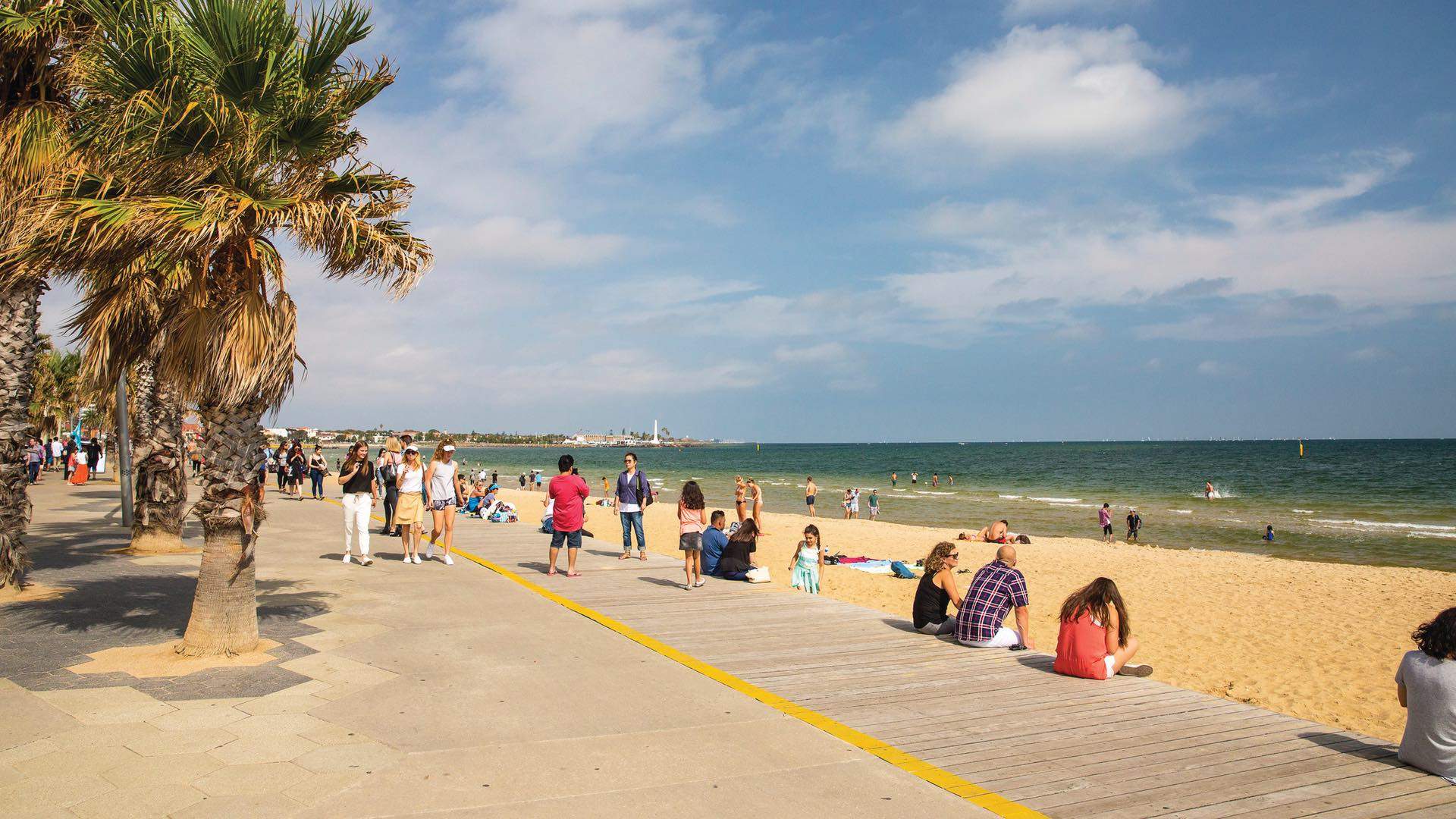
By 2015, the St Kilda foreshore had mutated from a local recreational strip into an internationally advertised, alcohol-fueled party zone, placing an unsustainable load on the St Kilda Police Station. Social media platforms accelerated this shift, broadcasting the beach as an unregulated venue for "orphan Christmas" events where backpackers and expatriates could congregate. The station's command observed a sharp rise in public order offenses, yet the municipal bylaws remained lenient, allowing public drinking until sunset. This regulatory gap forced officers into a reactive posture, where they could only intervene after intoxication had already escalated into violence or property damage.
The breaking point arrived on Christmas Day, 2017. An estimated 5, 000 revelers descended on the foreshore, overwhelming the rostered police presence. The gathering devolved into a chaotic brawl, resulting in assaults, public drunkenness, and a tram collision involving an intoxicated pedestrian. Inspector Jason Kelly, representing the police command, publicly condemned the event as "appalling" after council workers were forced to remove 29 tonnes of waste, including broken glass and abandoned furniture, from the sand. The station's holding cells reached capacity, and resources from across the Southern Metro Region were diverted to quell the disturbance. This operational failure demonstrated that the station could no longer police the foreshore without stricter legislative tools.
In response to the 2017 debacle, the Port Phillip Council, under heavy pressure from police leadership, enacted emergency restrictions. By December 2018, a permanent 24-hour alcohol ban was codified for the summer months (November 1 to March 31). For the officers at St Kilda Police Station, this shifted their primary summer duty from peacekeeping to zero-tolerance enforcement. The "Operation Summersafe" initiative was activated, requiring officers to patrol the sand in high-visibility vests, seizing open and sealed containers alike. The logistical load was significant; police were required to confiscate and destroy thousands of liters of alcohol, frequently engaging in confrontations with tourists who claimed ignorance of the new bylaws.
The enforcement strategy required a tactical evolution. The station began deploying Protective Services Officers (PSOs) to the beach, a deployment previously reserved for railway stations, to augment sworn members. The Mounted Branch became a fixture on the sand, using horses to break up dense crowds that patrol cars could not reach. This period also saw the installation of temporary fencing and CCTV arrays linked directly to the station's watch house, allowing the watch commander to direct ground units to developing hotspots before they spiraled out of control. Even with these measures, the station recorded a 161 percent higher rate of violent crime compared to the Victorian average, driven largely by the friction between intoxicated crowds and enforcement teams.
The COVID-19 pandemic (2020, 2021) transformed the foreshore from a party zone into a political flashpoint. When the Victorian government mandated lockdowns, St Kilda Beach became a primary site for civil disobedience. The station found itself enforcing health directives against residents who used the beach to protest isolation rules. In September 2021, the situation escalated when hundreds of anti-lockdown protesters clashed with police on the foreshore. The station was fortified, and officers were equipped with riot gear to disperse crowds that outnumbered them five to one. These operations drained the station's capacity to respond to routine crimes, as personnel were ring-fenced for public order maintenance.
Post-pandemic policing (2022, 2026) has settled into a rhythm of high-intensity regulation. The alcohol ban remains a permanent fixture, supplemented by a strict "glass ban" across the entire foreshore to prevent the weaponization of bottles. Officers problem on-the-spot fines of $204 for breaches, a punitive measure designed to deter the "party bus" demographic. The station has also had to expand its remit to the water itself, coordinating with Water Police to enforce exclusion zones for jet skis, which had become a new source of endangerment for swimmers. The 2025/2026 summer season saw the continuation of these hardline tactics, with the station integrating drone surveillance to monitor crowd density and alcohol consumption in real-time.
| Period | Event / Policy Change | Police Operational Impact |
|---|---|---|
| Dec 25, 2017 | "Orphan Christmas" Riot | 5, 000 revelers; 29 tonnes of trash; regional resources diverted; cells over capacity. |
| Jan 2018 | Emergency Alcohol Ban | Immediate shift to zero-tolerance confiscation; introduction of beach patrols. |
| Dec 2018 | Permanent Summer Ban | 24-hour ban (Nov 1, Mar 31); Operation Summersafe activation; PSO deployment. |
| Mar 2020 | COVID-19 Beach Closure | Enforcement of social distancing; beach closed to public; checkpoints established. |
| Sep 2021 | Anti-Lockdown Protests | Riot squad deployment; 300+ arrests region-wide; station fortified against unrest. |
| 2023, 2026 | Glass Ban & Jet Ski Zones | $204 fines standardized; drone surveillance integration; Water Police coordination. |
The transformation of the St Kilda foreshore from a libertine playground to a highly regulated zone has fundamentally altered the daily operations of the St Kilda Police Station. The "beat" includes the sand itself, requiring officers to navigate the tension between tourism promotion and law enforcement. While the massive brawls of 2017 have largely been suppressed, the station remains in a constant state of alert during the summer months, managing a precinct where the density of licensed venues and public spaces creates a perpetual risk of disorder. The cost of this stability is a permanent diversion of manpower, leaving other crime categories in the district as the station prioritizes the visibility of order on the bay.
Statistical Metrics of Recidivism and Violent Crime (2020, 2026)
The operational data governing St Kilda Police Station between 2020 and 2026 reveals a distinct bifurcation in criminal behavior, marked by the suppression effects of the COVID-19 pandemic followed by a violent statistical recoil. While the years 1700 to 1900 established St Kilda as a frontier of disorder, the modern era has quantified this chaos into precise metrics of recidivism and volume crime. By early 2026, the station functioned not as a law enforcement hub as a high-velocity processing center for a specific cohort of repeat offenders who drove crime rates to their highest levels since electronic recording began in 1993.
During the pandemic years of 2020 and 2021, the station observed a deceptive contraction in street-level violence. With Melbourne's nightlife economy suspended, the traditional "blood and vomit" policing of Fitzroy and Acland Streets, replaced by a surge in residential domestic interventions. Family incidents rose by 11. 3% in the Port Phillip Local Government Area (LGA) during this period, forcing general duties officers to pivot from public order management to complex family violence safety notices. This statistical anomaly corrected itself violently in 2022. As the lockdowns lifted, the "snapback" effect saw public assaults and robberies return to pre-pandemic baselines within six months, a velocity of return that overwhelmed rostered staffing levels.
The most significant statistical development between 2023 and 2026 was the explosion of "high-intensity recidivism." Data from the Crime Statistics Agency (CSA) for the year ending September 2025 identified a hardcore group of offenders responsible for a disproportionate volume of police contacts. Statewide, a cohort of 988 individuals committed 20 or more alleged incidents each within a 12-month window, an 86% increase from the previous year. St Kilda, with its density of retail and transient accommodation, became a primary theatre for these super-repeaters. Officers at the station frequently arrested the same individuals multiple times in a single week, particularly for theft from motor vehicles and aggravated retail burglary, which surged by 40% and 38% respectively in the district during 2024, 2025.
Youth crime metrics also sharply during this window. Between 2023 and 2025, offenses committed by youths aged 10 to 17 rose by 17. 9%. Unlike the petty vandalism of previous decades, this wave involved high-harm offenses: aggravated burglaries (home invasions) and carjackings. St Kilda Police Station became a central node for processing these young offenders, of whom were traveling from outer suburbs to target the affluent bayside strip. The bail reform laws of 2024, intended to reduce youth incarceration, initially correlated with a rise in breach-of-bail offenses, creating a revolving door where police paperwork outpaced the judicial process.
The decriminalization of public drunkenness in November 2023 fundamentally altered the station's statistical output. For over a century, "drunk and disorderly" was a primary metric for St Kilda police. The removal of this offense caused a statistical drop in public order crimes did not reduce demand; instead, it shifted the load to "Assault" and "Resist Police" categories, as interactions with intoxicated individuals became more volatile without the immediate power of arrest for simple drunkenness. By 2025, the Port Phillip LGA recorded a criminal incident rate of 11, 155. 7 per 100, 000 residents, a 16. 2% increase year-on-year, cementing its status as one of the most crime-dense jurisdictions in Victoria.
| Metric | 2021 (Pandemic) | 2023 (Recovery) | 2025 (Surge) | % Change (21-25) |
|---|---|---|---|---|
| Total Criminal Incidents | ~7, 890 | 9, 400 | 12, 840 | +62. 7% |
| Rate per 100, 000 Pop. | 6, 118. 3 | 9, 107. 2 | 11, 155. 7 | +82. 3% |
| Theft from Motor Vehicle | 1, 450 | 1, 736 | 2, 707 | +86. 6% |
| Family Violence Incidents | 1, 380 | 1, 450 | 1, 590 | +15. 2% |
| High-Intensity Recidivists (Statewide Context) | 530 (est) | 610 | 988 | +86. 4% |
The data from late 2025 indicates a structural shift in the nature of crime handled by St Kilda Police. The rise in "Theft from Motor Vehicle" (up 86. 6% over four years) correlates directly with the cost-of-living emergency, where number plates and tools became currency for organized syndicates. By March 2026, the station's intelligence unit reported that 55% of these thefts showed no forced entry, suggesting a rise in opportunistic scavenging by the transient population. This "survival crime" wave created a volume of reports that saturated the station's investigation queues, leaving less resource bandwidth for proactive community policing.
Violent crime rates in St Kilda specifically (postcode 3182) outpaced the broader Port Phillip average. In 2025, the suburb recorded an offense rate of 22, 391 per 100, 000 people, more than double the state average. Assault and robbery rates stood at one offense for every 43 residents. This density of violence necessitated the permanent deployment of Protective Services Officers (PSOs) to tram stops and foreshore patrols, a tactic previously reserved for the central business district. The station's holding cells, designed in a different era, frequently operated at capacity, forcing transfers to the Melbourne Custody Centre and removing patrol units from the street for hours at a time.
The trajectory leading into mid-2026 suggests no immediate abatement. The correlation between economic distress and volume crime remains tight, and the "high intensity" offender cohort continues to exploit gaps in the bail system. For the officers at St Kilda, the metrics translate into a relentless operational tempo, where the administrative load of processing recidivists consumes the majority of shift hours, leaving the historic station struggling to contain the modern complexities of its district.
Independent Broad-based Anti-corruption Commission (IBAC) Investigations
| Year | Operation / Incident | Nature of Misconduct | Outcome / Finding |
|---|---|---|---|
| 2012 | John Kenney Assault | Excessive force against disability pensioner. | Civil payout; highlighted brutality prior to full IBAC maturity. |
| 2015, 2017 | Operation Apsley | Illicit drug use/trafficking by Metro officers. | Exposed police drug culture; heightened surveillance in drug hubs like St Kilda. |
| 2020 | Dani Laidley Leak | Privacy breach; transphobic conduct; photo leak. | Criminal charges for officer; severe reputational damage; disciplinary action. |
| 2021, 2022 | Operation Carey | Assault of person in custody at St Kilda Station. | Senior Constable charged with unlawful assault. |
| 2022 | BWC Audit (VAGO/IBAC) | Failure to activate Body Worn Cameras. | Identified widespread non-compliance during use-of-force incidents. |
| 2023 | Predatory Behavior Review | Sexual of DV victims/ persons. | Confirmed persistence of predatory culture in high-contact precincts. |
| 2026 | St Kilda Drug Syndicate | Major cocaine/cannabis ring (Barber Shop). | High-risk environment for corruption; ongoing integrity monitoring. |
The trajectory of IBAC's involvement with St Kilda Police Station demonstrates a slow relentless of the precinct's historical impunity. From the blatant brutality of the early 2000s to the digital malfeasance of the Laidley case, the nature of misconduct has evolved, the core problem remains: a station culture that frequently views itself as separate from the community it serves. The data from 2020 to 2026 indicates that while physical assaults in custody are more likely to be prosecuted, the subtler forms of corruption, privacy breaches, predatory propositions, and selective camera usage, present a more complex challenge for investigators. As the precinct moves through 2026, the "St Kilda Triangle" of drugs, sex, and nightlife continues to generate the friction that breeds misconduct, ensuring that the station remains a permanent fixture on IBAC's radar.