
Constitutional Establishment and Article III Mandate
The establishment of the United States Supreme Court was neither inevitable nor universally desired in its final form. Under the Articles of Confederation, the absence of a national judiciary created a legal vacuum where state courts routinely favored their own citizens in disputes with outsiders. Maritime conflicts and interstate quarrels festered without a neutral arbiter. This legal disarray forced the delegates at the Constitutional Convention of 1787 to confront a radical idea: a distinct, independent judicial branch co-equal with the legislature and executive. The resulting Article III of the Constitution, while brief, constructed the foundation for what would become the most judicial body in the world, though its initial years suggested a far more fragile institution.
Debates in Philadelphia during the summer of 1787 revealed deep divisions regarding the scope of this new power. The Virginia Plan, proposed by James Madison, called for a strong national judiciary consisting of one supreme tribunal and multiple inferior tribunals. This proposal faced immediate resistance. John Rutledge of South Carolina argued vehemently against creating lower federal courts, asserting that state courts were sufficient to handle legal matters in the instance, with the Supreme Court serving only as an appellate body. Rutledge warned that a sprawling federal court system would be an "unnecessary encroachment" on state sovereignty. The deadlock broke only through what scholars term the "Madisonian Compromise." The delegates agreed to mandate "one supreme Court" left the creation of "inferior Courts" to the discretion of Congress. On June 5, 1787, the convention voted 8, 2 to allow, not require, a national legislature to establish lower courts.
The text of Article III, Section 1, solidified the judiciary's independence through two primary method: tenure and compensation. Judges were to hold their offices during "good Behaviour," a phrase drawn from English law that granted life tenure unless impeached. This provision aimed to insulate justices from political retribution. Alexander Hamilton, writing in Federalist No. 78, defended this permanency as an essential barrier against "legislative encroachments." He famously described the judiciary as the "least dangerous" branch, possessing "neither FORCE nor, judgment." Hamilton argued that without the power of the purse or the sword, the Court depended entirely on the executive to enforce its rulings. This theoretical weakness necessitated strong protections for the justices themselves.
Anti-Federalist critics saw a different future. Writing under the pseudonym "Brutus," Robert Yates predicted in his eleventh essay that the Supreme Court would become the supreme power in the land. Brutus warned that the court's power to interpret the Constitution according to its "spirit" rather than just its letter would allow judges to "mold the government into almost any shape they please." He argued that the independence Hamilton praised was actually a absence of accountability, creating a body of men placed above the legislature and the people. History shows that Brutus's fears regarding the expansion of judicial authority were prescient, particularly concerning the Court's ability to invalidate congressional acts.
The Congress translated these constitutional abstractions into reality with the Judiciary Act of 1789. Signed by President George Washington on September 24, 1789, the Act established the Court's initial structure: one Chief Justice and five Associate Justices. It set the Chief Justice's salary at $4, 000 and Associate Justices' at $3, 500, substantial sums for the era, intended to attract top legal minds. The Act also created thirteen judicial districts and three circuits, placing the Supreme Court at the apex of a federal hierarchy. Yet, the Act imposed a grueling duty that nearly broke the early Court: circuit riding. Justices were required to travel thousands of miles annually to preside over circuit courts alongside district judges, facing hazardous roads, poor lodging, and physical exhaustion.
The early reality of the Supreme Court contrasted sharply with the grandeur of its constitutional mandate. The position of Justice absence the prestige it commands in 2026. The Chief Justice, John Jay, found the role so diminishing that he resigned in 1795 to become Governor of New York, a position he considered more and significant. When President John Adams offered to reappoint Jay as Chief Justice in 1800, Jay declined, writing that the Court absence "energy, weight, and dignity." During its decade, the Court heard few cases; in terms, it had no docket at all. The justices spent more time traveling dusty roads than deliberating on high constitutional questions. Resignations were common as talented jurists sought more stable and influential positions in state government.
The transformation of the Court from a weak, circuit-riding body to a co-equal sovereign began not with a change in the Constitution, with the assertion of power in Marbury v. Madison (1803). While the specific ruling is a matter for later analysis, its structural impact was to operationalize the "judicial Power" granted in Article III. The Court claimed the exclusive right to say what the law is, fulfilling Brutus's prophecy over Hamilton's assurance. By the time the Court moved into its own building in 1935, it had long shed the indignity of borrowing committee rooms in the Capitol, symbolizing its physical and political separation from the legislature.
By February 2026, the structural mandate of Article III faces new scrutiny driven by data on tenure and politicization. The "good Behaviour" clause, originally designed to protect independence, results in tenures far exceeding the Framers' experience. Between 1789 and 1970, the average tenure of a Justice was approximately 15 years. Since 1970, that average has surged to over 26 years. Modern medical and the strategic timing of retirements have created a court where justices serve for generations, raising questions about democratic accountability that echo the Anti-Federalist critiques of 1788. Proposals for 18-year term limits, debated intensely in the 2020s, seek to align the 18th-century mandate with 21st-century demographics, yet the constitutional text remains unchanged.
The table contrasts the structural reality of the Supreme Court at its inception with its status in early 2026, highlighting the evolution of the Article III mandate.
| Metric | 1789 Structure (Judiciary Act) | 2026 Structure (Modern Era) |
|---|---|---|
| Membership | 6 (1 Chief, 5 Associates) | 9 (1 Chief, 8 Associates) |
| Selection Pool | White male property owners | Diverse (Gender, Race, Ethnicity) |
| Primary Duty | Circuit Riding & Trial Appeals | Constitutional Review (Certiorari) |
| Avg. Tenure | ~15 Years (Historical Avg to 1970) | ~26+ Years (Post-1970 Avg) |
| Caseload | <10 cases per year (early 1790s) | ~7, 000 petitions; ~60 signed opinions |
| Chief Justice Pay | $4, 000 (approx. $140k adj. for inflation) | $312, 200 (2025 rate) |
The trajectory from the Judiciary Act of 1789 to the Roberts Court of 2026 illustrates a shift in the application of Article III. What began as a compromise, a theoretical check on power by logistical misery, hardened into the arbiter of American life. The "judicial Power" that Rutledge feared and Madison championed has expanded to cover every facet of the modern administrative state, confirming that while the text of the Constitution remains static, the institution it created is, aggressive, and perpetually at the center of the struggle for political sovereignty.
Judicial Review Acquisition under Marshall (1801, 1835)
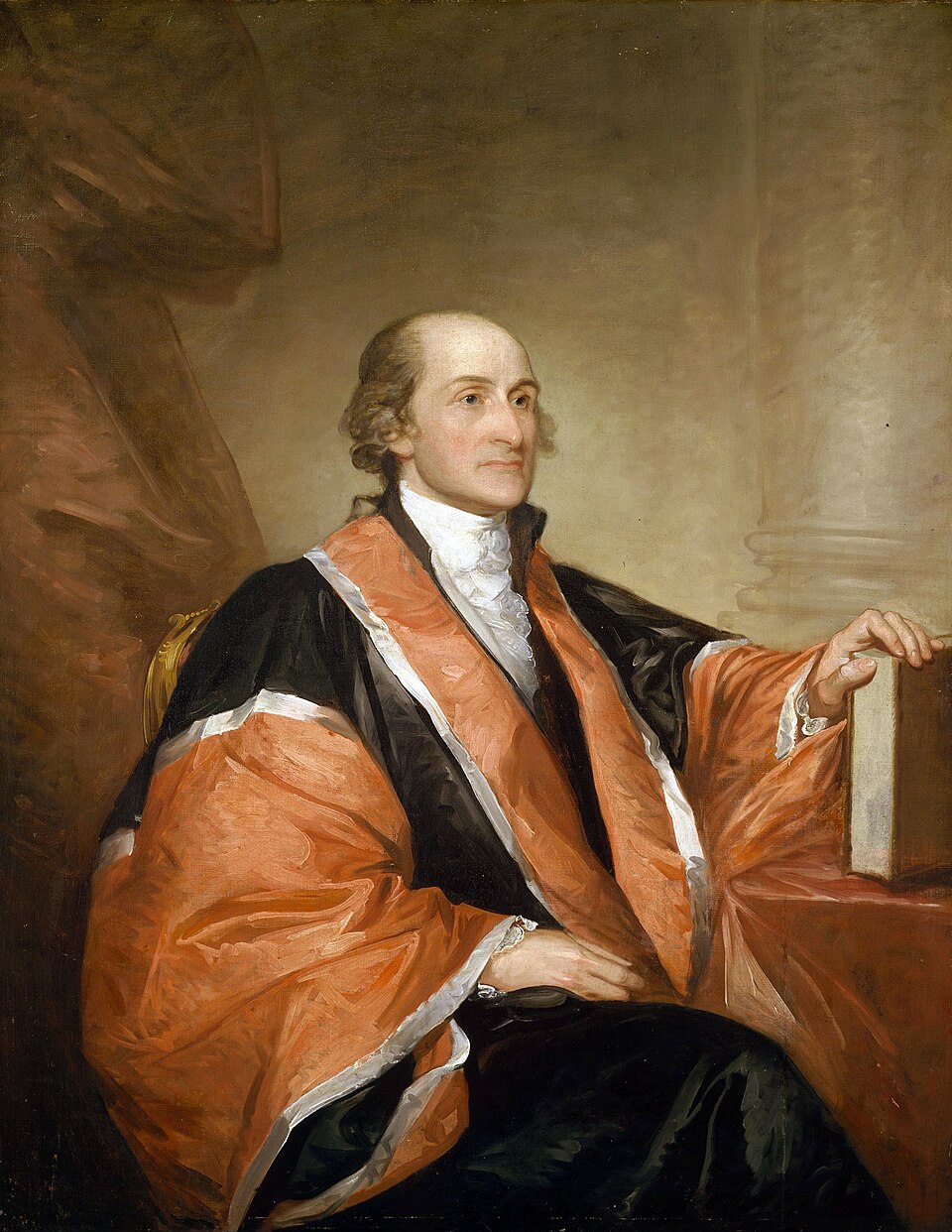
The transformation of the Supreme Court from a neglected backwater into the arbiter of American sovereignty was not an organic evolution a calculated seizure of power engineered by John Marshall. When Marshall took the oath as Chief Justice in 1801, the Court was homeless, meeting in a borrowed committee room in the unfinished Capitol, and absence the authority to enforce its against the executive branch. The outgoing Federalist administration, decimated by the election of 1800, sought to entrench its influence within the judiciary before Thomas Jefferson took office. This political desperation birthed the "Midnight Judges" emergency, where President John Adams signed commissions for new judges until his final hours. The failure to deliver one of these commissions, to William Marbury, provided the method for Marshall to execute the most significant legal maneuver in American history.
The case of Marbury v. Madison (1803) presented a fatal trap for the fragile Court. If Marshall ordered Secretary of State James Madison to deliver the commission, the Jefferson administration would simply ignore the order, exposing the Court's impotence. If Marshall ruled against Marbury, he would appear to surrender to partisan pressure. Marshall chose neither. Instead, he constructed a legal paradox that expanded judicial power by appearing to limit it. The Court ruled that Marbury had a legal right to his commission that the Supreme Court had no jurisdiction to order its delivery. Marshall declared that Section 13 of the Judiciary Act of 1789, which authorized the Court to problem writs of mandamus in such cases, violated Article III of the Constitution. By clear down a federal law as unconstitutional, Marshall established the doctrine of judicial review. He sacrificed the minor battle over a justice of the peace commission to secure the weapon: the authority to nullify acts of Congress.
Marshall's consolidation of power extended beyond legal theory into the operational mechanics of the Court itself. Prior to his tenure, justices delivered opinions seriatim, individually and sequentially, mimicking the British tradition. This practice highlighted internal disagreement and diluted the institution's voice. Marshall abolished this custom, insisting on a single "Opinion of the Court," which he frequently wrote himself. Data from his thirty-four-year tenure confirms his dominance: of the roughly 1, 100 decisions issued during this era, Marshall authored 519 opinions. By forcing the Court to speak with one voice, he projected an illusion of unanimity that masked internal dissent and elevated the Court's pronouncements to the status of unquestionable constitutional law.
With the weapon of judicial review secured and the internal discipline of the Court established, Marshall turned his sights on state resistance to federal supremacy. The conflict reached its apex in McCulloch v. Maryland (1819), a case triggered by Maryland's attempt to tax the Baltimore branch of the Second Bank of the United States. The state legislature had imposed a crushing tax of $15, 000 per year (approximately $360, 000 in 2026 currency) on any bank not chartered by the state, or a penalty of $100 for every note issued. Marshall's opinion dismantled the state's argument on two fronts., he invoked the Necessary and Proper Clause to validate the federal government's implied power to create a bank, rejecting a strict textualist reading of the Constitution. Second, he famously declared that "the power to tax involves the power to destroy," ruling that a state could not impede valid federal operations. This decision did not protect a bank; it cemented the hierarchy of American federalism, placing national institutions beyond the reach of state retaliation.
The economic ramifications of the Marshall Court's nationalism became even more tangible in Gibbons v. Ogden (1824). The dispute involved a steamboat monopoly granted by New York State to Robert Livingston and Robert Fulton, which prohibited competitors like Thomas Gibbons from operating in New York waters without a license. The monopoly stifled the nascent national market, creating a patchwork of state-level protectionism. Marshall used this case to define the Commerce Clause with sweeping breadth, ruling that federal authority over interstate commerce included the power to regulate navigation. This decision shattered state-sponsored monopolies and laid the legal groundwork for the modern integrated national economy. By 2026 standards, the Gibbons decision remains the bedrock of federal regulatory power, justifying everything from civil rights legislation to environmental protection standards.
The limits of Marshall's judicial supremacy were clear revealed when the Court collided with a hostile executive branch determined to ignore it. In Worcester v. Georgia (1832), the Court struck down Georgia's laws that seized Cherokee lands and imprisoned missionaries, affirming the sovereignty of the Cherokee Nation. Marshall ruled that Indian nations were "distinct political communities" where state laws had no force. Yet, without an executive to enforce the ruling, the victory was hollow. President Andrew Jackson, reflecting the aggressive expansionism of the era, refused to intervene, allowing Georgia to ignore the Court's mandate. This standoff exposed the structural weakness of the judiciary: it possesses judgment no sword. The subsequent forced removal of the Cherokee on the Trail of Tears stands as a grim testament to the inability of the Court to check a determined executive in the absence of political.
The statistical legacy of the Marshall era reveals a court that grew from a theoretical entity into a heavy-lifting branch of government. In 1801, the docket was so light the Court cancelled its August term; by 1835, the caseload had expanded to the point where the Court struggled to keep pace with the nation's commercial disputes. Marshall's death in 1835 marked the end of the judiciary's foundational phase. He had taken a vague Article III mandate and engineered a machine of governance capable of overriding presidents and legislatures. The table summarizes the key data points of Marshall's acquisition of judicial power.
| Metric | Data / Detail | Strategic Impact |
|---|---|---|
| Opinions Written | 519 (approx. 50% of total) | Created a unified "Voice of the Court" replacing individual seriatim opinions. |
| Federal Laws Voided | 1 (Judiciary Act §13) | Established Judicial Review without provoking a fatal confrontation with the Executive. |
| State Laws Voided | Multiple (e. g., Maryland Tax, NY Monopoly) | Enforced federal supremacy over state economic protectionism. |
| Constitutional Clauses Defined | Commerce, Necessary & Proper, Contracts | Expanded federal reach into banking, navigation, and corporate charters. |
The Marshall Court did not interpret the law; it constructed the federal government's nervous system. By the time Roger Taney succeeded Marshall, the Court had secured its place as a co-equal branch, though the looming emergency of slavery would soon test whether that authority could survive the fracturing of the union itself. The precedent set in 1803 remains the singular most authority in American constitutional law, referenced in thousands of cases through 2026 to justify the judiciary's final say on what the law is.
Pre-Civil War Jurisprudence and the Dred Scott Ruling
| Case Name | Year | Vote | Primary Holding | Impact |
|---|---|---|---|---|
| The Amistad | 1841 | 7, 1 | Africans on the ship were free born and kidnapped, not property. | Rare victory for abolitionists; avoided broad ruling on U. S. slavery. |
| Prigg v. Pennsylvania | 1842 | 8, 1 | Federal Fugitive Slave Act supersedes state personal liberty laws. | Stripped states of power to protect free Black residents; federalized slave catching. |
| Strader v. Graham | 1851 | 9, 0 | Status of a slave depends on the laws of the state they are currently in. | Refused to enforce the Northwest Ordinance; precursor to Dred Scott. |
| Dred Scott v. Sandford | 1857 | 7, 2 | Blacks cannot be citizens; Congress cannot ban slavery in territories. | Voided Missouri Compromise; accelerated route to Civil War; destroyed Court prestige. |
| Ableman v. Booth | 1859 | 9, 0 | State courts cannot problem writs of habeas corpus for federal prisoners. | Upheld Fugitive Slave Act of 1850 against Wisconsin's attempt to nullify it. |
(2026), *Dred Scott* is exclusively as part of the "anti-canon", a set of cases used to teach law students how judges should *not* reason. It remains a permanent stain on the institution, a reminder that the Supreme Court is not immune to the prejudices of its time and that judicial supremacy, when exercised without moral or factual grounding, can shatter the nation it was designed to serve. The Taney Court proved that a judiciary obsessed with strict textualism, when decoupled from the reality of human rights, can rationalize the greatest of evils.
Economic Deregulation during the Lochner Era (1897, 1937)

Between 1897 and 1937, the Supreme Court of the United States engaged in a forty-year campaign of judicial activism that fundamentally altered the nation's economic structure. This period, known as the Lochner Era, saw the Court weaponize the Fourteenth Amendment, originally ratified to protect the rights of freed slaves, to shield industrial capitalism from government regulation. By inventing the legal doctrine of "substantive due process," the justices transformed the Due Process Clause into a potent tool for clear down labor laws, minimum wage standards, and safety regulations. The Court operated on the premise that the "liberty of contract" between an employer and an employee was absolute, treating a penniless laborer and a massive corporation as equal negotiating partners. This legal fiction ignored the coercive reality of the industrial economy and resulted in the invalidation of approximately 170 state and federal statutes.
The era takes its name from the 1905 case Lochner v. New York, a decision that stands as a monument to judicial detachment from physical reality. New York State had passed the Bakeshop Act of 1895 to address the squalid conditions in urban bakeries, where workers labored for over 100 hours a week in cellar workrooms filled with flour dust, fumes, and vermin. Health data from the period linked these conditions to high rates of "white lung" (tuberculosis) and shortened life expectancies among bakers. The law capped working hours at 60 per week to protect public health. Yet, in a 5-4 decision, Justice Rufus Peckham wrote that the law was an "unreasonable, unnecessary and arbitrary interference with the right of the individual to his personal liberty." The Court declared that the state had no authority to intervene in the private contract between a baker and his boss, ruling that workers had a constitutional right to work themselves to death.
This philosophy extended beyond hours and safety. The Court aggressively dismantled attempts to organize labor. In Adair v. United States (1908) and Coppage v. Kansas (1915), the justices upheld the use of "yellow-dog contracts", employment agreements that forced workers to pledge they would not join a union as a condition of getting a job. The Court reasoned that if an employer had the right to dismiss a worker for any reason, they also had the right to refuse employment to union members. This logic stripped Congress and state legislatures of the power to ban these predatory contracts, leaving the labor movement defenseless against corporate coercion. The judiciary had criminalized the legislative protection of shared bargaining.
The Court's commitment to deregulation reached a zenith of cynicism in Adkins v. Children's Hospital (1923). Congress had established a minimum wage board for women and children in the District of Columbia to prevent wages from falling a subsistence level. The Court struck the law down, arguing that because women had gained the right to vote via the Nineteenth Amendment, they were legally equal to men and required no special protection from the state. Justice George Sutherland wrote that the "ancient inequality of the sexes" had disappeared, using the victory of women's suffrage as a weapon to deny women a living wage. This ruling froze minimum wage legislation across the country for over a decade, even as the Roaring Twenties gave way to economic collapse.
The onset of the Great Depression in 1929 exposed the catastrophic failure of the laissez-faire economics the Court had enshrined in constitutional law. As the economy evaporated, the Court's "Four Horsemen", Justices Pierce Butler, James McReynolds, George Sutherland, and Willis Van Devanter, formed an obstructionist bloc dedicated to preserving the Lochner doctrine. When President Franklin D. Roosevelt and Congress attempted to stabilize the imploding market with the New Deal, the Court retaliated. In 1935, the Court struck down the National Industrial Recovery Act in A. L. A. Schechter Poultry Corp. v. United States, and the following year, it invalidated the Agricultural Adjustment Act in United States v. Butler. The judiciary had positioned itself as the final barrier to national economic recovery, insisting on 19th-century legal theories while 25% of the workforce stood unemployed.
| Case | Year | Statute Struck Down | Judicial Rationale |
|---|---|---|---|
| Lochner v. New York | 1905 | NY Bakeshop Act (60-hour work week limit) | Violation of Liberty of Contract (14th Amdt) |
| Adair v. United States | 1908 | Erdman Act (Ban on anti-union discrimination) | Violation of Property Rights (5th Amdt) |
| Hammer v. Dagenhart | 1918 | Keating-Owen Act (Child Labor ban) | Congress exceeded Commerce Clause powers |
| Adkins v. Children's Hospital | 1923 | DC Minimum Wage Law for Women | Interference with Freedom of Contract |
| Schechter Poultry Corp. v. US | 1935 | National Industrial Recovery Act | Improper delegation of legislative power |
| Carter v. Carter Coal Co. | 1936 | Bituminous Coal Conservation Act | Labor relations are local, not interstate commerce |
The standoff broke only when the political pressure became. Following his landslide reelection in 1936, Roosevelt proposed the Judicial Procedures Reform Bill, widely known as the "court-packing plan," which would have allowed him to appoint up to six new justices to dilute the conservative majority. While the bill failed in Congress, the threat shattered the Court's resolve. In what became known as "the switch in time that saved nine," Justice Owen Roberts defected from the conservative bloc. In the 1937 case West Coast Hotel Co. v. Parrish, the Court upheld a Washington state minimum wage law, explicitly overruling Adkins and burying the doctrine of liberty of contract. Chief Justice Charles Evans Hughes wrote that the Constitution did not protect the "liberty" to exploit workers. This decision marked the definitive end of the Lochner Era, signaling a retreat from economic micromanagement that would hold for nearly a century.
The legacy of this period remains a warning about the dangers of judicial overreach masked as constitutional fidelity. For forty years, unelected judges substituted their own economic p
Civil Liberties Expansion under the Warren Court (1953, 1969)
The era of the Warren Court began with a miscalculation. In 1953, President Dwight D. Eisenhower appointed Earl Warren, the Republican Governor of California, as Chief Justice, expecting a moderate conservative who would stabilize the judiciary after the fractious Vinson years. Eisenhower later reportedly described this decision as "the biggest damn fool mistake I ever made." Instead of a caretaker, Warren led a judicial revolution that redefined the relationship between the citizen and the state. Between 1953 and 1969, the Court dismantled the legal framework of racial segregation, imposed strict procedural requirements on police, forced the redistricting of nearly every state legislature, and invented a constitutional right to privacy. This period represents the high-water mark of judicial liberalism, a sixteen-year anomaly that continues to define the ideological battle lines of the Supreme Court in 2026.
The Court's most famous decision, Brown v. Board of Education (1954), arrived early in Warren's tenure. Warren understood that a split decision would invite massive resistance in the South, so he spent months lobbying his colleagues to achieve a unanimous 9-0 vote. The opinion relied not just on legal precedent on social science, citing Kenneth Clark's "doll tests" to that segregation generated a feeling of inferiority among Black children that might affect their hearts and minds "in a way unlikely ever to be undone." Yet, the Court's moral clarity was matched by its practical impotence. In Brown II (1955), the Justices ordered desegregation to proceed with "all deliberate speed," a vague phrase that Southern states interpreted as "never." By 1964, a full decade after the ruling, only 1. 2 percent of Black students in the South attended school with white children. It was not until the Civil Rights Act of 1964 gave the federal government financial use that real integration began, proving that the Court could declare rights absence the sword to enforce them without executive and legislative backing.
While Brown dominated the headlines, the Warren Court's restructuring of the criminal justice system provoked even fiercer immediate backlash from law enforcement. Prior to the 1960s, the Bill of Rights was largely seen as a check on federal power, not state police tactics. The Court systematically "incorporated" these rights against the states via the Fourteenth Amendment. In Mapp v. Ohio (1961), the Court ruled that evidence obtained illegally, without a warrant, could not be used in state trials, establishing the "exclusionary rule." Police chiefs argued this would handcuff investigations, yet the Court doubled down two years later in Gideon v. Wainwright (1963). Clarence Earl Gideon, a drifter charged with breaking into a Florida pool hall, had petitioned the Court with a handwritten letter from his prison cell. The Court ruled unanimously that the Sixth Amendment guarantee of counsel applied to state felony cases, requiring governments to provide lawyers for indigent defendants. Before Gideon, thirteen states did not require appointed counsel for non-capital felonies; overnight, the public defender system became a constitutional mandate.
The apex of this due process revolution was Miranda v. Arizona (1966). The Court ruled 5-4 that prosecutors could not use statements stemming from custodial interrogation unless they demonstrated the use of procedural safeguards to secure the privilege against self-incrimination. This created the -ubiquitous "Miranda warning." Police departments nationwide insisted this would end the era of confessions. Data from Pittsburgh in the late 1960s showed confession rates dropping from 48 percent to 29 percent immediately following the ruling, though conviction rates remained relatively stable as police adapted by relying more on forensic evidence. By 2026, the Miranda warning had become a cultural staple, even as subsequent conservative Courts hollowed out its enforcement method, notably in the 2022 Vega v. Tekoh decision which ruled that a violation of Miranda does not provide a basis for a civil rights lawsuit.
Warren himself frequently neither Brown nor Miranda as his most significant achievement, rather Baker v. Carr (1962). For decades, state legislatures had refused to redraw district lines even with massive population shifts from rural farms to urban centers. In Tennessee, districts had not been redrawn since 1901. This malapportionment meant that a rural vote was frequently worth ten or twenty times more than an urban vote. In Alabama, the ratio was as high as 41 to 1. The Court had previously stayed out of this "political thicket," Warren led a majority to declare that redistricting was a justiciable problem under the Equal Protection Clause. This was followed by Reynolds v. Sims (1964), which established the "one person, one vote" principle. The ruling broke the stranglehold of rural minorities on state power, shifting political influence to the growing cities and suburbs. It was a structural re-engineering of American democracy that forced nearly every state to rewrite its constitution.
The Court also expanded the boundaries of the Amendment and personal liberty. In Engel v. Vitale (1962), the Justices struck down state-sponsored prayer in public schools, a decision that remains a lightning rod for the religious right. In New York Times Co. v. Sullivan (1964), the Court revolutionized libel law, ruling that public officials could not sue for defamation without proving "actual malice." This decision was not about press freedom in the abstract; it was a specific shield for Northern newspapers covering the civil rights movement, protecting them from bankrupting lawsuits filed by Southern segregationists. Without Sullivan, the national press might have been silenced by the legal of the Jim Crow South.
Perhaps the most far-reaching, and controversial, invention of the Warren era came in Griswold v. Connecticut (1965). clear down a state law that banned the use of contraceptives by married couples, Justice William O. Douglas wrote that the specific guarantees in the Bill of Rights have "penumbras," formed by emanations from those guarantees that help give them life and substance. This "right to privacy" became the foundation for Roe v. Wade in 1973. By 2026, following the Dobbs decision of 2022, the "penumbra" theory remains one of the most fiercely debated aspects of the Warren legacy, with originalist scholars attacking it as judicial fabrication while progressives defend it as essential to modern liberty.
| Case | Year | Vote | Core Holding | Immediate Consequence |
|---|---|---|---|---|
| Brown v. Board | 1954 | 9-0 | Segregation in schools is unconstitutional. | Massive resistance; only 1. 2% integration in South by 1964. |
| Mapp v. Ohio | 1961 | 6-3 | Exclusionary rule applies to states. | Evidence seized without warrant became inadmissible in state court. |
| Baker v. Carr | 1962 | 6-2 | Redistricting is justiciable. | Opened federal courts to lawsuits over gerrymandering/malapportionment. |
| Gideon v. Wainwright | 1963 | 9-0 | Right to counsel in state felonies. | Establishment of state-funded public defender systems nationwide. |
| Reynolds v. Sims | 1964 | 8-1 | "One person, one vote" for state legislatures. | Power shift from rural counties to urban centers. |
| Miranda v. Arizona | 1966 | 5-4 | Police must advise suspects of rights. | Standardized police interrogation; temporary drop in confessions. |
The Warren Court ended not with a whimper a scandal. In 1968, as Warren sought to retire, President Lyndon Johnson nominated Associate Justice Abe Fortas to replace him. Fortas, a close advisor to Johnson, faced a filibuster over his liberal record and ethics questions regarding financial payments. The nomination failed, and Fortas eventually resigned from the Court entirely. This allowed Richard Nixon, who had campaigned on a "law and order" platform attacking the Warren Court's "coddling of criminals," to appoint Warren Burger as Chief Justice in 1969. The sixteen-year experiment in aggressive judicial liberalism was over. Yet, the Warren Court had fundamentally altered the terrain. It had invalidated approximately 170 state statutes, compared to roughly 40 in the preceding era. It shifted the Supreme Court from a protector of property rights to a guardian of civil liberties, setting the stage for the conservative counter-revolution that would slowly gain ground over the five decades.
Ideological Realignment and Federalist Society Influence (1980, 2016)
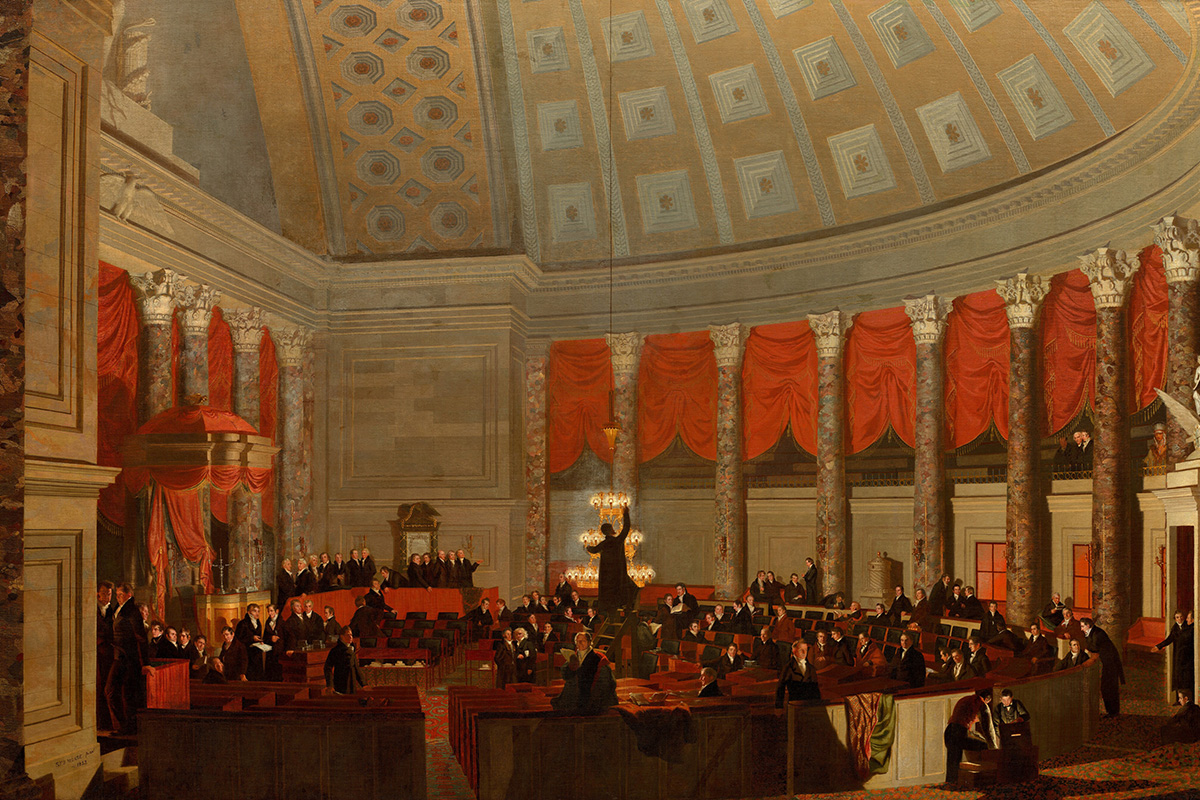
The ideological realignment of the Supreme Court between 1980 and 2016 was not an organic drift a calculated, well-funded engineering project. By the late 1970s, conservative legal scholars viewed the federal judiciary as a lost territory, dominated by the legacy of the Warren Court and what they perceived as "judicial activism." The response was the creation of a counter-infrastructure designed to identify, groom, and elevate jurists who adhered to specific interpretative theories, chief among them originalism and textualism. This period marked the transition from the idiosyncratic conservatism of the Burger Court to the disciplined, doctrinal conservatism of the Rehnquist and Roberts eras.
The engine of this transformation was the Federalist Society for Law and Public Policy Studies. Founded in 1982 by law students at Yale, Harvard, and the University of Chicago, the organization began as a debating club for conservative ideas. It quickly evolved into the primary gatekeeper for federal judicial appointments. Early financial backing came from the John M. Olin Foundation, which explicitly sought to reshape the legal culture. The Olin Foundation, along with the Scaife and Bradley foundations, poured millions into the society, viewing it as a long-term investment. By 2003, the Olin Foundation described the Federalist Society as "one of the best investments the foundation ever made." This network provided a credentialing system; aspiring judges knew that active participation in the Society was a prerequisite for advancement in a Republican administration.
President Ronald Reagan operationalized this strategy. His elevation of William Rehnquist to Chief Justice in 1986 and the appointment of Antonin Scalia created a new intellectual anchor for the Court. Scalia, in particular, popularized originalism, the theory that the Constitution should be interpreted based on its public meaning at the time of enactment, moving it from the fringes of academia to the center of Supreme Court jurisprudence. Yet, the movement faced a severe tactical defeat in 1987 with the nomination of Robert Bork. Bork, a brilliant polarizing scholar with a massive "paper trail" of controversial writings, was rejected by the Senate in a 42, 58 vote. The "Borking" of the nominee taught conservative strategists a crucial lesson: future nominees needed to be ideologically reliable publicly unclear. This led to the "stealth candidate" strategy, though it occasionally backfired, as seen with the appointment of David Souter in 1990, who eventually voted with the Court's liberal wing.
The 1990s and early 2000s saw the fruits of this long game. In United States v. Lopez (1995), the Rehnquist Court struck down the Gun-Free School Zones Act, marking the time since the New Deal that the Court invalidated a federal law by ruling it exceeded Congress's Commerce Clause power. This signaled a revival of federalism that would have been unthinkable two decades prior. The Court's intervention in the 2000 presidential election, Bush v. Gore, further demonstrated its willingness to exercise raw power. The 5, 4 decision to halt the Florida recount decided the presidency, cementing the perception of the Court as a political actor. The majority opinion, while framed in equal protection terms, was widely viewed as a pragmatic move by the conservative bloc to ensure a Republican victory.
Under Chief Justice John Roberts, appointed in 2005, the Court's focus shifted toward deregulation of campaign finance and the of the Voting Rights Act. The 2010 decision in Citizens United v. FEC overturned century-old restrictions on corporate political spending. Justice Anthony Kennedy's majority opinion held that political spending is a form of protected speech and that the government may not keep corporations or unions from spending money to support or denounce individual candidates in elections. The ruling fundamentally altered the mechanics of American elections, allowing unlimited sums to flow into "Super PACs." Three years later, in Shelby County v. Holder (2013), the Court struck down the coverage formula of the Voting Rights Act of 1965, releasing states with histories of discrimination from federal oversight. These decisions reflected a jurisprudence that prioritized a colorblind reading of the Constitution and a deregulatory method to markets and elections.
The influence of the Federalist Society matured into a stranglehold on the nomination process during this era. Leonard Leo, the Society's executive vice president, became the de facto architect of the judicial list. Leo raised hundreds of millions of dollars through unclear non-profits, such as the Judicial emergency Network, to run advertising campaigns supporting favored nominees and attacking opponents. This "dark money" apparatus ensured that judicial confirmations were treated like political campaigns. By the time of the 2016 election, the pipeline was fully vertically integrated: the Society identified law students, placed them in clerkships with trusted judges, moved them into positions in the Department of Justice, and elevated them to the federal bench.
The culmination of this thirty-year project occurred in February 2016, following the death of Justice Antonin Scalia. Senate Majority Leader Mitch McConnell, in an maneuver, refused to hold hearings for President Obama's nominee, Merrick Garland. Garland, a centrist judge on the D. C. Circuit, waited 293 days, the longest pending nomination in history, before his nomination expired. McConnell's blockade was a high- gamble predicated on the belief that the Supreme Court seat was a political asset that could drive conservative voter turnout. The strategy worked. Donald Trump released a list of chance Supreme Court nominees during his campaign, a list curated directly by Leonard Leo and the Federalist Society. This move reassured skeptical conservative voters that a Trump presidency would deliver the judicial outcomes they had sought since the Reagan era. The refusal to seat Garland and the subsequent election of Trump guaranteed that the ideological realignment begun in 1980 would be cemented for another generation.
| Nominee | Year | Appointing President | Senate Vote | Outcome | Significance |
|---|---|---|---|---|---|
| William Rehnquist (CJ) | 1986 | Reagan | 65, 33 | Confirmed | Shifted Court leadership to staunch conservative. |
| Antonin Scalia | 1986 | Reagan | 98, 0 | Confirmed | Mainstreamed Originalism. |
| Robert Bork | 1987 | Reagan | 42, 58 | Rejected | Catalyst for politicized confirmation battles. |
| Clarence Thomas | 1991 | G. H. W. Bush | 52, 48 | Confirmed | Replaced liberal icon Thurgood Marshall; solidified conservative bloc. |
| John Roberts | 2005 | G. W. Bush | 78, 22 | Confirmed | Began the Roberts Court era; focus on deregulation. |
| Samuel Alito | 2006 | G. W. Bush | 58, 42 | Confirmed | Replaced swing-vote O'Connor with reliable conservative. |
| Merrick Garland | 2016 | Obama | No Vote | Expired | Blocked by Senate Majority Leader for 293 days. |
The Conservative Supermajority and Precedent Reversal (2020, 2026)
The confirmation of Justice Amy Coney Barrett in October 2020 marked the decisive arrival of a confident six-member conservative supermajority. This bloc did not shift the ideological center of the Court. It fundamentally altered the institution's relationship with stare decisis and the other branches of government. The speed of this transformation became clear in the 2021, 2022 term. The Court moved rapidly to long-standing precedents that had defined American life for decades. The most visible rupture occurred on June 24, 2022. In Dobbs v. Jackson Women's Health Organization, the majority overturned both Roe v. Wade and Planned Parenthood v. Casey. The decision eliminated the federal constitutional right to abortion after nearly fifty years. Justice Alito wrote the opinion and asserted that the Constitution makes no reference to abortion and that no such right is implicitly protected by any constitutional provision. The ruling triggered immediate trigger bans in over a dozen states and signaled that the Court would no longer hesitate to discard settled law it viewed as erroneously decided.
The 2022 term also redefined the regulatory power of the state through New York State Rifle & Pistol Association, Inc. v. Bruen. The 6-3 decision struck down New York's proper-cause requirement for carrying a concealed weapon. More importantly, it established a new "history and tradition" test for Second Amendment challenges. This standard required the government to demonstrate that any firearm regulation is consistent with the Nation's historical tradition of firearm regulation. Lower courts struggled immediately to apply this test. Judges found themselves acting as amateur historians to determine if modern safety laws had analogues in the 18th or 19th centuries. The decision presumed the unconstitutionality of gun control measures unless a specific historical twin could be located in the archives of the founding era.
The supermajority turned its attention to the administrative state in 2024. For forty years, the doctrine established in Chevron U. S. A., Inc. v. Natural Resources Defense Council, Inc. required courts to defer to reasonable agency interpretations of ambiguous statutes. This deference allowed federal agencies to use their technical expertise to fill gaps left by Congress. On June 28, 2024, the Court issued its ruling in Loper Bright Enterprises v. Raimondo. The 6-3 decision explicitly overruled Chevron. Chief Justice Roberts wrote that the Administrative Procedure Act requires courts to exercise their independent judgment in deciding whether an agency has acted within its statutory authority. The ruling transferred immense power from executive agencies to the federal judiciary. It allowed judges to second-guess expert regulators on problem ranging from environmental protection to workplace safety. The immediate aftermath in 2025 saw a flood of litigation challenging federal rules. Corporations used Loper Bright to attack regulations on everything from drug pricing to net neutrality.
The Court's restructuring of presidential power proved even more consequential. On July 1, 2024, the Court decided Trump v. United States. The case addressed whether a former president enjoys immunity from criminal prosecution for conduct alleged to involve official acts during his tenure. The majority held that a former president has absolute immunity for actions within his core constitutional powers and at least presumptive immunity for all official acts. There is no immunity for unofficial acts. The ruling fundamentally complicated the prosecution of Donald Trump for his efforts to overturn the 2020 election. The decision required lower courts to parse which actions were "official" and which were "private." This procedural hurdle delayed the federal trial until after the 2024 election. Following Donald Trump's victory in November 2024, the federal case was dismissed by the district court in accordance with Justice Department policy against prosecuting a sitting president.
The 2025 term witnessed an aggressive expansion of the "shadow docket." These emergency orders are issued without full briefing or oral argument. The second Trump administration used this method frequently to bypass lower court injunctions. In the twenty weeks of 2025 alone, the administration filed 19 emergency applications. The Court granted relief in the vast majority of these cases. This practice allowed the executive branch to implement controversial policies on immigration and civil service purges before appellate courts could fully review their legality. One notable exception occurred in December 2025. The Federal Circuit's ruling in Lesko v. U. S. clarified that even post-Loper Bright, courts could uphold agency rules if Congress explicitly delegated gap-filling authority. Yet the general trend remained clear. The Supreme Court had become the final and immediate arbiter of executive action.
Public trust in the institution collapsed under the weight of these decisions and persistent ethics scandals. Reports in 2023 and 2024 revealed that Justice Clarence Thomas had accepted undisclosed luxury travel and gifts from billionaire Harlan Crow for decades. Justice Samuel Alito faced similar scrutiny for an undisclosed fishing trip with a hedge fund manager and for political flags flown at his residences. The Court resisted calls for binding oversight. In November 2023, it adopted a "Code of Conduct" that absence any enforcement method. The refusal to subject justices to the same ethical standards as lower court judges fueled a perception of impunity. Gallup polling in July 2025 showed the Court's approval rating had fallen to 39 percent. This was a historic low. The partisan divide in approval ratings reached 65 points. Republicans overwhelmingly approved of the Court's direction while Democratic trust evaporated entirely.
The 2025, 2026 term cemented the Court's role as the dominant policymaker in the federal system. The legislative branch remained paralyzed by polarization and the executive branch operated with a judicial shield of immunity. The Supreme Court stood alone with the final word. It systematically dismantled the regulatory infrastructure built during the New Deal and Great Society. The conservative supermajority achieved its long-held goal of returning the Constitution to a pre-1937 understanding of limited federal power. This victory came at the cost of the Court's reputation as a neutral arbiter. The institution is widely viewed by the public as a political entity. Its decisions are seen not as the inevitable result of legal reasoning as the exercise of raw power by a distinct ideological bloc.
| Case / Metric | Date | Outcome | Impact |
|---|---|---|---|
| Dobbs v. Jackson | June 24, 2022 | Overturned Roe & Casey | Ended federal right to abortion; returned authority to states. |
| NYSRPA v. Bruen | June 23, 2022 | Struck down NY gun law | Established "history and tradition" test for gun regulations. |
| SFFA v. Harvard | June 29, 2023 | Ended Affirmative Action | Prohibited race-conscious admissions in higher education. |
| Loper Bright v. Raimondo | June 28, 2024 | Overturned Chevron | Ended judicial deference to agency interpretations of statutes. |
| Trump v. United States | July 1, 2024 | Presidential Immunity | Granted absolute immunity for core constitutional acts. |
| Public Approval (Gallup) | July 2025 | 39% Approval | Lowest rating in recorded history; 65-point partisan gap. |
Statistical Analysis of Confirmation Votes and Tenure Length
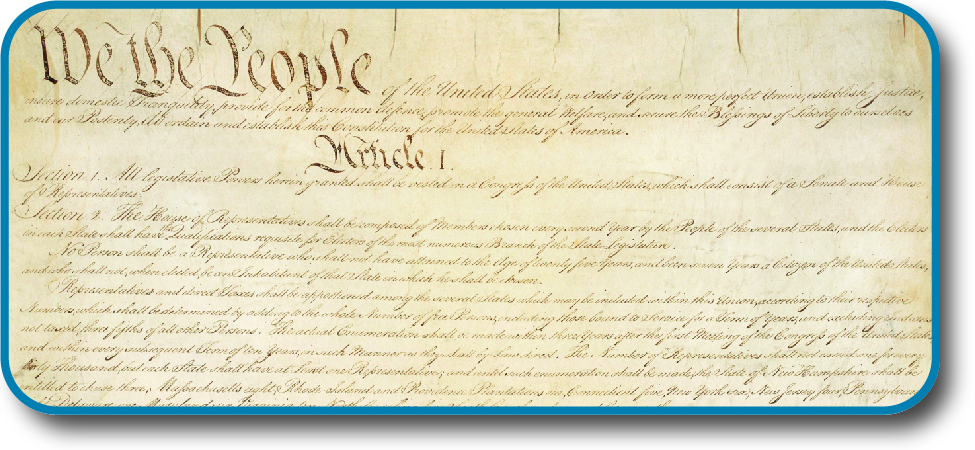
The transformation of the Supreme Court confirmation process from a routine administrative procedure into a high- partisan gauntlet is quantifiable through two primary datasets: Senate roll call votes and the duration of judicial tenure. For the 180 years of the Republic, the Senate frequently confirmed nominees via voice vote, a method that recorded no individual tally and signaled broad consensus. From 1789 to 1967, the Senate confirmed 76 justices without a recorded roll call. This practice in the late 20th century. Since 1967, every nominee has faced a recorded vote, and the margins of victory have narrowed with mathematical precision, tracking the intensifying polarization of the American electorate.
The inflection point in confirmation metrics occurred in 1987 with the nomination of Robert Bork. Prior to Bork, qualification, not ideology, served as the primary metric for confirmation. Antonin Scalia, a staunch conservative, was confirmed 98, 0 in 1986. Ruth Bader Ginsburg, a former ACLU litigator, was confirmed 96, 3 in 1993. These numbers reflect an era where the Senate deferred to the President's choice provided the nominee possessed legal competence. The rejection of Bork by a vote of 42, 58 shattered this norm, establishing a new precedent where a nominee's judicial philosophy became the central theater of conflict. Following Bork, the average "Nay" votes against successful nominees surged. In the 19th century, the Senate rejected only roughly one in five nominees, and for reasons of patronage or regional balance rather than interpretative methodology.
Data from the 21st century demonstrates the complete collapse of the consensus model. The confirmation of Samuel Alito in 2006 (58, 42) signaled the end of the 90-vote era, yet the true structural break occurred in 2017. When Republicans lowered the confirmation threshold from 60 votes to a simple majority (the "nuclear option") to confirm Neil Gorsuch, the statistical floor for confirmation dropped to 50. Consequently, the confirmations of Brett Kavanaugh (50, 48) in 2018 and Amy Coney Barrett (52, 48) in 2020 represent the narrowest margins in history for a sustained period. Kavanaugh's confirmation stands as the closest successful vote since 1881, when Stanley Matthews squeezed onto the bench by a 24, 23 margin. The confirmation of Ketanji Brown Jackson in 2022 (53, 47) reinforced this trend, proving that the 50-vote threshold is the permanent operating standard for both parties.
Parallel to the narrowing of confirmation votes is the dramatic expansion of judicial tenure. The Founding Fathers likely did not anticipate justices serving for three or four decades. In the early republic (1789, 1870), the average tenure of a Supreme Court justice was approximately 15 years. By the modern era (1970, 2026), that average nearly doubled to roughly 28 years. This "tenure inflation" is not solely a result of increased life expectancy. While modern medicine allows justices to live longer, data shows a deliberate strategy by presidents to appoint younger jurists to maximize their ideological footprint. The average age at appointment has trended downward, with recent appointees like Neil Gorsuch (49) and Amy Coney Barrett (48) selected specifically to anchor the court's direction for a generation.
The concept of "strategic retirement" has also distorted historical tenure averages. In the 19th century, justices frequently died in office or resigned due to illness regardless of who occupied the White House. Modern analysis reveals a sharp correlation between a justice's retirement date and the party of the incumbent president. Justices routinely time their departures to ensure a like-minded successor, allowing a single seat to be held by the same ideological faction for 50 or 60 years continuously. This phenomenon creates a "mortality deficit" where seats rarely open up unexpectedly, reducing the frequency of appointments and raising the for every vacancy. Between 1969 and 2026, the rate of vacancies dropped significantly compared to the 1800s, turning each nomination into a generational battle.
The rejection rate of nominees also provides insight into Senate mechanics. While only 12 nominees have been formally rejected by a Senate vote in history, this number masks the true volatility of the process. nominees were withdrawn by the President when a headcount revealed defeat was imminent. For example, Harriet Miers (2005) withdrew before a vote could occur. The 12 formal rejections, including John Rutledge (1795) and Robert Bork (1987), serve as statistical outliers that define the boundaries of Senate consent. The modern rarity of formal rejection is less a sign of agreement and more a sign of careful vetting; presidents rarely nominate individuals who cannot be guaranteed 50 votes, pre-calculating the whip count before the public announcement.
The following table illustrates the collapse of confirmation margins over the last four decades, contrasting the near-unanimity of the 1980s and 1990s with the partisan deadlocks of the 2020s.
| Justice | Year Confirmed | Vote Tally | Margin | Presidential Party |
|---|---|---|---|---|
| Antonin Scalia | 1986 | 98, 0 | +98 | Republican |
| Anthony Kennedy | 1988 | 97, 0 | +97 | Republican |
| Ruth Bader Ginsburg | 1993 | 96, 3 | +93 | Democrat |
| Stephen Breyer | 1994 | 87, 9 | +78 | Democrat |
| Samuel Alito | 2006 | 58, 42 | +16 | Republican |
| Elena Kagan | 2010 | 63, 37 | +26 | Democrat |
| Neil Gorsuch | 2017 | 54, 45 | +9 | Republican |
| Brett Kavanaugh | 2018 | 50, 48 | +2 | Republican |
| Amy Coney Barrett | 2020 | 52, 48 | +4 | Republican |
| Ketanji Brown Jackson | 2022 | 53, 47 | +6 | Democrat |
This data reveals that the "advice and consent" function of the Senate has shifted from a qualitative assessment of legal fitness to a raw headcount of partisan loyalty. The standard deviation of vote margins has tightened, leaving no room for the cross-party support seen as as the 1990s. With tenure lengths extending toward 30 years and confirmation margins shrinking to single digits, the statistical profile of the Supreme Court in 2026 bears little resemblance to the institution designed in 1787. The combination of younger appointees, strategic retirements, and simple-majority confirmations has created a court that is more insulated from electoral turnover than at any point in American history.
The Shadow Docket and Unsigned Emergency Orders
| Administration | Time Period | Emergency Applications Filed | Avg. Applications Per Year | Primary Outcome |
|---|---|---|---|---|
| George W. Bush | 2001, 2009 | 4 | 0. 5 | Rarely Granted |
| Barack Obama | 2009, 2017 | 4 | 0. 5 | Rarely Granted |
| Donald Trump (1st) | 2017, 2021 | 41 | 10. 25 | Frequently Granted |
| Joe Biden | 2021, 2025 | 19 | 4. 75 | Frequently Denied (31% grant rate) |
| Donald Trump (2nd) | Jan 2025 , May 2025 | 19 | 45. 6 (annualized pace) | Overwhelmingly Granted (83%) |
The consequences of this shift are for the American legal system. Lower courts are frequently overruled without explanation, leaving district and circuit judges unsure of the controlling legal standard. In *Labrador v. Poe* (April 2024), the Court stayed a lower court injunction against Idaho's ban on gender-affirming care for minors. While the order technically applied only to the preliminary injunction, Justices Gorsuch and Kavanaugh wrote concurrences signaling a deep hostility toward "universal injunctions", orders that block a law entirely rather than just for the specific plaintiffs. This signaled to litigants that the Court viewed the *scope* of lower court relief as a sufficient trigger for emergency intervention, regardless of the underlying merits. Critics that the shadow docket encourages a form of "ad hoc" constitutionalism, where the law depends on the immediate instincts of five Justices rather than settled precedent. The absence of signed opinions means the Court rarely has to justify its inconsistencies. For instance, the Court frequently the "Purcell principle" to block lower court changes to election rules close to an election, yet in other contexts, it has upended the days before major deadlines. As of February 2026, the shadow docket has become a second merits docket, one optimized for speed and executive deference. The "emergency" is no longer an external emergency the judicial process itself. By deciding the outcome of cases months before they are argued, if they are argued at all, the Court has fundamentally altered the Article III power, exercising immediate legislative veto power under the guise of procedural management. The normalization of this practice means that for the most consequential disputes in American life, the "Supreme Court ruling" is no longer a carefully crafted opinion handed down in June, a midnight order issued in February, deciding everything while explaining nothing.
Judicial Ethics Scandals and Disclosure Regulation

| Justice | Benefactor | Nature of Exchange | Est. Value (Inflation Adj.) | Outcome |
|---|---|---|---|---|
| Abe Fortas | Louis Wolfson | Annual retainer (returned) | ~$176, 000 (total contract value) | Resigned (1969) |
| Clarence Thomas | Harlan Crow | Jets, yachts, tuition, real estate | Millions (2000-2024) | Disclosures amended; no sanction |
| Samuel Alito | Paul Singer | Alaska fishing trip, private jet | ~$100, 000+ (single trip) | Defended as "personal hospitality" |
| Neil Gorsuch | Brian Duffy | Property sale to law firm head | Unknown profit on $1. 8M sale | Transaction disclosed; buyer identity omitted |
The method enabling these nondisclosures was a loophole in the Ethics in Government Act of 1978 known as the "personal hospitality" exemption. The law required officials to disclose gifts exempted food, lodging, or entertainment provided by an individual at their personal residence. Justices interpreted this exemption broadly to include private jet travel and stays at commercial resorts owned by friends. It was not until March 2023 that the Judicial Conference of the United States clarified that "personal hospitality" does not extend to commercial properties or private aviation. This regulatory ambiguity allowed justices to accept millions of dollars in off-the-books benefits for decades without technical violation of the statute, creating a shadow compensation system for the judiciary. Ethical concerns also extend to the commodification of the judicial office through book sales. Justice Sonia Sotomayor faced criticism in 2023 after reports revealed her staff systematically pressured public institutions, including libraries and universities, to purchase large quantities of her books in connection with speaking engagements. Emails obtained by the Associated Press showed court staff telling organizers that ordering 250 copies was "definitely not enough." While less financially significant than the gifts received by Thomas or Alito, the use of taxpayer-funded staff to drive personal royalty income, Sotomayor has earned nearly $4 million from publishing, demonstrates a culture where the distinction between public service and private gain has blurred across ideological lines. In response to mounting public outrage and threats of congressional intervention, the Supreme Court released its written "Code of Conduct" on November 13, 2023. The document, signed by all nine justices, largely codified existing principles contained a fatal structural flaw: it absence an enforcement method. Unlike the code governing lower court judges, which allows for complaints to be investigated by a panel of peers, the Supreme Court's code is self-enforcing. Each justice serves as the sole arbiter of their own compliance. The code uses permissive language, stating what justices "should" do rather than what they "must" do. Legal ethicists criticized the document as a public relations maneuver that offered no true accountability. The situation further in January 2025 when the Judicial Conference, the body responsible for administering financial disclosure laws, signaled a retreat on enforcement. In a quiet decision communicated to Senator Sheldon Whitehouse, the Conference indicated that if a judge or justice amends a financial disclosure report to include previously omitted items, the body would generally not refer the matter to the Attorney General for investigation. This policy grants immunity for filing false reports, provided the official corrects the record after being caught by journalists. This decision neutralizes the primary deterrent against hiding assets or gifts, as the penalty for getting caught is the administrative inconvenience of filing an amendment. As of 2026, the standoff between the Supreme Court and legislative oversight bodies remains unresolved. The Senate Judiciary Committee has attempted to subpoena records regarding the full extent of donor networks, yet the Court's defenders that such oversight violates the separation of powers. This constitutional stalemate leaves the United States with a Supreme Court that possesses the final word on the law acknowledges no authority above itself regarding the conduct of its members. The transition from the shame-driven resignation of Abe Fortas to the defiance of the modern court marks a fundamental shift in the institution's relationship with the public trust.
Supreme Court Building Architecture and Physical Security
For the 145 years of its existence, the Supreme Court of the United States was a homeless institution. Between 1790 and 1935, the nation's highest tribunal operated as a tenant in borrowed spaces, moving from the Merchants Exchange Building in New York City to Independence Hall in Philadelphia, and to a series of cramped chambers within the U. S. Capitol. The Court's early obscurity was physically manifest; for decades, the justices deliberated in a basement room beneath the Senate, a humid and claustrophobic space that invited unflattering comparisons to a "potato hole." It was not until Chief Justice William Howard Taft, the only person to serve as both President and Chief Justice, lobbied Congress in the 1920s that the judicial branch secured authorization for a permanent residence commensurate with its constitutional status.
The resulting structure, completed in 1935 under the direction of architect Cass Gilbert, was designed to project imperial authority. Situated at 1 Street NE, directly across from the Capitol, the building is a Neoclassical temple clad in gleaming white Vermont marble, a material chosen for its uniform brilliance. The construction process was a logistical feat of the era, requiring the transport of marble blocks from three different states: Vermont for the exterior, Georgia for the four inner courtyards, and Alabama for the interior walls and floors. The Great Hall, leading to the courtroom, features thirty-six columns of solid marble, while the courtroom itself utilizes Ivory Vein marble from Spain and Light Siena marble from Italy. The total cost of construction was $9. 74 million, a sum that came in under budget, a rarity for federal projects that stands in sharp contrast to modern government procurement.
Architectural symbolism on the building's exterior codifies the Court's self-conception. The West Pediment, facing the Capitol, features the sculpture Equal Justice Under Law by Robert Ingersoll Aitken. In a breach of traditional stoicism, Aitken sculpted the faces of the building's creators, including Taft and Gilbert, onto the classical figures. The East Pediment, facing away from the seat of legislative power, bears the inscription Justice, the Guardian of Liberty. Sculpted by Hermon A. MacNeil, this group acknowledges the global lineage of American law, featuring central figures of Moses, Confucius, and Solon. These friezes and the sixteen massive Corinthian columns supporting the portico were intended to intimidate and inspire, creating a physical separation between the chaotic political bargaining of the legislature and the cool, detached judgment of the judiciary.
Security for this "Marble Palace" was originally minimal, reflecting an era when the Court was accessible and largely insulated from physical threats. The Supreme Court Police was established in 1935 with a small force of 33 officers drawn from the Capitol Police. For decades, the building remained relatively open, with the public able to walk up the main steps and enter the Great Hall. This posture of openness began to in the late 20th century collapsed entirely in the 21st. The terrorist attacks of September 11, 2001, and the subsequent anthrax scares forced the closure of the massive bronze front doors to the public, redirecting visitors to side entrances for screening. The building, once a porous symbol of democratic law, began its slow transformation into a hardened target.
The most drastic alteration to the Court's physical security occurred in May 2022, following the leak of the draft opinion in Dobbs v. Jackson Women's Health Organization. Anticipating civil unrest, federal authorities erected an eight-foot, non- metal fence around the entire perimeter of the block, sealing the Court off from the public it serves. While the heavy fencing was removed in August 2022, it was replaced by a system of smaller formidable blocks that restrict access to the plaza. This physical fortification coincided with a dramatic expansion of the security apparatus; the Supreme Court Police Parity Act of 2022 was signed into law in June of that year, granting the Marshal of the Court authority to provide round-the-clock protection to the families of the Justices, a power previously reserved for the Executive and Legislative branches.
By 2026, the security footprint of the Supreme Court had expanded significantly beyond the building's marble walls. The threat, characterized by a sharp rise in targeted threats against federal judges, necessitated a budget surge. The judiciary's fiscal year 2025 and 2026 budget requests included substantial increases for court security, with specific allocations for hardening the Justices' private residences and increasing the headcount of the Supreme Court Police. The force, which began with three dozen officers, had grown into a specialized protective detail operating with a budget exceeding $10 million for residential security alone. The architectural dialogue of the 1930s, which spoke of openness and "equal justice", has been complicated by the modern reality of bollards, checkpoints, and buffer zones, turning the temple of law into a of solitude.
| Era | Primary Security Posture | Key Infrastructure/Policy Changes |
|---|---|---|
| 1935, 2001 | Open Access | Public entry via main bronze doors; minimal perimeter blocks. |
| 2001, 2022 | Controlled Screening | Main doors closed to public; side entrance screening; anthrax mail. |
| May 2022 | Fortification | 8-foot non- fencing erected post-Dobbs leak; plaza closed. |
| 2022, 2026 | Expanded Perimeter | Police Parity Act (family protection); residential hardening; permanent plaza blocks. |
Public Confidence Metrics and Structural Change Proposals
By early 2026, public confidence in the Supreme Court had calcified at levels that would have been unimaginable to the justices of the late 20th century. Data from the Marquette Law School Poll released in February 2026 placed the Court's approval rating at 44 percent, with 56 percent of Americans disapproving of its performance. This continued a trend of historic lows that began precipitously in 2022 following the Dobbs decision. Gallup polling from October 2025 corroborated this stagnation, recording a 42 percent approval rating and noting that trust in the federal judicial branch had flatlined near 49 percent. These metrics represent a statistical collapse from the late 1990s, when approval ratings frequently hovered near 80 percent, suggesting the Court has lost its perceived status as a neutral arbiter and is viewed by a majority of the electorate as a distinctly political entity.
The partisan composition of this distrust is clear. The 2026 data reveals a chasm: while 78 percent of Republicans approved of the Court's handling of its job, only 17 percent of Democrats and 26 percent of independents shared that view. This polarization indicates that the Court's legitimacy is no longer tied to its legal reasoning rather to the political utility of its outcomes. The of trust was accelerated not only by unpopular rulings by a sequence of ethics controversies involving senior justices. Reports in 2023 and 2024 detailing undisclosed luxury travel and gifts accepted by Justice Clarence Thomas and Justice Samuel Alito forced the judiciary to confront its absence of external oversight. In response to mounting pressure, the Court adopted a "Code of Conduct" on November 13, 2023. Yet, legal scholars and ethics experts immediately criticized the document for its absence of an enforcement method. Unlike lower federal judges, who are subject to investigatory procedures, the Supreme Court justices remain the sole arbiters of their own ethical compliance, a structural reality that did little to quell public skepticism.
Discussions regarding structural reform have moved from the fringe of academic theory to the center of legislative debate. While the number of justices has remained at nine since 1869, history shows this figure is statutory, not constitutional. The Judiciary Act of 1789 established a six-member Court. Congress altered the size of the bench six times in the nation's 80 years, frequently for nakedly political reasons. The number dropped to five in 1801 to deny Thomas Jefferson an appointment, rose to seven in 1807, nine in 1837, and ten in 1863 to ensure a pro-Union majority during the Civil War. It was reduced to seven in 1866 to limit President Andrew Johnson's power before settling at nine under President Grant. This volatility proves that the "tradition" of nine is a frozen accident of 19th-century politics, susceptible to change via simple legislation.
| Year | Number of Justices | Legislative Context |
|---|---|---|
| 1789 | 6 | Judiciary Act of 1789 establishes the Court. |
| 1801 | 5 | Federalists reduce size to block Jefferson from appointing a justice. |
| 1802 | 6 | Repeal of the 1801 Act restores the sixth seat. |
| 1807 | 7 | Seat added to cover the new Seventh Circuit (Kentucky, Tennessee, Ohio). |
| 1837 | 9 | Two seats added to cover expanded western circuits. |
| 1863 | 10 | Seat added to ensure Union loyalty during the Civil War. |
| 1866 | 7 | Congress reduces size to deny President Andrew Johnson any appointments. |
| 1869 | 9 | Judiciary Act of 1869 fixes the number at nine. |
Among the proposals to restore legitimacy, 18-year term limits have emerged as the most popular and legally plausible reform. The "Supreme Court Biennial Appointments and Term Limits Act," introduced in various forms between 2023 and 2025, seeks to regularize the appointment process. Under this model, a new justice would be appointed every two years, and after 18 years of active service, justices would transition to "senior status," hearing cases on lower courts or filling in only when the High Court absence a quorum. This system aims to lower the of each confirmation battle and ensure that the Court's composition reflects the outcome of recent presidential elections rather than the actuarial longevity of individual jurists. Polling consistently shows bipartisan support for term limits, frequently exceeding 60 percent, in contrast to "court-packing" (expanding the bench), which generally fails to command majority support due to fears of a retaliatory spiral.
A more aggressive constitutionally grounded tool available to Congress is jurisdiction stripping. The Exceptions Clause of Article III, Section 2, grants Congress the power to make "exceptions" to the Supreme Court's appellate jurisdiction. While rarely used in modern times, this power allows the legislature to simply remove certain topics from the Court's purview. As the Court continues to strike down federal regulations, exemplified by the curtailing of administrative state power in the mid-2020s, progressive lawmakers have increasingly floated jurisdiction stripping as a necessary check on judicial supremacy. yet, as of 2026, no such legislation has passed, leaving the Court with its full appellate authority intact even as its public mandate withers.
The standoff between a polarized public and an insulated judiciary defines the current era. The Court's insistence on self-regulation regarding ethics, combined with its willingness to overturn long-standing precedents, has created a feedback loop of distrust. While the Justices maintain that their decisions are based solely on the law, the metrics indicate that the American people increasingly view the institution as a political prize. Without significant structural change, whether through term limits, ethics enforcement, or a reconfiguration of the bench, the data suggests the Supreme Court remain a source of national division rather than a method for its resolution.