
Land Acquisition and Displacement of Queen City (1800, 1941)
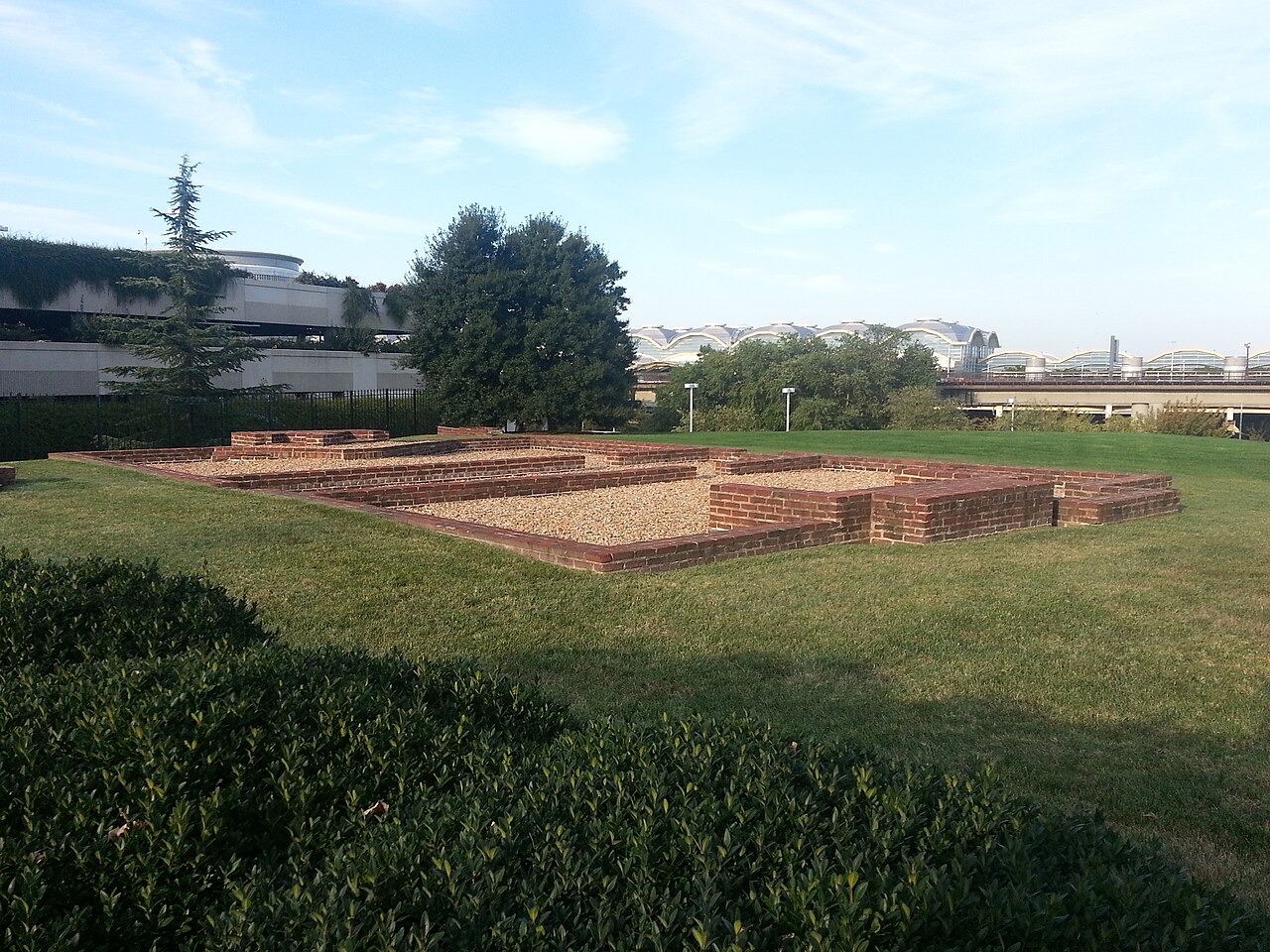
The soil beneath the Pentagon holds a history of displacement that predates the pour of concrete in 1941. Long before the Department of War sought a unified headquarters, the land belonged to the massive Abingdon plantation. In 1669, John Alexander purchased the tract for 6, 000 pounds of tobacco. The site remained in the hands of the Alexander, Custis, and Hunter families for centuries. It functioned as a seat of agrarian power where enslaved laborers worked the fields near the Potomac River. The ruins of the Abingdon house still sit near Reagan National Airport. This early era established a pattern of wealthy landowners controlling the terrain while the labor force remained invisible in the official record.
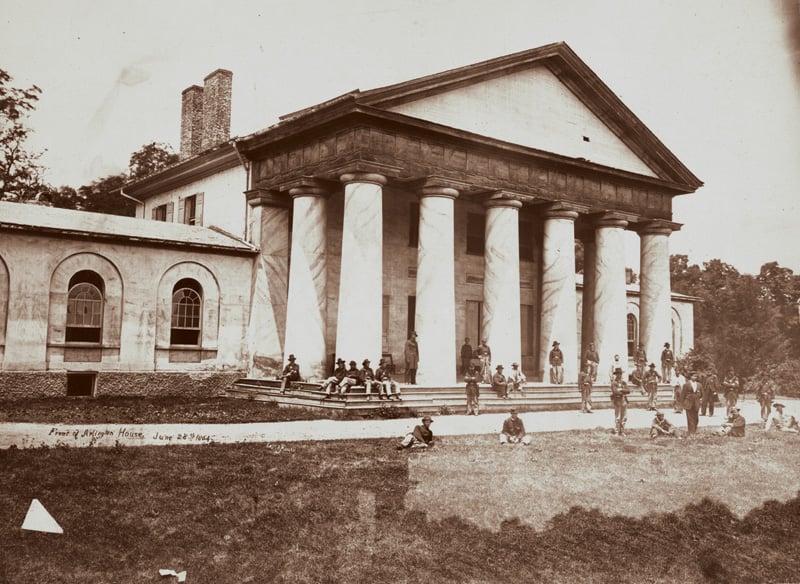
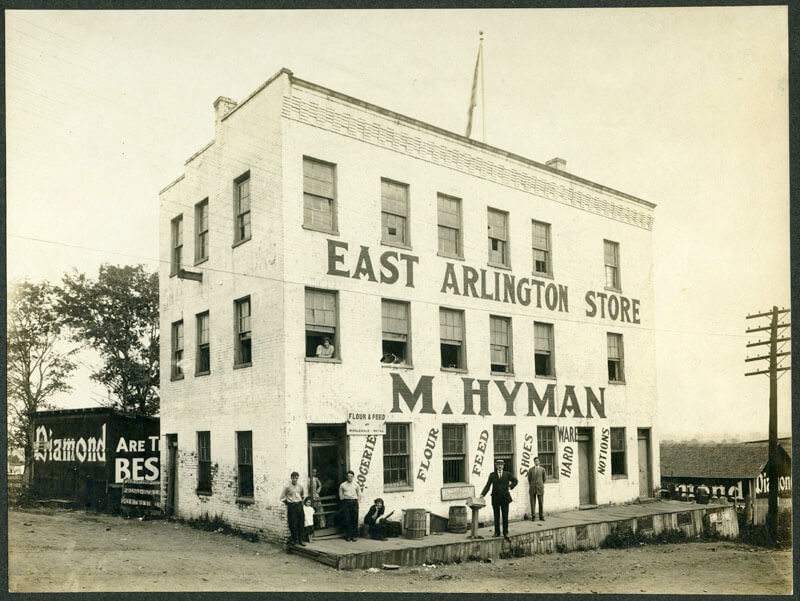
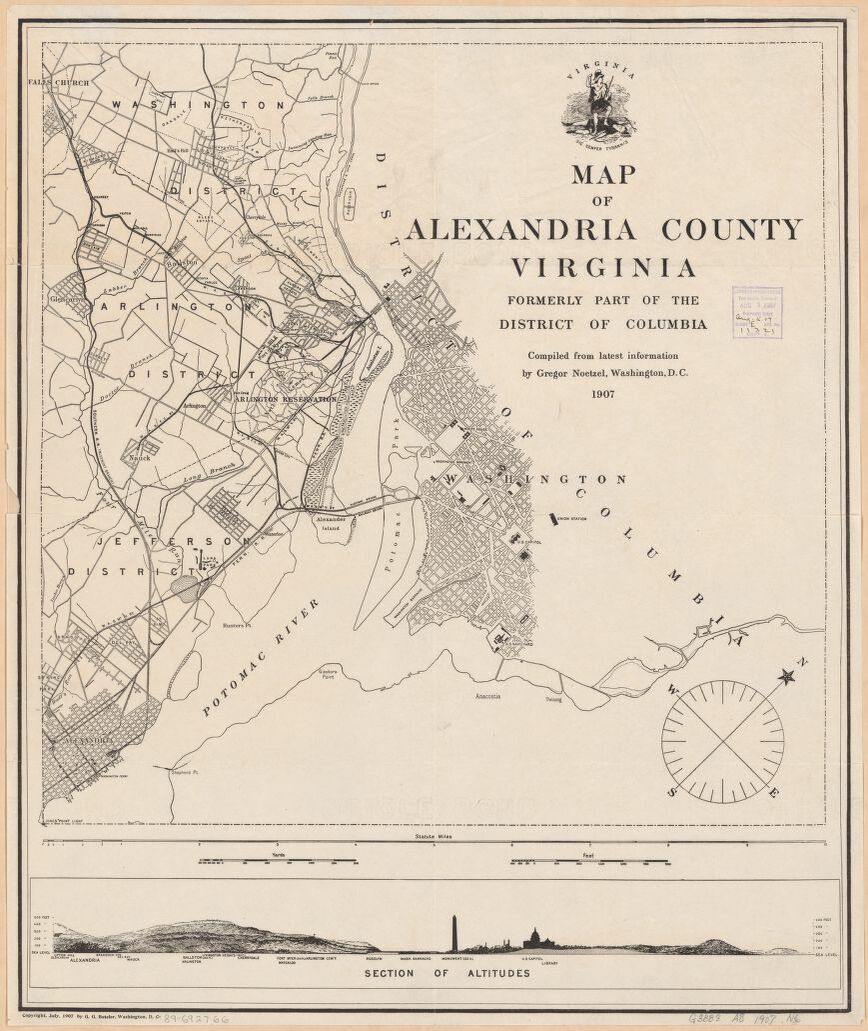
The Civil War broke this continuity. Union troops seized the Arlington estate of Robert E. Lee. The federal government established Freedman's Village on the grounds to house formerly enslaved people. Although the government closed Freedman's Village in 1900, the displaced families did not. They moved slightly east and formed new communities. One of these was Queen City. Established in the 1890s near the intersection of Columbia Pike and the future Shirley Highway, Queen City grew into a self-sufficient African American enclave. By 1940, it housed over 900 residents. The neighborhood featured the Mount Olive Baptist Church, a fire department, and lodges. It was a rare sanctuary of black homeownership in a segregated Virginia.
The onset of World War II triggered a rapid expansion of the federal bureaucracy. The War Department operated out of seventeen different buildings scattered across Washington. Brigadier General Brehon Somervell, the chief of the Construction Division, demanded a solution. Somervell was a man of ruthless efficiency who viewed obstacles as enemies. He proposed a single massive building to house 40, 000 employees. His initial choice for the site was not Queen City a plot of land known as Arlington Farms, adjacent to Arlington National Cemetery. This location offered high ground and easy access. It also threatened to mar the view of the capital from the grave of Pierre L'Enfant.
President Franklin D. Roosevelt intervened. In August 1941, he drove to the Virginia side of the Potomac and rejected the Arlington Farms site. He feared the massive structure would desecrate the solemnity of the cemetery. Roosevelt pointed down the river to a low-lying area near the old Hoover Airport. This region included an industrial zone known as "Hell's Bottom" and the residential streets of Queen City. Somervell accepted the change refused to alter the building's pentagonal shape, which had been designed to fit the irregular borders of the original Arlington Farms site. The die was cast. The government needed 583 acres. Queen City stood directly in the route of the planned road network.
The seizure of Queen City stands as a textbook case of eminent domain abuse. The War Department did not negotiate. It dictated. On February 11, 1942, federal agents delivered eviction notices to the residents of East Arlington and Queen City. The government gave families thirty days to vacate. This deadline was absolute. Residents scrambled to find housing in a segregated market that offered few options for black families. The government offered compensation, yet the amounts were frequently market value. The total payout for 180 property owners was $369, 427. This averaged to roughly $2, 000 per family. Renters received nothing. They lost their homes and their community without a cent of restitution.
The destruction was total. Crews moved in immediately after the March deadline. They did not the homes for salvage. They burned them. The War Department razed the Mount Olive Baptist Church and the Odd Fellows Hall. The physical evidence of fifty years of community building in weeks. In its place, engineers poured the cloverleaf intersection that connects the Pentagon to Columbia Pike. The roads that carry generals and bureaucrats to work today sit directly on top of the foundations of Queen City homes. The displacement was not a side effect of the construction. It was a prerequisite. The Pentagon required a "clean slate" and the government created one by erasing a black neighborhood.
Somervell pushed the project with manic intensity. Groundbreaking occurred on September 11, 1941, even before the land acquisition was fully resolved. The construction crews worked around the clock. The urgency of the war effort served as a shield against criticism. Local officials in Arlington County did not object to the displacement. The racial of 1940s Virginia meant that the destruction of a black community for a federal project faced zero political resistance. The "Hell's Bottom" label was frequently applied to the entire area to justify the clearance, conflating the respectable homes of Queen City with the shacks and pawnshops near the airport.
| Date | Event | Impact |
|---|---|---|
| August 1941 | FDR rejects Arlington Farms site | Project moves to Queen City/Hell's Bottom area |
| Sept 11, 1941 | Groundbreaking ceremony | Construction begins before full land control |
| Feb 11, 1942 | Eviction notices issued | Residents given 30 days to leave |
| March 1942 | Deadline for vacancy | Families forced out; lose possessions |
| April 1942 | Demolition begins | Homes and churches burned to the ground |
| Jan 15, 1943 | Pentagon dedication | Queen City is buried under asphalt |
The memory of Queen City remained buried for decades. The official history of the Pentagon focuses on the engineering marvel and the speed of construction. It rarely mentions the cost paid by the residents of East Arlington. William Vollin, a resident who was a child during the eviction, spent his life trying to keep the story alive. He described the community as a place where people looked out for one another, a clear contrast to the "slum" narrative used by federal planners. The displacement fractured social bonds that never healed. Families were scattered to Green Valley, Washington D. C., and other areas, losing the intergenerational wealth and stability they had built since the 1890s.
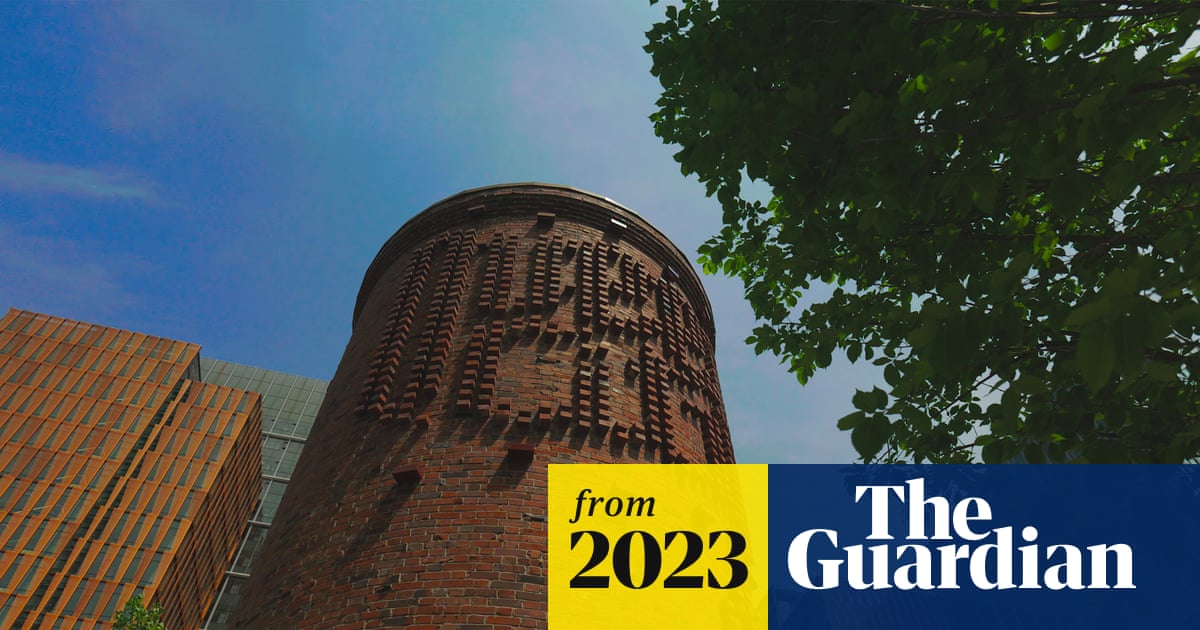
Recognition of this injustice has only arrived in the 2020s. In May 2025, the Arlington County Board passed a resolution formally acknowledging the destruction of Queen City. The Board expressed regret for the county's failure to protect its residents in 1942. This resolution termed the event an "atrocity" and admitted that the use of eminent domain was predatory. A 35-foot brick tower stands in Metropolitan Park as a memorial. It features 903 ceramic teardrops, one for each displaced resident. This gesture comes more than eighty years late. The land is gone. The wealth is gone. The Pentagon remains a built on the ashes of a stolen community.
The acquisition of the Pentagon site was not a bloodless administrative task. It was a violent act of domestic conquest. The government used the emergency of war to bypass due process and trample property rights. The legacy of the Pentagon is tied to this initial sin. The building is a symbol of American military power, yet its foundation rests on the dispossession of American citizens. The efficiency that Somervell championed came at the direct expense of the most population in Arlington. The concrete cloverleafs do not just guide traffic. They seal the earth over the remains of Queen City.
Fast-Track Construction and Material Rationing (1941, 1943)
The construction of the Pentagon represents a collision between administrative ambition and the material realities of total war. The project began not with a blueprint, with a logistical ultimatum delivered by Brigadier General Brehon B. Somervell. On Thursday, July 17, 1941, Somervell summoned architects George Bergstrom and David Witmer to his office. His directive was absolute: design a headquarters capable of housing 40, 000 War Department employees, with four million square feet of floor space, and have the preliminary drawings on his desk by 9: 00 AM the following Monday. The architects worked through the weekend to produce a design dictated entirely by the constraints of the site, a plot of land known as Arlington Farms, hemmed in by five existing roadways. The resulting pentagonal shape was not an occult symbol or an aesthetic choice, a geometric need to maximize space within the irregular boundaries of the available infrastructure.
The site selected for this massive undertaking was a swampy wasteland locally known as "Hell's Bottom." Located near the Potomac River, the ground consisted of unstable alluvial soil that required aggressive engineering intervention before a single foundation wall could rise. To stabilize the terrain, the Army Corps of Engineers oversaw the dredging of 5. 5 million cubic yards of earth. Workers drove 41, 492 concrete piles into the marshland to support the structure's immense weight. The location had previously housed a squatter settlement and a brickyard, all of which were razed to clear the route for the military's consolidation. The decision to build on this low-lying tract came after the Commission of Fine Arts rejected an earlier proposal to build near Arlington National Cemetery, arguing that a sprawling headquarters would desecrate the view from the grave of Pierre L'Enfant.
Groundbreaking occurred on September 11, 1941, a date that would gain grim resonance sixty years later. At the time, the ceremony marked the beginning of a race against a conflict the United States had not yet officially entered. Colonel Leslie Groves, a ruthless and engineer who would later direct the Manhattan Project, took charge of the construction. Groves managed the project with an iron grip, pushing the workforce to its physical limits. The attack on Pearl Harbor on December 7, 1941, three months into construction, stripped away any remaining bureaucratic caution. The timeline compressed further. Somervell demanded that one million square feet be ready for occupancy by April 1, 1943. The workforce swelled to over 15, 000 laborers, operating in three shifts, twenty-four hours a day, seven days a week. Floodlights bathed the site in perpetual artificial daylight, turning the Virginia swamp into a sleepless industrial zone.
The entry of the United States into World War II triggered an immediate and severe emergency in material availability. The War Department issued strict rationing orders: steel, copper, and bronze were essential for the production of battleships, tanks, and artillery shells. The Pentagon had to be built with the scraps. This scarcity dictated the building's most distinct architectural features. Architects eliminated steel-reinforced elevators, replacing them with concrete ramps that zigzagged between floors. These ramps saved tons of steel also facilitated the rapid movement of pedestrian traffic, a need for a building with miles of corridors. The design team substituted concrete drainage pipes for cast iron and used fiberboard in place of metal lath. The facade was clad in Indiana limestone not for grandeur, because masonry required no metal. In total, the strict rationing measures saved an estimated 43, 000 tons of steel, enough to build a battleship.
The human geography of the Pentagon was as engineered as its foundation. The construction took place in Virginia, a state governed by Jim Crow laws that mandated strict racial segregation in public facilities. This legal requirement clashed with President Franklin D. Roosevelt's Executive Order 8802, which prohibited discrimination in the defense industry. The architects, caught between federal directive and state statute, designed the building with separate dining and sanitation facilities for Black and white employees. This resulted in the installation of 284 bathrooms, twice the number required for a building of its occupancy. When Roosevelt visited the site in May 1942, he observed the excessive plumbing infrastructure and the "White" and "Colored" signs prepared for the doors. The President ordered the signs removed, yet the physical legacy of segregation remained in the building's double-plumbing configuration. For decades, the extra restrooms stood as a silent testament to the racial apartheid codified in the structure's original blueprints.
| Metric | Value |
|---|---|
| Construction Duration | 16 Months (Sept 11, 1941 , Jan 15, 1943) |
| Total Cost (1943) | $83, 000, 000 |
| Peak Workforce | ~15, 000 Workers |
| Concrete Poured | 435, 000 Cubic Yards |
| Sand and Gravel Used | 680, 000 Tons |
| Steel Saved by Rationing | 43, 000 Tons |
| Worker Fatalities | 8 Reported Deaths |
The pace of construction compromised safety. The relentless schedule led to accidents, and official records list eight worker fatalities during the sixteen-month sprint. Groves and Somervell viewed these losses as collateral damage in the broader war effort. The pressure to deliver the building led to "fast-tracking," a method where construction began before the designs were complete. Architects frequently handed blueprints to the foremen only moments before the concrete was poured. This chaotic synchronization resulted in errors, retrofits, and a building that evolved in real-time. even with the chaos, the employees moved into the unfinished shell in April 1942, walking through active construction zones to reach their desks. The air in the corridors remained thick with dust and the smell of wet cement for months.
By the time the Pentagon was dedicated on January 15, 1943, it had consumed 680, 000 tons of sand and gravel and 435, 000 cubic yards of concrete. It stood as the largest office building in the world, a title it held for decades. The final cost tallied at approximately $83 million, a massive overrun from the initial $35 million estimate, yet insignificant compared to the daily burn rate of the war it was built to manage. The structure was a of bureaucracy, designed to centralize the sprawling and disorganized War Department which had previously been scattered across seventeen different buildings in Washington, D. C. Its five concentric rings, connected by ten corridors like the spokes of a wheel, allowed a person to walk between any two points in the building in under seven minutes, a metric of efficiency that Somervell prioritized above all else.
The completion of the Pentagon marked a shift in the of American governance. It was a physical manifestation of the military-industrial complex that President Eisenhower would later warn against. The building was not an office; it was a self-contained city with its own telephone exchange, power plant, and sewage treatment capabilities. The "Hell's Bottom" swamp had been conquered, paved over, and fortified, burying the agrarian past of the Queen City and the Abingdon plantation under millions of tons of reinforced concrete. The rationing of 1941, 1943 ensured that the building was stripped of ornamentation, leaving a clear, imposing edifice that reflected the brutal utility of the era. It was a monument to the logistical power of the United States, built by segregated labor, on seized land, in record time.
Pentagonal Geometry and Non-Steel Structural Design
The geometric logic of the Pentagon is frequently mistaken for occult symbolism or masonic intent. The reality is far more bureaucratic and accidental. In July 1941, Brigadier General Brehon Somervell ordered a new headquarters for the War Department. The initial site selected was Arlington Farms, a plot of land bound by five roadways that created an irregular pentagonal footprint. Architect George Bergstrom and engineer Hugh Casey had a single weekend to produce a design. They traced the property lines. When President Franklin D. Roosevelt later moved the project to the Hoover Airport site, known locally as "Hell's Bottom", to protect the vista from Arlington National Cemetery, the five-sided shape remained. Redesigning the structure would have delayed construction, and the Department of War had no time to spare.
Wartime scarcity dictated the structural engineering. By late 1941, the Navy required the nation's steel supply for battleships and destroyers. This embargo forced the Army Corps of Engineers to abandon a traditional steel frame. Instead, they relied on reinforced concrete, a decision that inadvertently hardened the facility against future attacks. The builders, led by contractor John McShain, poured 435, 000 cubic yards of concrete. To source the aggregate, the Corps dredged the Potomac River. They extracted 680, 000 tons of sand and gravel from the riverbed, creating the artificial inlet known as the Pentagon Lagoon. This massive displacement of earth allowed the structure to rise from the swampy soil of the former airfield.
| Structural Metric | Data Point (1943 Completion) |
|---|---|
| Total Concrete Piles | 41, 492 |
| Sand & Gravel Dredged | 680, 000 tons |
| Concrete Volume | 435, 000 cubic yards |
| Construction Duration | 16 months (Sept 1941 , Jan 1943) |
Vertical movement within the complex also bowed to the steel absence. Elevators require heavy metal gears, cables, and cars. To conserve these resources, Bergstrom designed a system of concrete ramps. These inclined walkways connect the five floors, allowing thousands of workers to move simultaneously without mechanical assistance. The ramps proved highly for moving large volumes of personnel, a need for a building with a population rivaling a small city. While freight elevators existed for logistics, passenger lifts were virtually absent until modern renovations. This design choice prioritized horizontal flow and foot traffic, creating a unique internal pedestrian culture that to the present day.
The exterior skin masks the concrete skeleton. Masons clad the facade in Indiana Limestone, the same material used for the Empire State Building. This choice projected an image of permanence and neoclassical order, a style frequently termed "Stripped Classicism." The limestone panels, sourced from Bedford quarries, are a curtain wall. They bear no structural load. Behind them lies the true strength of the edifice: concrete columns reinforced with spiral steel bars. This specific engineering detail, spiral reinforcement rather than simple ties, would prove decisive sixty years after the final pour.
On September 11, 2001, the structural redundancy of the concrete frame saved lives. When American Airlines Flight 77 struck the western wedge, the impact severed dozens of support columns. In a standard steel-frame building, such damage frequently triggers immediate progressive collapse. Yet the Pentagon's spiral-reinforced columns possessed high ductility. They absorbed the energy and redistributed the load to the remaining grid. The section above the impact zone held its position for nearly thirty minutes before collapsing, granting hundreds of occupants time to escape. The 2003 Building Performance Study by the American Society of Civil Engineers confirmed that the wartime concrete design prevented a far higher casualty count.
The Phoenix Project, launched immediately after the 2001 attack, began a new era of structural hardening that continued through 2026. Engineers rebuilt the damaged wedge with even stronger reinforcements. They installed blast-resistant windows weighing 2, 500 pounds each. These panes are designed to withstand extreme pressure waves without shattering into deadly glass shards. The renovation also introduced a steel substructure to the limestone facade, anchoring the stone more securely against shock. Between 2000 and 2011, the Pentagon Renovation Program (PenRen) systematically gutted and rebuilt each of the five wedges. This modernization introduced seventy passenger elevators, ending the exclusive reliance on ramps for accessibility.
By 2026, the facility stands as a hybrid of 1940s brute force engineering and 21st-century defensive technology. The original concrete piles, driven deep into the Potomac mud, still support the massive weight. The limestone, though weathered, remains the public face of the Department of Defense. Inside, the ramps function alongside modern lifts, a physical record of the steel embargo that shaped the building. The accidental pentagonal geometry, born of a rushed weekend and a forgotten farm, endures as one of the most recognizable architectural forms on the planet.
Segregated Facilities and Wartime Labor Protocols
The labor force that erected the Pentagon reflected the racial stratification of the era. At the peak of construction, over 15, 000 workers swarmed the site, operating in twenty-four-hour shifts under floodlights. Approximately 40 percent of this workforce was Black. These laborers performed the most physically demanding tasks, including the mixing of concrete and the dredging of the Potomac riverbed. Even with their serious role in the project, Black workers faced widespread discrimination on the job site. They were frequently relegated to the lowest-paid positions, although the sheer scarcity of skilled labor forced contractors to promote Black men to carpentry and masonry roles, sparking resentment among white trade unions.
Tensions on the ground frequently erupted into violence. The muddy, chaotic expanse of the construction zone became a flashpoint for racial hostility. White guards and foremen enforced a rigid hierarchy. Reports from the period detail brawls between white and Black work crews, frequently triggered by disputes over access to water stations or transportation. The urgency of the war effort did little to dissolve these prejudices; instead, the compressed schedule and high-pressure environment exacerbated them. The War Department prioritized the building's completion date of early 1943 over the safety or civil rights of its construction battalions.
Executive Order 8802, signed by Roosevelt in June 1941, theoretically banned discrimination in the defense industry. The order established the Fair Employment Practice Committee (FEPC) to investigate violations. In practice, the Pentagon construction site operated in a gray zone. While the federal government officially prohibited bias, the private contractors hired to build the structure frequently adhered to local Virginian employment practices. The FEPC absence the enforcement power to police a project of such magnitude and speed. Consequently, the site functioned as a segregated enclave where federal ideals clashed with the reality of Southern labor relations.
The cafeteria system presented the most volatile frontier for integration. Unlike the restrooms, which could be used anonymously, dining required social mixing. The original designs included separate dining halls for Black and white employees, with the facilities for Black workers located in the basement. This arrangement until a specific incident forced a policy shift. in May 1942, Jimmy Harold, a Black draftsman and ordnance worker, entered a "white" cafeteria. A white security guard beat him for this transgression. The assault drew the attention of William Hastie, the Black civilian aide to the Secretary of War. Hastie's pressure, combined with the bad publicity, compelled General Somervell to order the desegregation of all dining facilities within the Pentagon.
| Facility / Protocol | Virginia State Mandate | Pentagon Implementation | Resolution |
|---|---|---|---|
| Restrooms | Strict Separation Required | Double facilities built (284 total) | Signs banned by FDR; facilities integrated by practice. |
| Dining Halls | Strict Separation Required | Basement segregation planned | Integrated 1942 after assault on Black worker. |
| Construction Labor | Segregated Work Gangs | Segregated crews; distinct pay | Remained largely segregated throughout construction. |
| Jurisdiction | State Police Authority | Federal "Exclusive Jurisdiction" | Federal authority asserted to override state police powers. |
The legal battle over jurisdiction defined the Pentagon's early operational status. Virginia Governor Colgate Darden had ceded exclusive jurisdiction over the land to the War Department in 1942, a legal maneuver that technically nullified state laws within the building's perimeter. Yet, state officials continued to pressure the military to observe racial customs. The War Department used this jurisdictional loophole to justify the integration of the cafeterias, making the Pentagon the only desegregated public eating establishment in Virginia during the 1940s. This created a unique social paradox where Black employees could eat alongside white colleagues inside the building faced immediate arrest for attempting the same act in the restaurants of Arlington or Alexandria just outside the gates.
The legacy of these wartime decisions remains visible in the building's architecture. The excessive number of restrooms stands as a permanent archaeological record of the Jim Crow era. Modern renovations have repurposed these facilities, the layout retains the footprint of the 1941 segregationist mandate. The integration of the Pentagon did not occur through a direct evolution of moral conscience through a series of tactical executive orders and violent confrontations. The "double infrastructure" serves as a physical reminder that the building was constructed not just on the soil of a former plantation, within the legal framework of a segregated state.
By 1943, as the building reached full operational capacity, the internal began to diverge sharply from the surrounding community. The War Department's need for efficiency eventually outweighed the desire to uphold social hierarchies. Segregated lines for food or bathrooms slowed down the movement of personnel, a logistical flaw that military planners could not abide during a global war. Thus, the integration of the Pentagon was driven as much by the cold calculus of wartime logistics as by the directives of the Commander-in-Chief.
Cold War Command Center Retrofits and Bunkers
The transition of the Pentagon from a World War II administrative hive to a Cold War required a fundamental shift in architectural philosophy. When construction finished in 1943, the building was designed to shuffle paperwork, not survive nuclear armageddon. The detonation of the Soviet RDS-1 nuclear bomb in 1949 shattered this complacency. Military planners realized the world's largest office building was a soft target, sitting exposed on the banks of the Potomac. This realization triggered a decades-long, frequently secret effort to retrofit the facility with command centers capable of orchestrating global warfare, even as the building itself remained to direct attack.
The most significant addition was the National Military Command Center (NMCC), established in early 1962 following the chaotic communications failures of the Bay of Pigs invasion. Located within the Joint Staff area, the NMCC, frequently referred to as "The Tank", became the operational nerve center for the Department of Defense. Contrary to popular film depictions of a deep subterranean cavern, the NMCC sits above ground on the second floor. Its primary defense was not concrete thickness redundancy. Planners acknowledged that a direct nuclear hit on Arlington would vaporize the facility. Consequently, the NMCC served as a switchboard for the National Command Authority, designed to transmit launch orders before the building was destroyed.
To ensure continuity of government, the Department of Defense activated the "Underground Pentagon" at Raven Rock Mountain Complex (Site R) in Pennsylvania. Operational by 1953, this backup facility lies beneath 650 feet of greenstone granite and remains the true bunker for Pentagon leadership. During the Cold War, a rotation of generals and staff maintained a constant shadow government at Site R, ready to assume command if Washington fell. The Pentagon building itself functioned as a decoy, a visible symbol of power that masked the distributed nature of American nuclear command and control. In 1963, the Pentagon proposed the Deep Underground Command Center (DUCC), a capsule to be buried 3, 500 feet the building, the project was deemed too expensive and never built.
Soviet intelligence analysts struggled to interpret the Pentagon's internal layout from satellite imagery. A persistent Cold War legend, later confirmed by Pentagon officials, involved the central courtyard. Soviet satellites tracked high-ranking officers entering and exiting a small structure in the center of the five-acre plaza daily. Intelligence officers in Moscow concluded this was the entrance to the secret underground bunker and reportedly targeted two ICBMs directly at these coordinates. The structure was, in reality, a hot dog stand where staff bought lunch. The "Cafe Ground Zero" myth illustrates the paranoia that defined the era, where every architectural feature was viewed through the lens of nuclear survival.
By the 1990s, the physical condition of the Pentagon had into a serious problem. The building relied on antiquated copper wiring, contained miles of asbestos, and absence modern fire suppression systems. In 1993, Congress authorized a massive renovation program to strip the building down to its concrete columns, wedge by wedge. This project was not cosmetic; it was a structural hardening designed to counter truck bombs and conventional explosives, a threat profile that had replaced the nuclear fears of the previous decades. The renovation included the installation of steel reinforcement beams and a geotechnical mesh made of Kevlar-like material to prevent wall collapse.
The most visible element of this hardening was the window replacement program. The original 1940s glass was replaced with blast-resistant units, each weighing approximately 1, 600 pounds and nearly two inches thick. These windows were designed to remain intact during an explosion, preventing the fragmentation that causes the majority of casualties in urban bombings. The phase of this renovation, known as Wedge 1, was five days from official completion on September 11, 2001. When American Airlines Flight 77 struck the building, it hit the newly reinforced Wedge 1. Data from the structural analysis report shows that the blast-resistant windows and steel reinforcements prevented the immediate collapse of the upper floors for 30 minutes, allowing hundreds of personnel to escape. In unrenovated sections, the destruction would have been absolute.
Post-9/11 reconstruction, named the Phoenix Project, accelerated the hardening of the remaining wedges. Yet, by 2026, the definition of a "bunker" had shifted again. The modern Pentagon focuses less on physical concrete and more on digital resilience. The NMCC has undergone multiple upgrades to support Joint All-Domain Command and Control (JADC2), a system that integrates data from space, air, and sea assets into a single glass-pane interface. The threat is no longer just a kinetic missile a cyber-kinetic strike capable of blinding the building's sensors. To counter this, recent retrofits involve shielding server rooms against Electromagnetic Pulses (EMP) and creating "SCIF-within-a-SCIF" architectures to secure the Palantir-backed Maven Smart System and other AI-driven targeting tools.
| Era | Facility / Project | Primary Threat Focus | Key Defensive Feature |
|---|---|---|---|
| 1962, 1989 | NMCC ("The Tank") | Nuclear ICBM | Redundancy via Raven Rock (Site R) |
| 1963 | DUCC (Proposed) | Direct Nuclear Strike | 3, 500 ft deep capsule (Never Built) |
| 1993, 2001 | Renovation (Wedge 1) | Truck Bomb / Terrorism | Blast-resistant windows, Kevlar mesh |
| 2002, 2011 | Phoenix Project | Asymmetric Warfare | Chemical/Bio filtration, structural steel |
| 2020, 2026 | JADC2 Integration | Cyber / Hypersonic | EMP hardening, Zero Trust data architecture |
The pneumatic tube system, once the circulatory system of the Cold War Pentagon, also reflects this technological trajectory. Installed to move physical punch cards and memos rapidly between offices without using unsecured phone lines, the Lamson tubes were a mechanical solution to information security. By 2026, these tubes are largely artifacts, replaced by fiber-optic cables and the "Open DAGIR" data ecosystem. The physical bunkers remain, maintained in readiness at Raven Rock and Mount Weather, the Pentagon itself has evolved into a hybrid entity: a physical office building wrapped in a digital, designed to survive threats that its 1941 architects could never have imagined.
September 11 Flight 77 Strike and Project Phoenix Reconstruction
| Metric | Data Point |
|---|---|
| Total Cost | $501 Million (approximate for Wedge 1 rebuild) |
| Demolition Time | 32 Days (Estimate: 6 months) |
| Limestone Sourced | 2. 1 Million Pounds (Indiana) |
| Man-Hours Worked | 3 Million+ |
| Completion Date | August 15, 2002 (28 days ahead of schedule) |
The reconstruction concluded ahead of schedule. On August 15, 2002, tenants began reoccupying the E-Ring offices at the point of impact. The total cost of the Phoenix Project and the associated recovery efforts reached approximately $500 million to $700 million, depending on the inclusion of equipment replacement and wider renovation costs. The speed of the rebuild served as a calculated message of resilience, yet the internal scars remained. The 184 victims included civilians, military personnel, and contractors, ranging in age from 3 to 71. In 2008, the Pentagon Memorial opened on the grounds adjacent to the impact site. It features 184 illuminated benches, each cantilevered over a pool of water, arranged along the flight route of the aircraft. By 2026, this memorial remains a solemn anchor on the Pentagon reservation, distinct from the bustling activity of the rebuilt Wedge 1. The limestone facade, weathered by a quarter-century of exposure, shows no visible seam between the 1941 blocks and the 2002 replacements. The physical wound is healed, hidden behind the uniform geometry of the Indiana stone, while the structural hardening validated on that day have since become standard for high-risk federal buildings worldwide.
Seismic Vulnerability and 2011 Earthquake Damage
| Metric | Data Point |
|---|---|
| Earthquake Magnitude | 5. 8 (Mw) |
| Epicenter Distance | ~84 miles (Mineral, VA) |
| Soil Type | Potomac Formation (Alluvial Silt/Clay) |
| Primary Failure Mode | Differential movement at expansion joints |
| Key Infrastructure Damage | Heating Plant chimneys, 3rd-floor water mains |
| Evacuation Duration | ~15 minutes (initial tactical clear) |
Following the quake, engineers conducted a rigorous inspection of the 6. 5 million square foot facility. While the main concrete skeleton remained intact, the inspection revealed the hidden costs of deferred maintenance on the unrenovated wedges. The limestone panels on the exterior, anchored by aging metal clips, showed signs of stress. The repair bill for the region, including the National Cathedral and Washington Monument, exceeded $200 million, with the Pentagon absorbing a portion of this through its existing renovation budget. The event forced a re-evaluation of the seismic risk for the entire National Capital Region. By 2026, the lessons of 2011 have been integrated into the facility's long-term defense posture. The realization that the East Coast is subject to rare damaging "intraplate" earthquakes ended the assumption that the Pentagon was immune to geological threats. Seismic dampers and flexible pipe couplings are standard in all renovated wedges. The "Hell's Bottom" soil remains a permanent liability, yet the engineering controls installed over the last 15 years ensure that the five rings move in harmony, rather than collision, during the inevitable tremor.
Renovation Program and Hazardous Material Abatement (1993, 2011)
By 1993, the Pentagon functioned less as a global military headquarters and more as a decaying concrete relic. Built in a frantic 16-month sprint during World War II, the structure had never undergone a major renovation. The consequences of this deferred maintenance were physical and gross. Sewage pipes, cast in iron or concrete during the steel absence of 1941, frequently burst, dripping raw waste onto the desks of defense planners. The electrical grid, unchanged since 1953, suffered twenty to thirty localized power outages daily. Rats roamed the basement levels, and the building absence fire sprinklers in most areas. The General Services Administration (GSA) transferred custody of the facility to the Department of Defense in 1990, handing over a building that violated nearly every modern building code.
Congress authorized the Pentagon Renovation Program (PENREN) with a mandate to strip the building down to its concrete pillars and rebuild it from the inside out. The of the project was massive, covering 6. 5 million square feet of floor space. The logistical challenge required the creation of a "swing space" strategy. Planners divided the building into five "wedges." Occupants of one wedge would move to temporary offices or off-site locations, allowing construction crews to gut that section entirely before moving to the. This method allowed the building to remain operational, a non-negotiable requirement for the nerve center of the U. S. military.
The demolition phase revealed the extent of the environmental toxicity. The original construction used asbestos liberally in plaster, pipe insulation, and floor tiles. Lead paint covered the walls, and mercury and PCBs were present in the lighting fixtures. Abatement crews removed an estimated 58, 000 tons of asbestos-contaminated material over the course of the project. In Wedge 1 alone, workers hauled out 83 million pounds of debris, of which 28 million pounds were classified as hazardous. negative-pressure containment zones were established to prevent carcinogenic fibers from entering the ventilation systems of the occupied wedges.
Construction on Wedge 1 began in 1998 and focused on hardening the facility against modern threats. Engineers installed steel reinforcement beams and Kevlar-like mesh into the walls to prevent masonry from shattering during an explosion. The windows, originally thin glass, were replaced with blast-resistant units weighing 1, 600 pounds each and measuring nearly two inches thick. These upgrades were nearly complete on September 11, 2001. When American Airlines Flight 77 struck the Pentagon, it hit the newly reinforced Wedge 1. The blast-resistant windows remained intact near the impact zone, and the steel reinforcements prevented the upper floors from collapsing for 35 minutes, allowing hundreds of personnel to escape. In contrast, the adjacent unrenovated Wedge 2, which absence sprinklers and reinforcement, suffered far more extensive fire damage.
The attacks forced a bifurcation of the renovation effort. The "Phoenix Project" launched immediately to rebuild the damaged section of Wedge 1 and Wedge 2. Crews worked twenty-four hours a day, seven days a week, to restore the outer ring by the anniversary of the attack. They sourced limestone from the same Indiana quarries used in 1941 to match the facade. The Phoenix Project finished ahead of schedule in August 2002, costing approximately $500 million. Simultaneously, the broader renovation of Wedges 2 through 5 continued, accelerated by Congressional funding and a heightened sense of urgency.
| Phase | Period | Key Activities & Metrics |
|---|---|---|
| Planning & Assessment | 1993, 1997 | Transfer from GSA to DoD; identification of 58, 000 tons of hazardous materials; design of the "Wedge" strategy. |
| Wedge 1 Renovation | 1998, 2001 | Installation of steel blast reinforcements and 1, 600-lb windows; removal of 28 million lbs of hazardous waste. |
| Phoenix Project | 2001, 2002 | Reconstruction of the 9/11 impact zone; demolition of 400, 000 sq ft of damaged structure; completed in roughly 11 months. |
| Wedges 2, 5 | 2002, 2011 | Accelerated schedule; implementation of Universal Space Plan; LEED certification for sustainable construction. |
| Completion | June 2011 | Project concludes with a total cost of approximately $4. 5 billion; 17. 5 miles of corridors fully modernized. |
The renovation of Wedges 2 through 5 introduced the "Universal Space Plan," a design philosophy aimed at flexibility. Open office bays replaced the maze of private cubicles and partition walls that had defined the Pentagon's interior for decades. This layout allowed for rapid reconfiguration of office space as mission requirements changed. The modernization also included the installation of "smart walls" containing easily accessible electrical and data cabling, ending the practice of abandoning old wires in the ceiling plenums. By the time the project concluded, crews had installed over 100, 000 voice and data drops and upgraded the facility's power plant to handle the load of modern computing.
The project officially ended in June 2011, three years ahead of the original 2014 schedule significantly over the initial 1990s budget estimates. The final cost method $4. 5 billion. This figure reflected not just the inflation of construction materials the radical expansion of security requirements following the 1995 Oklahoma City bombing and the 2001 attacks. The renovation transformed the Pentagon from a fire trap with toxins into a modern, secure command center, extending the building's operational life by another 50 years.
Financial Audit Failures and Asset Tracking Deficiencies (2018, 2026)
| Audit Year | Result | Key Metric of Failure |
|---|---|---|
| 2018 | Disclaimer of Opinion | attempt; 1, 200 auditors could not trace terabytes of data. |
| 2019 | Disclaimer of Opinion | $35 trillion in unsupported accounting adjustments recorded. |
| 2020 | Disclaimer of Opinion | Seven distinct audit firms unable to validate beginning balances. |
| 2021 | Disclaimer of Opinion | Only 7% of funding free from material weaknesses. |
| 2022 | Disclaimer of Opinion | Unable to account for 61% of total assets ($3. 5 trillion). |
| 2023 | Disclaimer of Opinion | Assets for rose to 63%. |
| 2024 | Disclaimer of Opinion | 15 of 28 reporting entities received failing grades. |
| 2025 | Disclaimer of Opinion | 26 material weaknesses identified; 8th consecutive failure. |
The physical manifestation of this accounting chaos is most visible in the management of weapon system inventories. The F-35 Joint Strike Fighter program, the most expensive weapon system in history, operates with a "Global Spares Pool" that the Pentagon technically owns does not track. A May 2023 Government Accountability Office (GAO) report exposed that the Department of Defense had lost track of over one million F-35 spare parts valued at approximately $85 million. This valuation is likely a severe undercount, as it only includes parts where losses were explicitly identified. The problem from the Department's reliance on contractors to manage government property without direct federal oversight. Lockheed Martin and Pratt & Whitney manage the global pool of engines, tires, and landing gear. The Pentagon's own property records do not mirror the contractor's databases. Consequently, the Department of Defense does not know where its property is located, how much of it is broken, or if it even exists. By 2025, the number of missing parts in the final assembly line had spiked to 4, 000, causing production delays as aircraft sat idle awaiting components that the system claimed were available. This opacity extends to the munitions stockpiles. During the rapid disbursement of aid to Ukraine between 2022 and 2024, the Pentagon discovered a valuation error of $6. 2 billion. The Department had been using "replacement cost" rather than "net book value" to price the weapons sent abroad. While this accounting error theoretically allowed the shipment of more equipment without exceeding Congressional spending caps, it demonstrated the malleability of Pentagon financial data. The numbers change based on the methodology applied, not on the physical reality of the assets in the warehouse. The cost of the audit process itself adds another of waste. The Department of Defense spends nearly $1 billion annually to pay independent public accounting firms to conduct these audits. These firms, including Ernst & Young and KPMG, consistently return the same verdict: the books are unauditable. Taxpayers pay a billion-dollar annual premium to be told that the government cannot track their money. One outlier exists in this terrain of failure. The U. S. Marine Corps became the military service to pass a full financial audit in 2023, followed by a second pass in 2024. This success proved that auditability is possible, yet it also highlighted the severity of the failure in the Army, Navy, and Air Force. The Marine Corps is the smallest of the services; the massive, sprawling logistics of the Army and the shipyards of the Navy remain black holes of financial data. By early 2026, the Department of Defense remained the only federal agency to never pass an audit. The statutory deadline to achieve a clean opinion by 2028, mandated by the National Defense Authorization Act, appears mathematically impossible given the current trajectory. The Department continues to rely on legacy systems, dating back to the COBOL era, that cannot communicate with modern financial software. Until these systems are retired, the Pentagon continue to generate financial statements that are little more than estimates, backed by trillions of dollars in unsupported adjustments.
Cloud Computing Contracts and Digital Modernization Disputes
The battle for the Pentagon's future is no longer fought over the physical soil of Arlington over the digital terrain of the cloud. By February 2026, the Department of Defense (DoD) has spent nearly a decade struggling to modernize its information infrastructure, a process defined by litigious stagnation, political vendettas, and a reliance on obsolete code. While the building itself stands as a of concrete, its digital interior remains a patchwork of 1970s mainframes and fragmented cloud experiments. The transition from on-premise servers to commercial cloud providers has exposed a deep cultural rift between Silicon Valley engineers and military command, yet the sheer of federal spending has silenced most ethical objections.
The modern era of this conflict began with the Joint Enterprise Defense Infrastructure (JEDI) contract in 2018. The Pentagon sought a single vendor to build a unified "war cloud" for $10 billion. This winner-take-all method was designed to force standardization across the disjointed military branches. It instead triggered a corporate war. Amazon Web Services (AWS) was the presumed frontrunner, yet the contract went to Microsoft in October 2019. Amazon immediately sued. The company alleged that then-President Donald Trump exerted improper pressure on defense officials to deny the contract to Amazon CEO Jeff Bezos, whom Trump viewed as a political enemy. The litigation froze the project for years. The Pentagon eventually cancelled JEDI in July 2021, admitting that the delay had rendered the original specifications useless. The failure of JEDI cost the DoD three years of development time while data volume exploded.
Defense officials pivoted to the Joint Warfighting Cloud Capability (JWCC) in 2022. This new vehicle abandoned the single-vendor model. The Pentagon instead awarded a shared $9 billion ceiling contract to four tech giants: AWS, Google, Microsoft, and Oracle. By early 2026, this arrangement has distributed billions in task orders, buying peace between the corporations by giving each a slice of the budget. The JWCC allows military commanders to purchase cloud services directly from these vendors without navigating the usual acquisition bureaucracy. As of March 2025, the DoD had awarded approximately $2. 3 billion in task orders under this vehicle. The department is preparing for "JWCC," a successor program expected to exceed the original $9 billion cap, proving that the solution to acquisition failure is frequently simply to increase the spending limit.
The inclusion of Google in the JWCC marks a quiet end to the "Project Maven" controversy. In 2018, thousands of Google employees protested the company's involvement in Maven, a Pentagon initiative using artificial intelligence to analyze drone surveillance footage. The internal revolt forced Google to withdraw from the contract at that time. Eight years later, that ethical resistance has largely evaporated. The economic reality of the 2020s and the structure of the JWCC have reintegrated Google into the defense industrial base. The tech sector's initial reluctance to engage in "the business of war" has been replaced by a race to secure indefinite-delivery, indefinite-quantity (IDIQ) contracts.
While the cloud contracts garner headlines, the Pentagon's internal IT rot consumes the majority of its technology budget. A Government Accountability Office (GAO) audit released in mid-2025 revealed that the DoD plans to spend $10. 9 billion on business IT programs between 2023 and 2025. The audit found that 70 percent of this funding goes strictly to operations and maintenance (O&S), keeping the lights on for legacy systems, rather than development or modernization. Only 30 percent is allocated to new technology. This ratio has barely moved in a decade. The cost of maintaining obsolete hardware increases annually as the pool of technicians who understand languages like COBOL shrinks.
Specific programs illustrate this dysfunction. The Maintenance Repair and Overhaul System, designed to track equipment repairs, overran its budget by $815. 5 million between 2023 and 2025. Another financial management system meant to audit the Navy and Air Force is four years behind schedule. The GAO identified ten "serious" legacy systems in need of immediate replacement in 2019. By July 2025, the DoD had successfully modernized only three of them. The remaining seven continue to operate with known cybersecurity vulnerabilities, unsupported hardware, and codebases that predate the soldiers who use them. The department's deadline to implement "Zero Trust" cybersecurity architecture by 2027 is currently at risk due to these unpatchable legacy anchors.
| Program / Era | Primary Vendor(s) | Budget / Cost | Outcome |
|---|---|---|---|
| JEDI (2018, 2021) | Microsoft (Awarded) | $10 Billion (Ceiling) | Cancelled after 3 years of litigation. Zero operational capability delivered. |
| JWCC (2022, 2026) | AWS, Google, Microsoft, Oracle | $9 Billion (Ceiling) | Active. ~$2. 3B obligated by 2025. "JWCC " planning underway. |
| Legacy Maintenance (2023, 2025) | Various / Internal | $7. 6 Billion (Est.) | Spent on keeping obsolete systems running (70% of IT budget). |
| MROS Overrun | Defense Logistics Agency | +$815. 5 Million | Cost growth on a single repair-tracking system (2023, 2025). |
The result is a bifurcated reality. On one side, the Pentagon funds new cloud experiments where AI analyzes battlefield data in real-time. On the other, logistics officers wait for green-screen terminals to load inventory lists from mainframes installed during the Reagan administration. The friction between these two worlds creates security gaps that no amount of cloud spending can instantly close. As the DoD moves toward the 2027 Zero Trust deadline, the primary obstacle is not the capability of the cloud providers, the inability of the Pentagon to unplug the machines of the past.
Perimeter Security Upgrades and Force Protection Measures
The transformation of the Pentagon from an open administrative campus to a fortified citadel represents a fundamental shift in American military doctrine regarding domestic security. When construction finished in 1943, the facility prioritized accessibility and logistical speed. The original design allowed public buses to drive directly into tunnels beneath the building, a feature that remained for decades. Civilians could walk into the central courtyard without screening, eating lunch alongside uniformed officers. This openness ended permanently following a series of threat assessments in the 1990s and the catastrophic events of September 2001. By 2026, the perimeter had expanded physically and electronically, pushing the defensive line thousands of feet outward from the building's limestone skin.
The most dangerous vulnerability in the original design was the underground bus and taxi tunnel. Security officials in the 1990s identified this subterranean artery as a fatal flaw; a truck bomb detonated inside could destabilize the foundation and collapse a massive section of the structure. The 1995 Oklahoma City bombing accelerated plans to neutralize this threat. Defense officials moved to close the tunnel to non-official traffic, yet the full hardening process required the massive Pentagon Renovation Program (PenRen). This billion-dollar project, already underway on September 11, 2001, reinforced the outer "E" ring with steel beams and ballistic shielding. The renovation saved hundreds of lives when American Airlines Flight 77 struck Wedge 1. The aircraft hit the only section of the building that had received these upgrades.
The specific engineering of the Wedge 1 windows proved decisive during the attack. The blast-resistant assemblies weighed 2, 500 pounds each. The glass, nearly two inches thick, was backed by geotextile debris-catching screens similar to Kevlar. While the impact annihilated the walls, of these windows remained intact in adjacent areas, preventing the fireball from venting into offices and shielding survivors from razor-sharp glass shrapnel. Following the attack, this standard became mandatory for the entire facility. The Department of Defense accelerated the installation of these heavy countermeasures across all five wedges, turning the building into a blast-resistant bunker disguised as an office complex.
Logistics required a similar defensive overhaul. In the late 1990s, every delivery truck that method the loading docks represented a chance vehicle-borne improvised explosive device (VBIED). To mitigate this, the Department of Defense constructed the Remote Delivery Facility (RDF), a 250, 000-square-foot secure processing center located on the north side of the reservation. Opened in 2000, the RDF forces all commercial traffic to offload cargo hundreds of yards away from the main building. Workers screen every package and pallet for chemical, biological, and radiological agents before transferring items to government vehicles for final delivery. This separation ensures that no unchecked commercial truck ever touches the Pentagon's exterior walls.
Public transit underwent a parallel expulsion. The underground tunnel closed to all bus traffic, and officials constructed a new Pentagon Transit Center, which opened in December 2001. This facility forced buses to drop passengers at a standoff distance of 280 feet, well outside the lethal blast radius of a standard vehicle bomb. The Metro entrance, once a direct feed into the building's underbelly, received a hardened "Metro Entrance Facility" (MEF). This addition functions as an exterior airlock, screening commuters with X-ray machines and magnetometers before they can access the secure perimeter. The design uses earth berms and reinforced concrete to direct any chance blast energy upward and away from the main structure.
The need of these outer defenses became clear on March 4, 2010, when John Patrick Bedell method the Metro entrance armed with two 9mm semi-automatic pistols. Bedell, wearing a suit, drew his weapons and engaged Pentagon Force Protection Agency (PFPA) officers at point-blank range. The officers, protected by ballistic vests, returned fire and killed Bedell. The incident demonstrated that the "hard line" of security had successfully moved outward; the shooter never breached the building's interior. In response, the PFPA further refined entry procedures, increasing the visibility of tactical teams and deploying more random screening measures at the transit hub.
By 2024, the threat profile shifted from ground-based attackers to aerial surveillance and kinetic strikes. The proliferation of small, commercial drones forced the Pentagon to look upward. In January 2026, the Department of Defense issued new guidance expanding the engagement authority for installation commanders. Under the direction of the Joint Interagency Task Force 401, security forces received authorization to neutralize unmanned aircraft systems (UAS) even before they crossed the physical fence line. The new rules classified unauthorized surveillance of the facility as a direct threat, allowing operators to use electronic jamming or kinetic interceptors to down drones hovering in adjacent airspace. This policy change acknowledged that in an era of loitering munitions, waiting for a perimeter breach is a fatal error.
Current force protection measures in 2026 rely on a "Zero Trust" physical environment. The perimeter bristles with automated sentry towers equipped with gait-recognition cameras and millimeter-wave scanners. Biometric data governs every access point, replacing simple visual badge inspections with cryptographic identity verification. The PFPA operates a sophisticated counter-UAS (C-UAS) grid that creates an electronic dome over the reservation. This system detects radio frequency links between drones and controllers, capable of severing the connection or tracing the pilot's location instantly. The evolution is complete: the building that once welcomed the public with open tunnels treats the surrounding air, land, and digital space as a contested combat zone.
| Era | Primary Threat Model | Key Defensive Measure | Perimeter Status |
|---|---|---|---|
| 1943, 1990 | Espionage / Sabotage | Badge checks at doors | Open (Public access to courtyard) |
| 1995, 2001 | Truck Bomb (VBIED) | Remote Delivery Facility (RDF) | Restricted (Tunnel closure planned) |
| 2001, 2002 | Aircraft / VBIED | Blast-resistant windows / Transit move | Hardened (Standoff distance enforced) |
| 2010, 2020 | Active Shooter / Lone Wolf | Metro Entrance Facility (MEF) | Screened (Exterior checkpoints) |
| 2021, 2026 | Drone Swarm / Surveillance | C-UAS Electronic Dome | Expanded (Beyond fence line authority) |
Water Infrastructure and Environmental Contamination Concerns
The Pentagon's structural integrity relies on a foundation that is fundamentally unstable. The building sits atop a geologic depression formerly known as "Hell's Bottom," a low-lying marshland and brickyard district near the Potomac River. To construct the facility in 1941, Army engineers moved 5. 5 million cubic yards of earth and dredged 680, 000 tons of sand and gravel from the Potomac to create concrete. This aggressive reclamation project transformed a swamp into a, yet the underlying hydrology remains a persistent threat. The water table sits dangerously close to the basement levels, requiring a constant, energy-intensive dewatering process to prevent the Potomac from reclaiming the site.
Wartime absence in 1941 forced architects to use unreinforced concrete pipes for sewage and drainage instead of steel, which was reserved for battleships and tanks. This decision a fragility into the building's arteries that manifests in frequent failures. In November 2019, a major water main break flooded the Pentagon Metro station, forcing the closure of the transit hub and revealing that the ruptured line, dating back to 1977, ran directly beneath the building, rendering it inaccessible to repair crews. The transit authority had to construct an entirely new bypass line, a symptom of the logistical nightmare created by building a massive facility over compromised infrastructure.
The environmental footprint of the Pentagon extends beyond sewage and silt. Decades of firefighting drills at the Pentagon Helipad introduced per- and polyfluoroalkyl substances (PFAS) into the soil and groundwater. These "forever chemicals," found in Aqueous Film Forming Foam (AFFF), do not degrade naturally. Department of Defense data from 2024 confirms that groundwater at the Pentagon Reservation contains PFAS levels exceeding new EPA limits of 4 parts per trillion. While the building draws its drinking water from the Washington Aqueduct, which has faced its own scrutiny for lead levels and sediment, the groundwater beneath the asphalt remains a toxic reservoir, posing runoff risks to the adjacent Potomac River during heavy rains.
| Hazard Category | Primary Source | Status / Metric |
|---|---|---|
| Groundwater Contamination | AFFF Firefighting Foam (Helipad) | PFAS levels exceed EPA 2024 Maximum Contaminant Levels (4 ppt). |
| Infrastructure Failure | Aging Concrete/Cast Iron Pipes | serious failures in 2019 (Metro Flood) and ongoing maintenance backlog. |
| Air Quality/Mold | HVAC Moisture & Water Intrusion | Part of DoD-wide "Operation Counter-Mold" (2023) response. |
| Flood Risk | Potomac River Proximity | Zone AE (High Risk); mitigation relies on aging levees and pumps. |
The Heating and Refrigeration Plant (HRP), a massive industrial facility on the reservation, generates the steam and chilled water necessary to regulate the building's climate. Historically, the HRP burned coal, blanketing the area in soot, before transitioning to fuel oil and natural gas. Even with these upgrades, the plant remains a significant point source of thermal pollution. Discharge water released back into the Potomac ecosystem frequently exceeds ambient river temperatures, disrupting local aquatic life. The 2001 "Finding of No Significant Impact" for the HRP's outfall line allowed operations to continue, yet modern environmental assessments in 2025 challenge these older rulings, citing the cumulative stress on the Chesapeake Bay watershed.
Lead contamination remains a silent liability within the building's original 1940s plumbing. While the 1993, 2011 "PenRen" renovation project replaced miles of piping, sections of the original infrastructure in unrenovated service corridors. The EPA's 2024 Lead and Copper Rule Improvements mandated stricter testing, forcing the DoD to accelerate pipe replacement across its National Capital Region facilities. The risk is not theoretical; the Washington Aqueduct, which supplies the Pentagon, issued boil water advisories in the 2020s due to algae and turbidity, exposing the vulnerability of the entire water supply chain that serves the national defense headquarters.
Climate change accelerates these threats. The Pentagon lies less than 20 feet above sea level. Projections for 2050 show that rising waters in the Potomac could breach the current flood control systems during storm surges. The DC Clean Rivers Project and the construction of the Potomac River Tunnel aim to reduce sewage overflow, yet they do not address the rising water table pushing up against the Pentagon's slab. The building, designed for a mid-20th-century climate, faces a future where the swamp it buried threatens to rise again, carrying with it a toxic mixture of modern chemicals and ancient mud.